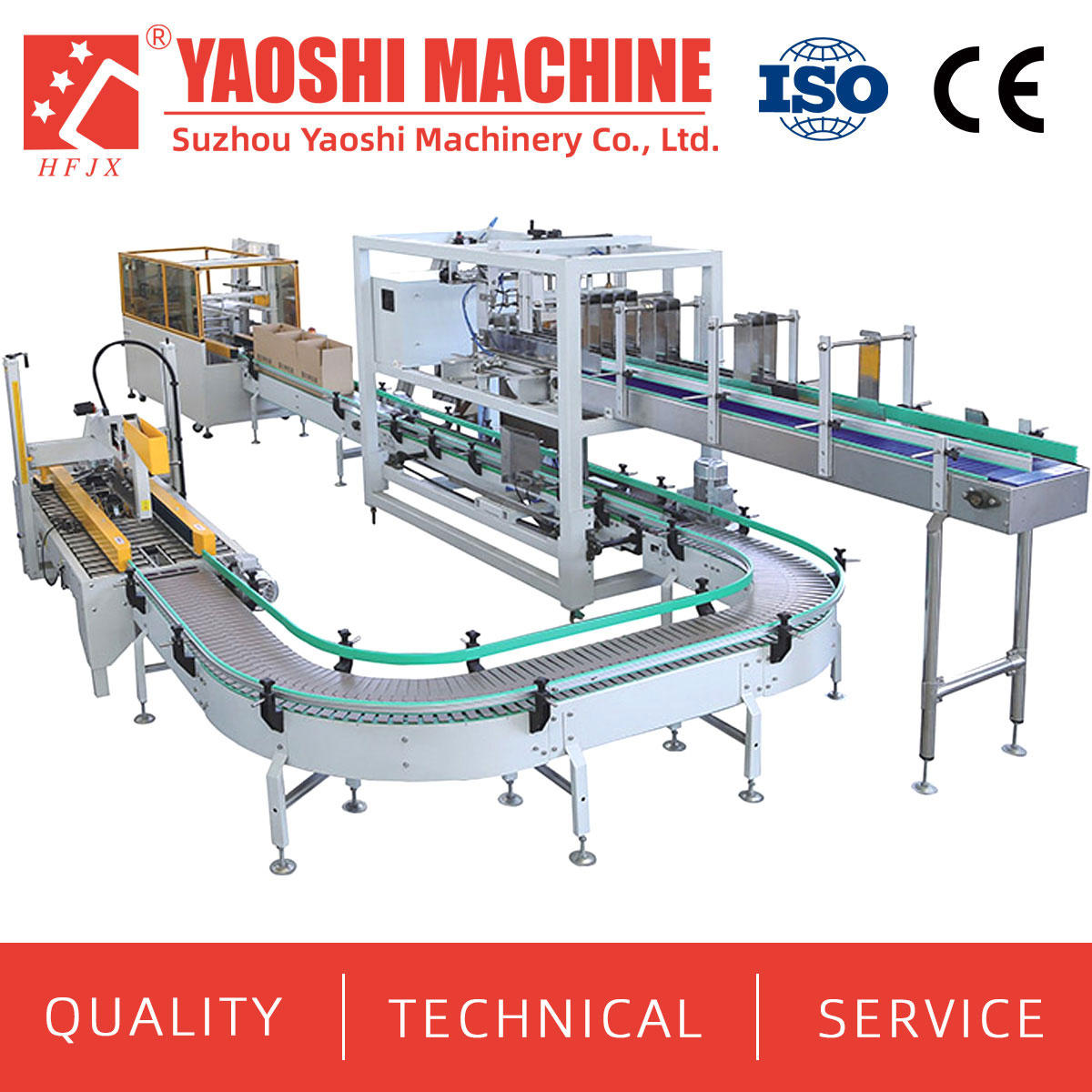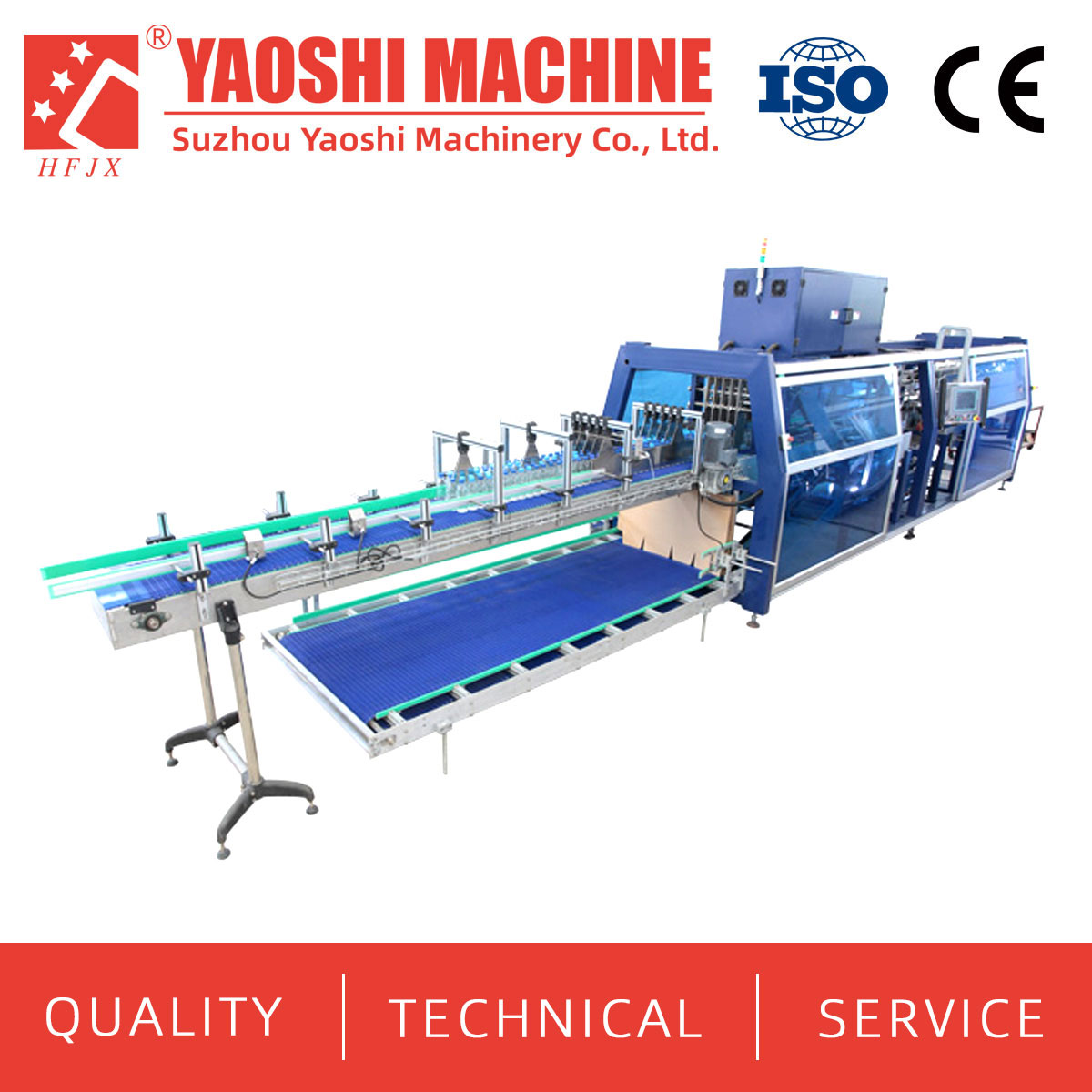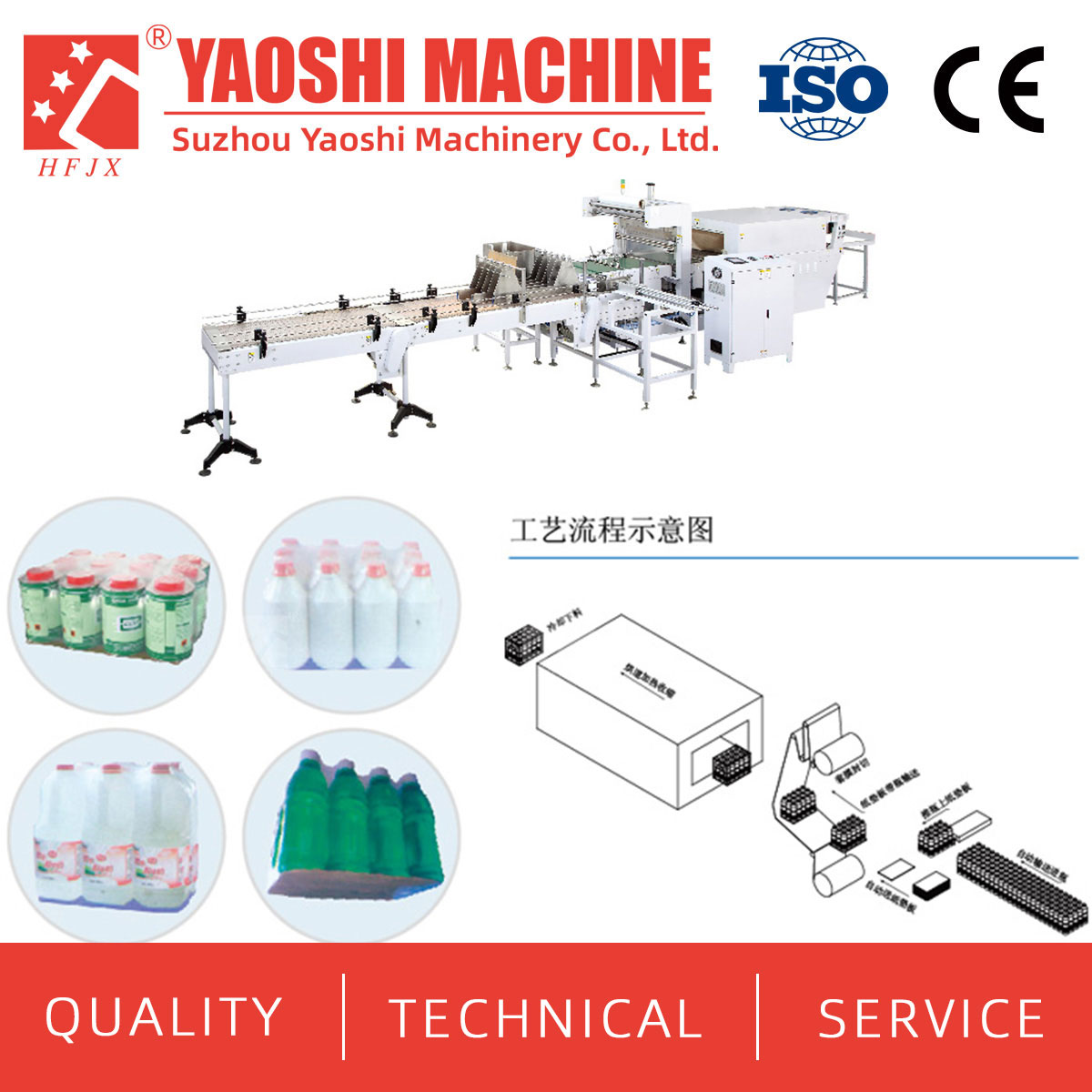
A can packaging machine in this guide groups filled, closed beverage cans into packs for handling and distribution. It does not fill the beverage or form the can seam. Keeping that boundary clear helps define the conveyors, grouping equipment, film wrapping or carton packing required after the filling and seaming section.
For a technical review with Yaoshi Machinery, start with the condition of the cans arriving at packing and the finished pack required at discharge. Those two points establish the application. Can volume and filler speed alone leave the grouping pattern, packaging materials and acceptable output undefined.
Mark the proposed packing infeed on the line layout. State which processes occur between seaming and that point, including any product-specific treatment, surface conditioning, coding or inspection. These are project-dependent steps, not a fixed equipment sequence for every canned beverage.
Provide the can dimensions, filled weight, decoration and temperature and surface condition at packing. If cold cans develop condensation or carry product residue, include that condition in the application review. Do not assess the pack only with clean, dry samples when the production line delivers something different.
Our engineering team needs an agreed input condition and a clear responsibility boundary. Identify where nonconforming cans are removed under your quality plan. A downstream packer does not replace seam inspection or establish that the filling and seaming operation is acceptable.
Yaoshi Machinery's beverage packaging equipment range includes film-based and carton systems. Submit the required pack drawing to narrow the configuration rather than selecting from a broad machine name.
| Can-pack route | What to define | Engineering review |
|---|---|---|
| Film-only multipack | Can count, row arrangement, film and discharge orientation | Group stability, wrapping and shrinking result, finished-pack handling |
| Tray or pad with film | Board construction, pack pattern, film and finished dimensions | Board feeding or forming, can transfer and complete pack compatibility |
| Carton or corrugated case | Blank or case style, loading arrangement and closure requirements | Grouping, board handling, loading or forming, and closing scope |
A flat pad is not the same as a formed tray. A carton folded around a can group is not the same process as loading cans into a separately erected case. Specify the construction and request a corresponding equipment list.
For a board-supported film pack, our half-tray film shrink wrapping machine is a route to evaluate. The board drawing, can arrangement and required output must establish the offered feeding and grouping scope. Do not assume that all tray, pad and film-only functions are included in one configuration.
Half-tray film wrapping equipment reference. Confirm the supplied configuration for your beverage can pack.
Send the actual can drawing, including diameter, height and relevant body profile. Nominal volume alone is insufficient. List every format, especially where standard, sleek or slim designs have different handling dimensions.
The grouping section must deliver the correct count and arrangement without unacceptable damage. Ask for a review of can spacing, contact points, transfer gaps and the response to interrupted flow. Include label or sleeve condition where decorated cans enter the packer.
Agree acceptable appearance and damage criteria for the trial. A pack can have the correct count while individual cans show unwanted dents or scuffing. Specify the checks needed for your container and distribution requirements rather than accepting a general statement of “stable packing.”
If more than one flavor is required in a pack, state that at the outset. Mixed-product packs introduce feeding and verification questions beyond ordinary grouping. Do not assume that a standard single-product arrangement provides that capability.
Use the intended pack count to translate the filling-line requirement:
Required packs per minute = incoming cans per hour ÷ cans per pack ÷ 60.
For illustration, 18,000 cans per hour equals 25 packs per minute in a 12-can format and 12.5 packs per minute in a 24-can format. These are arithmetic examples, not demonstrated Yaoshi machine outputs.
State whether the incoming rate is sustained or a short peak. Define the required acceptable output after the agreed pack checks, and review material replenishment, stops and recovery against it. A maximum catalogue speed is not the same as accepted continuous output for your can, board and film combination.
For frequent SKU changes, submit batch sizes and the changeover schedule. Request a format-parts list and adjustment requirements. Changing pack count can alter the grouping duty even if the can itself stays unchanged.
The published specifications for our automatic carton packaging machine include the following reference entries. They provide a screening basis; the can application still requires format and material confirmation.
| Published item | Listed value | What to confirm for cans |
|---|---|---|
| Production capacity | 35–45 boxes/minute | Accepted output with the specified can and carton |
| Pack arrangement | 3 × 4 / 4 × 6 | Approved count, rows and loading orientation |
| Applicable bottle and can dimensions | Diameter 60–90 mm; height 120–280 mm | Actual can profile and handling suitability |
| Machine dimensions | 10,400 × 1,800 × 2,600 mm | Installed layout and service access |
| Total power | 20 kW | Final utility schedule and equipment boundary |
| Compressed air pressure | 0.4–0.6 MPa | Required supply conditions at the agreed connection |
A can within the stated dimensional envelope is not automatically an approved format. The offer needs a confirmed material specification, handling arrangement and trial basis. The listed electrical rating is not a measured energy-consumption figure, and the machine dimensions do not include every conveyor or maintenance clearance.
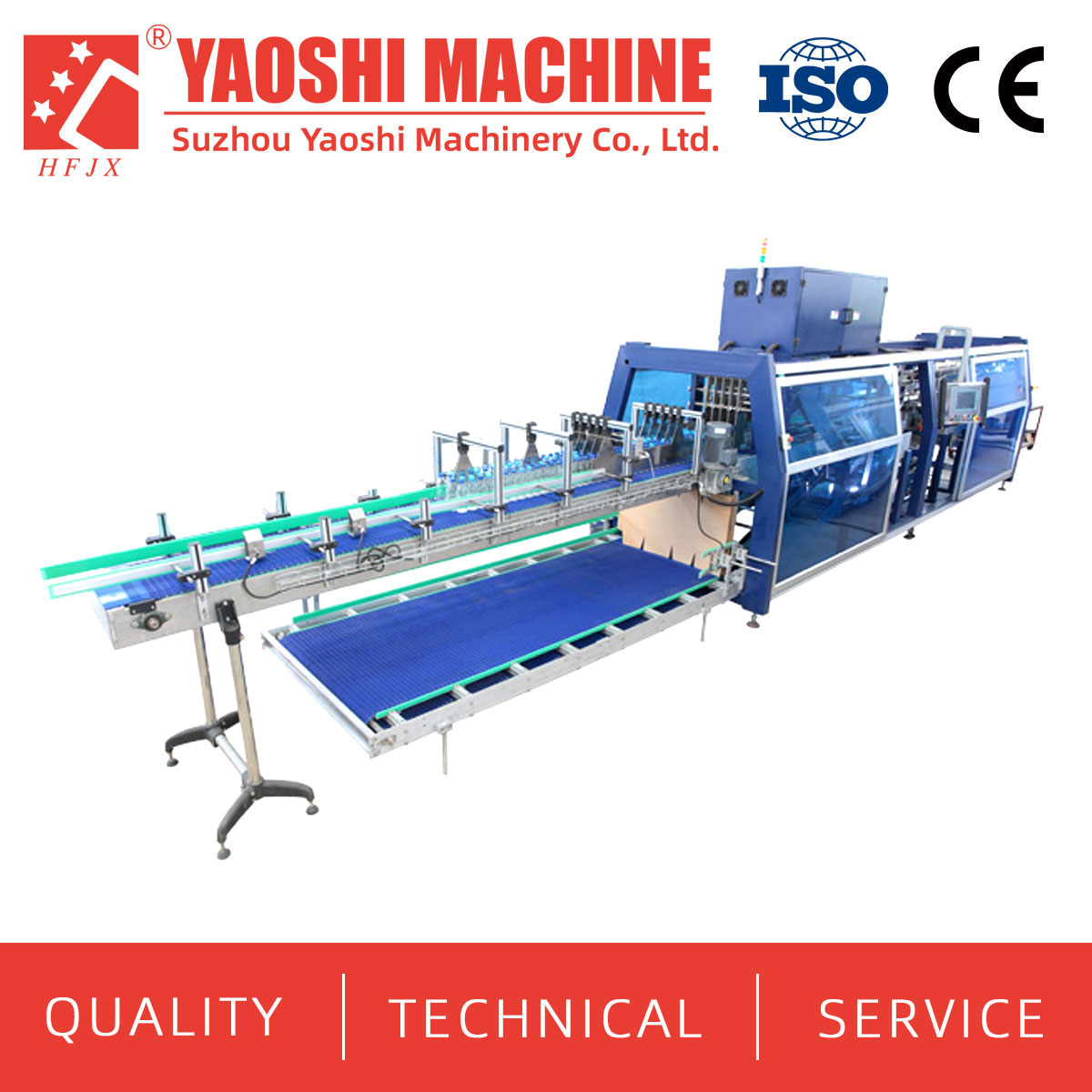
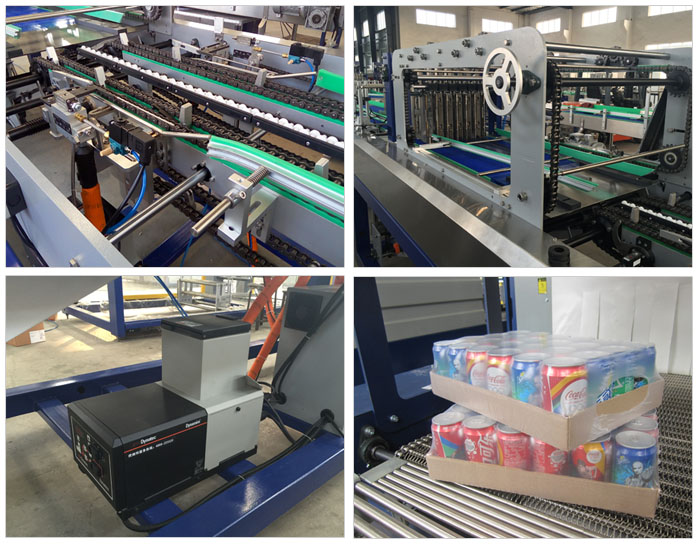
Our carton-packaging equipment shown with a bottle infeed. The photograph illustrates the machine family; can handling must be confirmed for the offered configuration.
Provide the infeed and outfeed direction, conveyor height, available floor space and downstream destination. Agree what happens when the packer stops and how the upstream flow responds. Buffering and restart behavior should be defined for the actual layout rather than left to installation.
For film packs, specify the film material, dimensions, roll data and plain or printed construction. For tray or carton packs, provide the board drawing and samples. Include the condition of the cans and packaging materials in the trial plan.
Define the handover to manual handling, pack conveyors or palletizing. Identify the acceptable pack dimensions, weight and presentation at that point. Palletizing, stretch wrapping, coding and inspection should appear as included, optional or excluded duties, not implied parts of a general packaging-machine offer.
Send container samples or drawings, the required packaging format and target line speed for each SKU. Add the can's arrival condition, proposed packaging materials and line layout. This gives the technical proposal a defined basis without reopening the filler or seamer selection.
Use representative filled and closed cans and production-equivalent materials.
Agree pack count, arrangement, closure or film quality and acceptable can appearance.
State the test duration or quantity and the output counting point.
Include a representative stop/restart and required format change.
Separate machine acceptance from any additional distribution or stacking validation.
Keep missing samples, untested can formats and undefined interfaces on a confirmation list. They should be resolved before extending performance acceptance to the complete application.
No. Here, the packer groups already closed cans into secondary packs. Seam formation and seam-quality control remain separate upstream duties.
No. Define the required retail and distribution pack first, then evaluate film-only, board-supported or carton equipment against it.
Only after confirming the actual dimensions, grouping and format parts. These names do not replace a can drawing and an approved format list.
The trial should reflect the actual arrival condition. State moisture, residue and temperature conditions so material and handling compatibility can be assessed.
Do not assume so. Define inspection and rejection responsibilities separately. Packing acceptance does not substitute for your approved seam-control plan.
Submit the can specification, packaging format and target line speed. Include material samples, the can's arrival condition and the line layout for a useful interface review.
Discuss your can packaging machine application with Yaoshi Machinery by sending container samples or drawings, the packaging format and target line speed. Include cans per pack, packaging materials and the layout after seaming. Contact tony@yaos.ltd or +86 18915689808 for a configuration review with clear grouping, packing and handover boundaries.


+86-512-58530618

Wukesong Road, Sanxing Town, Zhangjiagang City, Jiangsu Province, China