



Two quotations can describe a high-speed liquid filling machine with the same bottles-per-hour figure and still represent different production results. One speed may refer to a short mechanical run with the easiest bottle. Another may refer to a sustained test with the specified beverage, closure and connected equipment. Unless the conditions are written beside the number, the figures are not comparable.
A beverage plant needs saleable output at a defined point in the line, not the highest instantaneous speed shown on a control screen. Capacity planning should therefore connect product behavior, container size, operating time, format changes, line constraints and acceptance testing before a model is selected.
Start by separating the different meanings of “output.” Each answers a different purchasing question.
| Output term | What it describes | How it should be used |
|---|---|---|
| Maximum or instantaneous speed | The highest observed or stated machine rate under specified conditions | Use only as a mechanical reference; do not multiply it by every scheduled hour |
| Sustained filler rate | The rate the filling section maintains during an agreed continuous test | Compare filler models using the same product, container, fill and test duration |
| Effective line rate | Accepted containers leaving the defined line endpoint while the connected line is running | Use for line balancing and interface design |
| Net output per shift | Saleable containers produced after planned stops, changeovers and rejected packs | Use for demand, staffing and production planning |
The quotation should name which term it uses. “Up to” speed, nominal capacity and guaranteed output are not interchangeable descriptions. The output point also matters: filled bottles at the filler discharge, closed bottles after the capper, or finished packs after secondary packaging will produce different counts.
A capacity request should identify one or more reference duties. Each duty combines a product, container, closure, fill volume, process condition and required output. If the line will run several SKUs, state the production share and normal campaign length for each one.
Product type and relevant flow, foam, carbonation, temperature or particle conditions;
container material, dimensions, opening, nominal volume and physical samples;
closure type, drawing and sample;
required fill basis and inspection method;
target saleable containers per shift, day or month;
scheduled hours, number of shifts and operating days;
changeover and cleaning frequency;
the exact point where finished output will be counted.
One high-speed model may perform differently across formats. A larger fill volume changes the time needed to transfer product. A narrow opening, unstable bottle or difficult closure can change the practical rate of the connected line. Ask the supplier to state output for every important format rather than publishing one speed for the entire project.
Begin with the number of saleable packs required within the production period. Then subtract planned non-running time from the scheduled time. Planned losses can include product change, cleaning, format change, inspection, shift handover and scheduled maintenance.
The planning logic is:
Available production time = scheduled time − planned non-running time
Required effective line rate = required saleable output ÷ available production time
This rate is a planning target, not the final filler specification. The buyer and supplier must still allow for the line’s expected interruptions and the selected recovery strategy. Do not insert a generic efficiency percentage copied from another factory. For an existing plant, use measured operating data. For a new plant, record the assumptions and test them during project review.
The main filling cycle depends on what must happen while the container is at the valve or nozzle. Product supply, fill volume, flow behavior, foam control, temperature and any required settling or staged filling can affect the sustainable rate. The selected filling method must match the actual beverage process; “high speed” does not describe a filling principle.
Container handling can impose a separate limit. Bottle height, diameter, neck finish, base stability and material affect infeed, centering and transfer. Closure feeding and application must also keep pace without creating a routine queue after the filler. These factors should be reviewed against drawings and production samples.

Yaos Machinery’s liquid filling machine range covers several beverage applications on the official website. The applicable configuration and output must still be confirmed from the product, container and complete-line duty rather than inferred from the category alone.
A faster filler increases real production only when it is the constraint and the rest of the line can support the new rate. Map the route from empty-container supply to the output-counting point. For every section, record its normal operating rate, common stops, recovery behavior and available accumulation.
| Line section | Capacity question | Evidence to request or measure |
|---|---|---|
| Bottle supply | Can the reference container reach the filler at a stable pitch? | Normal feed rate, starvation events, transfer drawings and sample runs |
| Product supply | Can the agreed product condition be maintained at the filler inlet? | Flow, pressure, temperature and process-control conditions where relevant |
| Filling | What sustained rate is demonstrated with the reference duty? | Test duration, fill results, stops and actual accepted count |
| Closure feeding and capping | Can closures be replenished, sorted and applied at the effective filler rate? | Cap samples, replenishment method, stop log and accepted closed bottles |
| Labeling and coding | Can filled containers be spaced, labeled and coded without routine backup? | Format-specific rate, roll changes, rejects and restart behavior |
| Secondary packing | Can finished containers be grouped and packed at the required pack rate? | Pack pattern, packs per minute, material replenishment and rejected packs |
If PET bottles are produced beside the line, the bottle blowing equipment and transfer system must support the required bottle supply. A higher filler rating has little value if bottle delivery repeatedly starves the infeed.
Labeling rate depends on the approved bottle and label combination. Container stability, label length, label material, application method and roll replacement all affect sustained production. The labeler also needs recovery capacity after short upstream interruptions, but that margin should be selected from real events rather than a universal percentage.
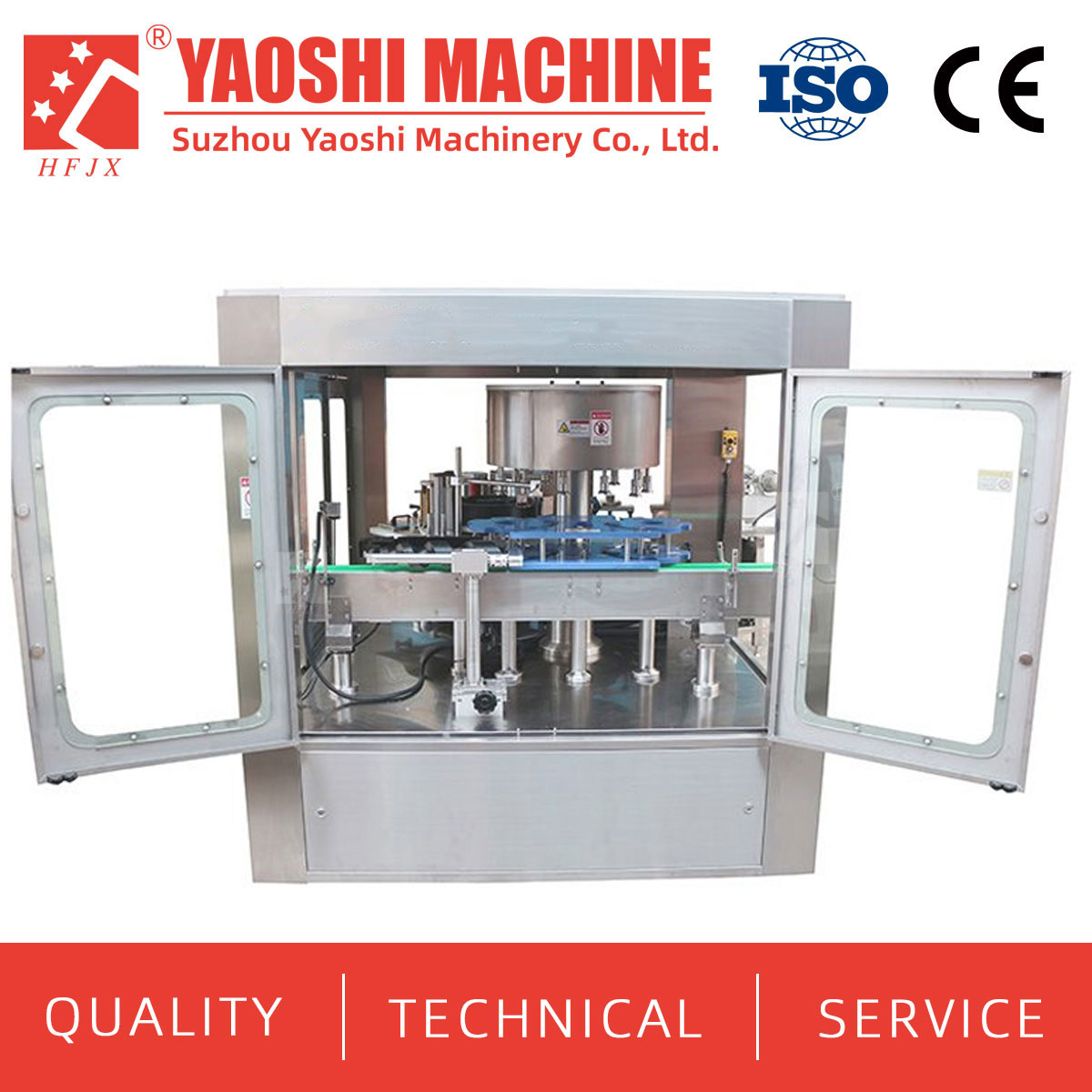
When reviewing automatic labeling equipment, use the same container, label and output basis applied to the filler comparison. Record what happens during label replenishment, a missed label, a local stop and restart. These events determine whether the labeler can support the proposed effective line rate.
Secondary packaging is measured in packs, trays or cartons rather than individual bottles. Convert the effective bottle rate using the required pack pattern. Then account for grouping, material loading, sealing or shrinking, inspection and discharge. A manual packing point should be included in the calculation if it remains in the project.
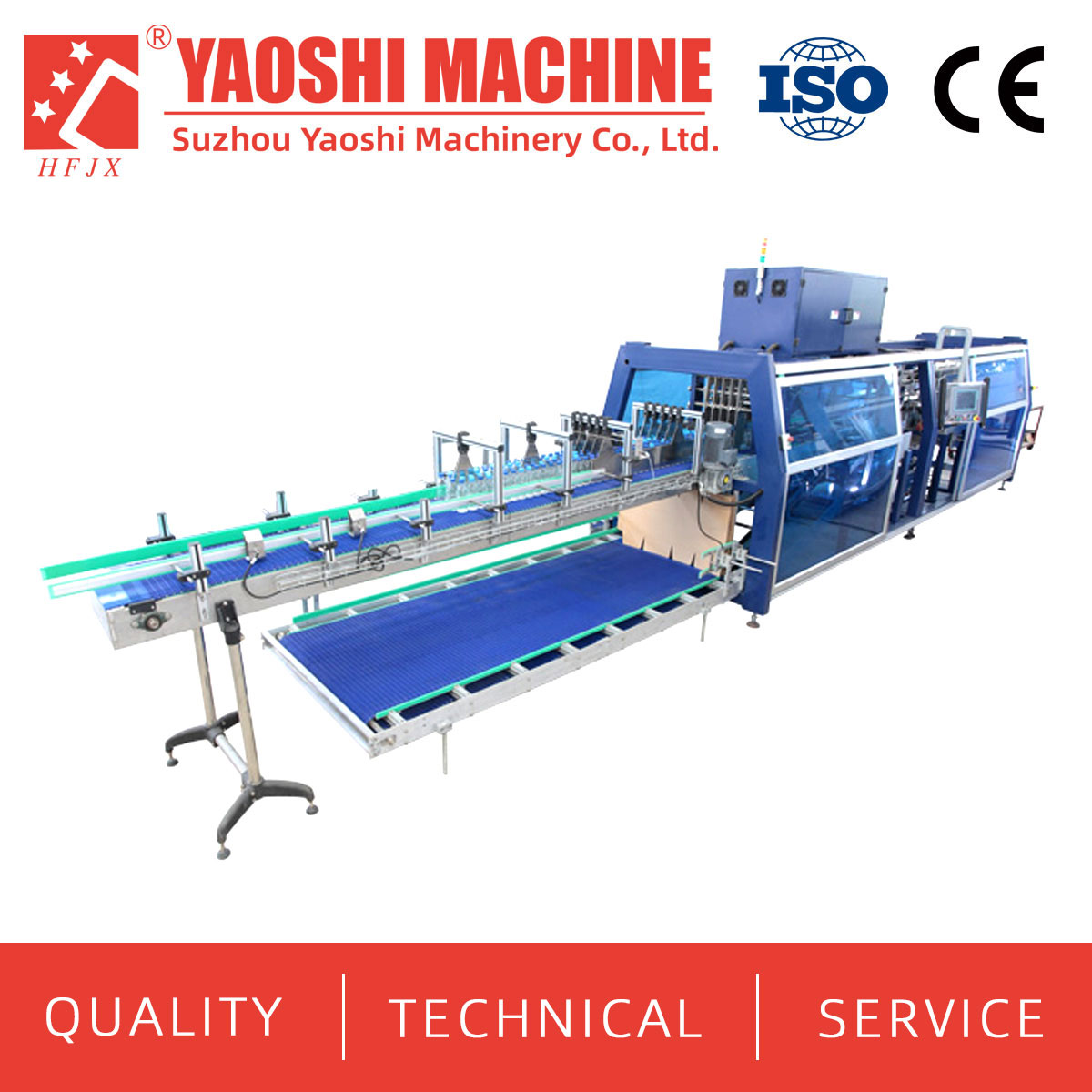
The selected beverage packaging equipment should be compared using the actual container and pack format. Oversizing the filler does not solve a packer that cannot accept the required flow or recover after normal material replenishment.
Net shift output depends on how the line is scheduled. A project with one long production campaign has a different capacity requirement from a line changing product, bottle, cap and label several times per shift.
Measure a changeover from the last acceptable pack of the previous SKU to the first acceptable pack of the next SKU. Include product displacement, cleaning, physical format parts, guide adjustment, closure and label changes, recipe selection, verification and controlled restart. Avoid counting only the time required to select a stored recipe.
For each planned stop, record frequency and duration. The capacity sheet can then show the number of productive minutes remaining in the shift. This exposes whether a proposed high-speed model creates useful saleable output or simply adds unused mechanical capacity between frequent stops.
Connected machines do not need identical nameplate speeds. Downstream sections may require enough effective capacity to recover from ordinary interruptions before accumulation fills and stops the filler. The required recovery rate depends on stop frequency, stop duration, accumulation volume, container behavior and restart sequence.
Ask the supplier to explain the assumed event: which station stops, how long the event lasts, where containers accumulate, which machines continue running and how the line returns to normal. A fixed speed margin applied to every station is not a substitute for this event-based review.
Place every quotation onto a standard comparison sheet. Do not copy only the largest BPH number. Require the following fields for each proposed model:
reference product, container, closure and fill volume;
speed term used and output-counting point;
sustained test rate and agreed test duration;
included upstream and downstream equipment;
output for the limiting SKU;
format-change and cleaning assumptions;
operator and material-replenishment tasks;
accumulation and recovery basis;
quality checks and reject treatment;
conditions that remain to be confirmed by samples or trials.
A model with a lower maximum speed may support more net production if it handles the real SKU mix with fewer or shorter interruptions. The decision should follow the documented production duty, not the model name.
Before replacing a filler, record where the current line waits and where containers queue. Separate planned downtime, equipment faults, material shortages, reduced-speed running and rejected output. If the labeler or packer already limits the line, installing a faster filler alone may not increase saleable output.
Share the current layout, conveyor heights, control interfaces, observed rates and stop history with the equipment supplier. State which existing machines will remain and which performance conditions have been verified. This allows the proposal to target the actual constraint rather than the most visible machine.
The acceptance protocol should use the approved product or test medium, container, closure and line scope. Define the output-counting point, test duration, acceptable packs, sampling or inspection method, planned replenishment and treatment of stops. If site-dependent equipment cannot be tested before shipment, list the factory evidence and the site evidence separately.
Record all dependencies. Product supply, utilities, packaging materials, operators and third-party machines must be available under the agreed conditions. Without those conditions, a speed demonstration cannot establish net production for the complete plant.
There is no universal BPH threshold. “High speed” is relative to the beverage, fill volume, container, closure, production schedule and connected line. Define the required effective output before applying the term.
No. Rated BPH must be tied to stated test conditions. Actual hourly output also reflects bottle supply, product conditions, capping, labeling, packing, short stops and accepted quality.
No. Real output is limited by the active constraint in the connected process. That constraint can change with the SKU and operating condition.
Request a separate rate for each important product and container combination. Do not apply the smallest bottle’s speed to larger or more difficult formats.
Subtract the complete changeover from scheduled production time. Count cleaning, parts, adjustments, packaging-material changes, verification and restart.
No. Extra effective capacity is useful when it supports recovery from defined interruptions. Excess nameplate speed without suitable transfers, accumulation and controls may remain unused.
Only if the filler is the relevant constraint and the remaining equipment can support the new effective rate. Measure current losses before deciding.
Define the product or test medium, container, closure, line scope, counting point, duration, quality criteria, planned interventions and treatment of stops before testing.
For a high-speed liquid filling machine or connected-line review, send Yaos Machinery the product and filling conditions, container and closure drawings or samples, required saleable output, operating schedule, SKU mix, factory layout and existing-line interfaces. For an expansion, include measured output and stop data from the current line.
Ask for a format-specific capacity table, equipment list, line layout, interface requirements and acceptance basis. Email tony@yaos.ltd or call/WhatsApp +86 18915689808.


+86-512-58530618

Wukesong Road, Sanxing Town, Zhangjiagang City, Jiangsu Province, China


