



A quotation for a juice bottling machine can look complete while leaving the main engineering questions unanswered. “Juice, 10,000 bottles per hour, 500 ml PET” does not tell the supplier how the product flows, whether pulp can pass through the valves, how the package reacts to heat, or where cleaning and cooling begin and end.
The useful specification starts with the product at the filler inlet and follows it through filling, closure application, cooling and downstream handling. This guide explains the information a juice producer should define before comparing an automatic juice filling machine or a complete line.
The product name is not an equipment specification. Two orange drinks can require different handling when one is clarified and the other contains pulp. A nectar may flow differently at room temperature and at its intended filling temperature. A formula change can also affect foaming, heat transfer, product recovery and cleaning.
Prepare a product data sheet for every planned SKU. At minimum, record:
product type, recipe status and whether it is still or carbonated;
pH or acidity data confirmed by the product technologist;
soluble solids, density and viscosity at the actual filling temperature;
pulp, fibre or fruit-piece type, maximum dimensions and concentration;
tendency to settle, separate, foam or trap air;
heat sensitivity, oxygen sensitivity and target shelf-life conditions;
preservation process approved by the buyer's process authority; and
allergen and changeover requirements where relevant.
Do not ask the equipment supplier to infer a safe time-and-temperature process from the beverage name. The product developer or process authority should establish the preservation conditions. The machine supplier then designs the product circuit, filler interface and line controls around those approved conditions.
Pulp content must be described with numbers and samples. “With pulp” does not define the largest particle, fibre length, solids percentage, softness or settling rate. These factors influence the passage through pumps, heat exchangers, tanks, pipe bends, manifolds and filling valves.
A clarified, low-viscosity juice may suit a different metering principle from a pulpy nectar. Larger inclusions may require a wider product path or a separate dosing step. Agitation or controlled recirculation may be needed to keep the feed uniform, but excessive shear can damage fragile fruit pieces. The correct arrangement depends on the real product rather than a generic label such as “fruit juice filling machine.”
Before quotation, provide a representative product sample and state the measurement method for pulp size and concentration. Ask the supplier to identify the narrowest product passage, the expected treatment of settled product, and the cleaning method for the complete wetted path.
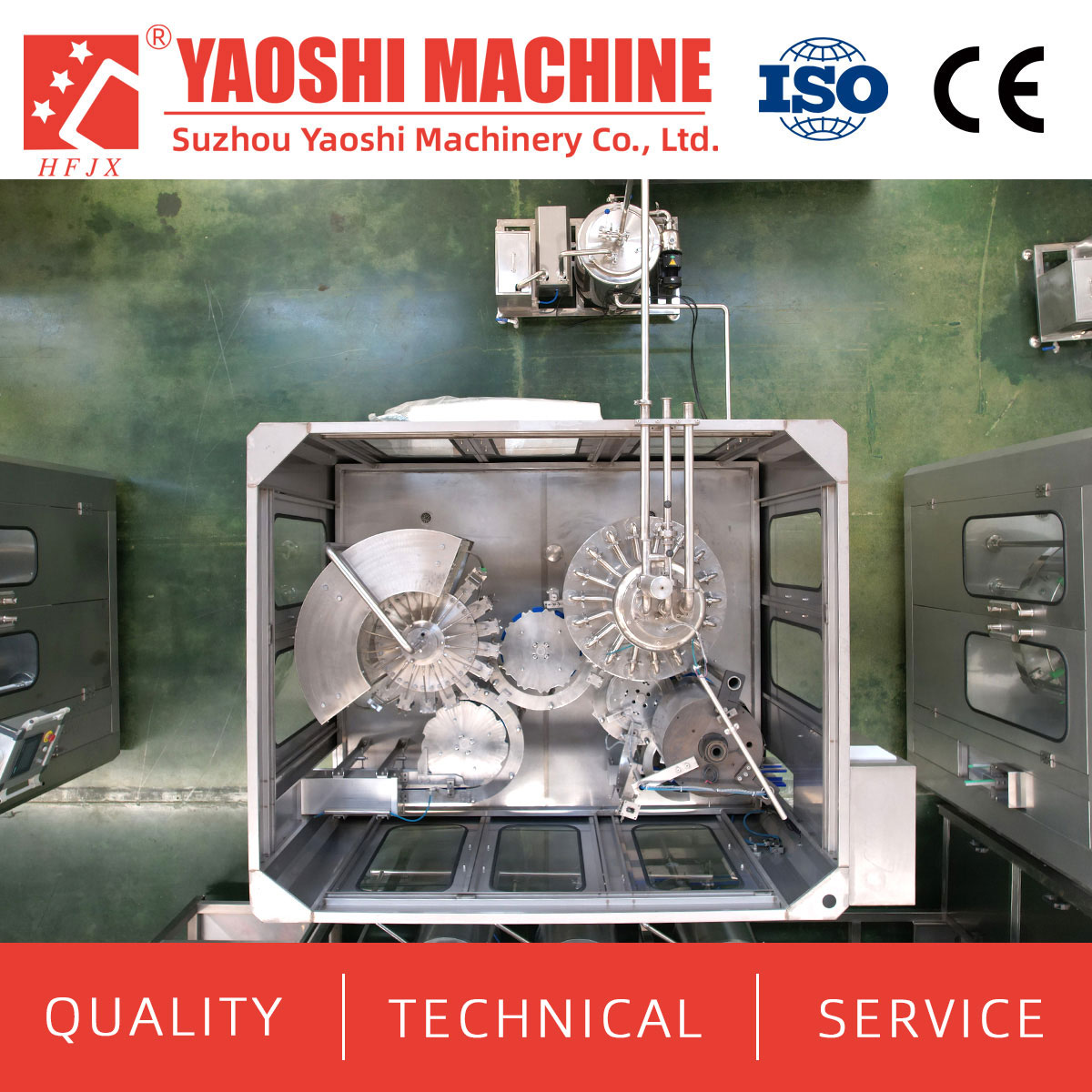
Juice filling equipment must be configured around the product, filling process, bottle and closure rather than nominal output alone.
“Hot fill” is still incomplete without an interface schedule. The quotation should state the product temperature delivered to the filler, the permitted operating range, the return or recirculation condition, and what the line does during a stop. It should also define who supplies the heater or sterilizer, holding section, buffer tank, pumps, valves and interconnecting pipework.
For cold, ultra-clean or aseptic projects, the hygienic boundary and product protection method need the same clarity. A filler cannot be selected independently from the approved treatment process and the hygiene level required downstream of it.
Temperature affects viscosity and filling behaviour. It also affects the bottle, cap, liner, fill level, headspace and cooling demand. Record temperatures at the product-preparation outlet, filler inlet, filled-container discharge and cooler exit. These points make supplier comparisons much more useful than one nominal filling temperature.
Send dimensioned drawings and physical samples for every bottle and closure. For PET, confirm whether the bottle and neck finish are designed for the specified thermal and vacuum loads. For glass, define allowable thermal shock and handling limits. For cans, the filling and seaming scope follows a different package interface and should not be treated as a bottle changeover.
The package specification should cover:
container material, volume, diameter, height, neck or finish and empty-container weight;
closure type, dimensions, liner or seal requirements and application method;
target fill quantity or fill level, permitted tolerance and headspace;
bottle stability on conveyors before and after filling;
approved exposure to filling, inversion, pasteurization or cooling conditions;
label type, label position, coding area and packed format; and
the complete SKU matrix, including planned future formats.
A hot-filled PET bottle can change shape as the product cools and internal pressure falls. Bottle design, closure seal and cooling profile therefore belong in the same technical discussion. Glass requires controlled heating and cooling to limit thermal stress. The discharge temperature must also suit the selected labeling machine, coder and secondary packaging material.
The filler needs a stable product supply. Mixing, syrup dissolution, filtration, homogenization, deaeration, heat treatment and buffer storage may sit upstream, depending on the recipe. Each module changes the product presented to the filler.
The buyer and supplier should mark the battery limits on a process flow diagram. For each connection, state flow, temperature, pressure, pipe size, product condition and control responsibility. Yaos Machinery lists mixing, sterilizing, filling, cooling, labeling and packing modules within its juice production solution. The final scope still needs to be defined for the buyer's formula and site.
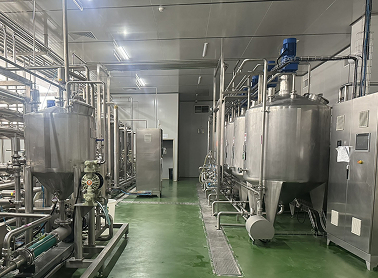
Upstream processing and the filler must share defined product, temperature, flow and control interfaces.
Sugar, pulp and fibres can remain in valves, tanks and return lines if the circuit is difficult to drain or has restricted passages. A cleaning specification should cover the filler and every connected product-contact component, not only the main bowl.
Ask the supplier for a CIP flow diagram showing circuits, valve positions, return paths, drain points and the boundary between automatic and manual cleaning. Confirm which sections can be cleaned in place, which parts require removal, how recipe changeovers are managed, and how cleaning results will be verified. The chemical concentration, temperature and contact time must be approved for the product, soil load, materials and plant hygiene plan rather than copied from a generic recipe.
If several products will share the line, identify the most difficult cleaning case. A clear drink followed by another clear drink may not define the required downtime. A pulpy, strongly colored or allergen-containing SKU can set the real changeover requirement. Review the available pretreatment and CIP equipment as part of the product circuit, not as an isolated option.
For a hot-fill project, cooling is part of the process specification. The cooler must accept containers at the defined inlet condition and deliver them at a temperature compatible with bottle stability, label adhesion, coding and packing. The required residence time and cooling profile depend on the package material, wall design, bottle volume, product temperature and plant water conditions.
The quotation should state cooler inlet and outlet conditions, zone control, conveyor speed range, water consumption basis, heat-recovery boundary, drainage and cleaning access. It should also explain how the line handles a short stop without leaving containers exposed to an unsuitable thermal cycle.
Do not size the filler in isolation. If the cooler, labeler or automatic packaging machine cannot sustain the required SKU, the line will not deliver the requested net output.
Nominal BPH is useful only when tied to a reference bottle and product. State the required stable output for each major SKU, not just the fastest small bottle. Add planned operating hours, changeover frequency, sanitation time, expected production mix and downstream pack format.
Ask the supplier to distinguish machine design speed, rated output and the acceptance-test condition. The selected juice bottling machine should be evaluated with the slowest or most difficult commercial SKU as well as the reference bottle. The line balance should include accumulation and controlled speed margins, but the quotation should state where those margins are applied.
| Specification area | Buyer input | Supplier response |
|---|---|---|
| Product | Formula family, pH, soluble solids, density, viscosity at filling temperature, foam and oxygen sensitivity | Filling principle, wetted-path design and product limitations |
| Pulp and fibres | Type, maximum dimensions, concentration, hardness and settling behaviour | Minimum passage, dosing method, agitation or recirculation and sample-test plan |
| Process | Approved preservation method, filler inlet condition and allowable operating range | Process boundary, controls, stop mode and interface schedule |
| Package | Drawings and samples for each bottle, cap, label and case format | Change parts, container handling, closure system and format limits |
| Cooling | Package thermal limits, desired outlet condition and site water data | Cooling zones, residence-time basis, utilities and downstream interface |
| Cleaning | SKU sequence, soil load, allergens and plant sanitation standard | CIP circuits, manual tasks, cleaning boundary and validation support |
| Output | Stable BPH by product and package, shifts and changeover frequency | Rated output by SKU, line balance, acceptance conditions and exclusions |
| Site | Layout, elevations, utilities, local standards and installation conditions | Equipment layout, connected loads, responsibilities and installation scope |
A factory acceptance test based only on water cannot confirm how a viscous or pulpy juice will fill. Agree on the test product, package, duration and acceptance criteria before the order. If the commercial recipe cannot be shipped, define an approved test medium that reproduces the relevant flow, foam and particle conditions closely enough for the test purpose.
The FAT plan should cover fill quantity or level, closure application, container damage, product loss, alarms, changeover tasks and cleaning sequence. The site acceptance test should then verify the integrated line with site utilities, upstream product supply and downstream packaging under agreed conditions.
Quoting average pulp instead of maximum particle and fibre dimensions.
Measuring viscosity at room temperature when the product is filled at another temperature.
Choosing the bottle after the preservation and cooling process has been fixed.
Using filler speed as the guaranteed output of the complete line.
Leaving the heater, buffer tank, return loop, cooler or CIP boundary undefined.
Testing the easiest SKU while the difficult SKU drives the equipment design.
It may be possible when the valves, product passages, feed system and cleaning arrangement cover both products. The supplier needs maximum pulp dimensions, concentration and a representative sample before confirming the range.
Not by default. Mixing, filtration, homogenization, deaeration, thermal treatment, buffer storage and CIP may be separate modules. The quotation must identify what is included and where each interface sits.
No. The bottle supplier must confirm the container's thermal and vacuum performance for the full filling, closure and cooling cycle. Neck finish, cap, fill level and bottle geometry also matter.
Viscosity can change with temperature. The value at the filler inlet is more useful for selecting pumps, valves, pipework and metering conditions than a room-temperature value alone.
The basis includes product and package inlet conditions, required outlet condition, container material and geometry, line speed, cooling-water conditions and the approved thermal profile.
Send the product matrix, process conditions, pulp data, package drawings and samples, output by SKU, site utilities, layout, cleaning requirements and the requested commercial scope.
Start with one completed row for every product-and-package combination. Mark the hardest SKU, provide samples, and attach the approved process conditions and site utility data. Ask each supplier to return the same boundary table with inclusions, options, exclusions and assumptions.
For a project-specific review, send Yaos Machinery the juice formula category, pulp specification, filling-temperature range, bottle and closure drawings, required output and plant layout through the contact page. The response should define the proposed filling method, cleaning and cooling boundaries, line modules, utilities and test conditions before commercial comparison.


+86-512-58530618

Wukesong Road, Sanxing Town, Zhangjiagang City, Jiangsu Province, China


