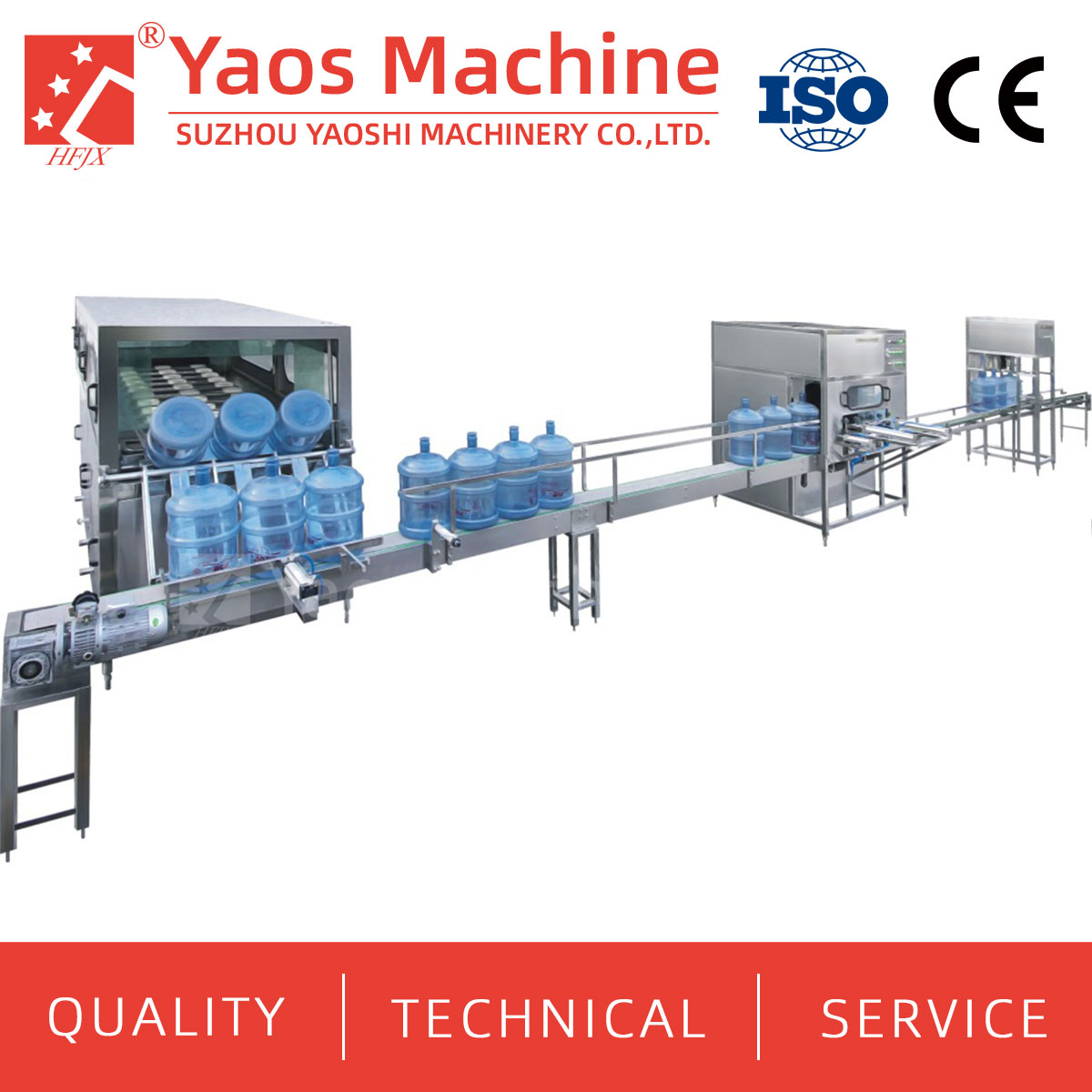
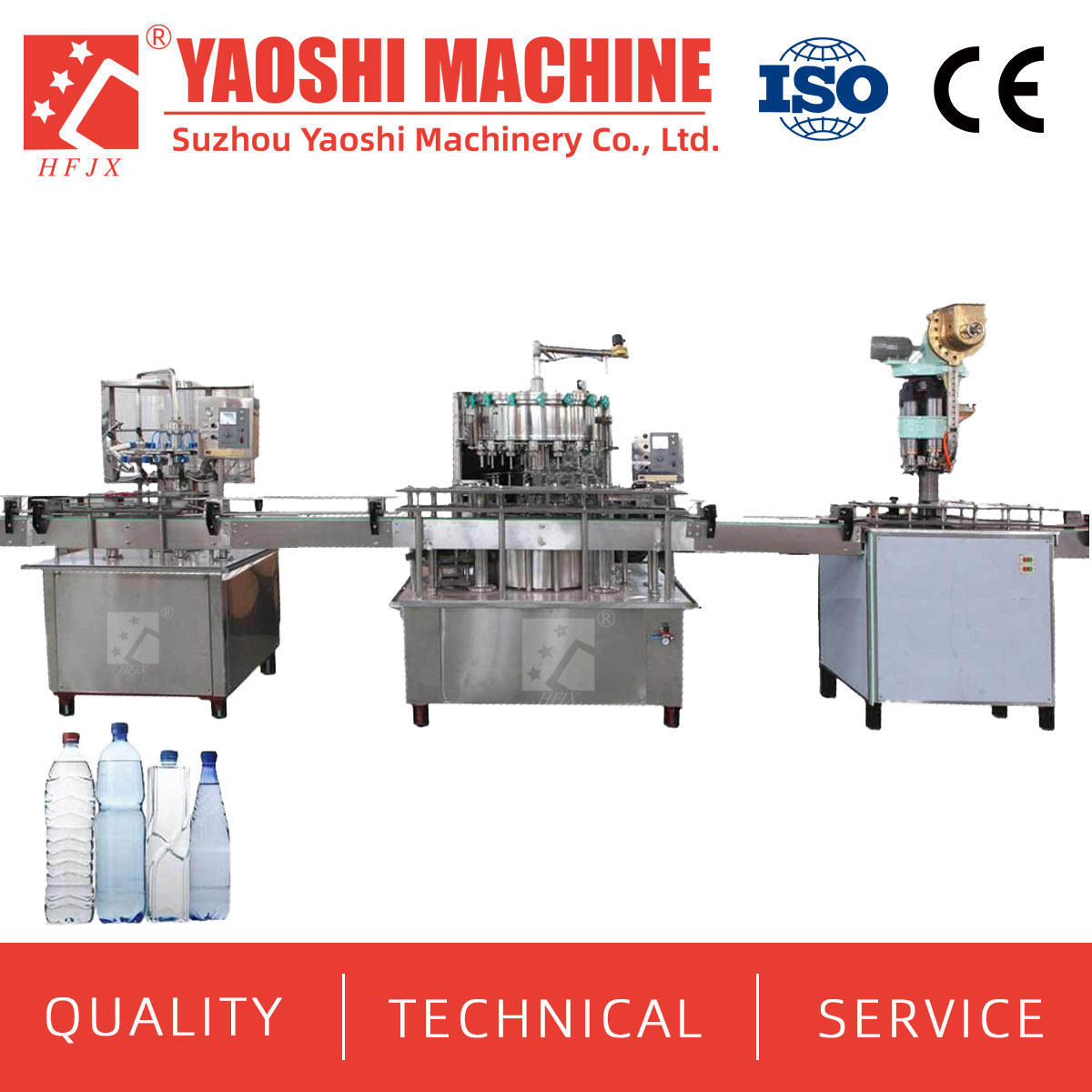
An automatic water filling machine integrates mechanical, pneumatic, and electronic subsystems to transfer bulk water into containers at commercial throughput rates. Each subsystem addresses a distinct stage of the filling cycle. Understanding these components clarifies equipment selection and maintenance priorities for bottling operations.

Container Feed and Transport Mechanisms
Container transport subsystems position empty bottles at the filling station with repeatable timing accuracy. Conveyors, star wheels, and timing screws work in sequence to prevent bottle collisions and maintain consistent spacing throughout the line.
Rinser and Conveyor Integration
Rinser units spray treated water or air into inverted bottles before filling to remove residual dust and particulates. Belt-driven conveyors advance rinsed containers toward the filling carousel at speeds matching the filler throughput.
Star Wheel and Timing Screw Systems
Star wheels rotate in synchronized intervals to transfer bottles from the conveyor into the filling turret. Timing screws thread containers into precise pockets on the star wheel, preventing jamming during high-speed transitions. Both components require hardness-rated stainless steel construction to withstand continuous mechanical contact with glass or PET surfaces.
Liquid Metering and Filling Valves
Filling valves control the volume of water entering each container using gravity, pressure, or flow-metered methods. The valve design determines fill accuracy, spillage rate, and compatibility with container geometry.
Gravity and Pressure Filling Methods
Gravity filling relies on a raised liquid tank above the filling nozzles, allowing water to flow into bottles by hydrostatic head. Pressure filling introduces compressed gas above the liquid surface to accelerate flow and handle carbonated or viscous products.
Gravity systems suit still water at moderate line speeds. Pressure systems maintain fill consistency above 300 bottles per minute for carbonated and still product categories alike.
Flow Meter and Volume Control Systems
Electromagnetic flow meters measure the real-time volume passing through each filling nozzle, enabling digital correction of fill levels. Servo-driven valve actuators adjust open duration in milliseconds to compensate for container volume variation.
Flow meter accuracy rated at ±0.5 percent ensures repeatable fill heights across container format changeovers.
Capping and Sealing Subsystems
Capping units apply and torque plastic or aluminum closures onto filled bottles to preserve product integrity. Cap feeders, sorting chutes, and torque-controlled heads form the three functional stages of the sealing process.
Cap Sorter and Feeder Units
Vibratory or centrifugal cap sorters separate misoriented closures and deliver them into feed chutes aligned with the capping turret. Magnetic or vacuum grippers pick sorted caps and place them onto bottle mouths during the indexing rotation.
Sorter throughput must exceed the capping speed by a margin of 10 to 15 percent to prevent starvation delays.
Torque-Controlled Capping Heads
Capping heads apply a programmed torque value to each closure using spring-loaded or servo-controlled spindles. Torque sensors feedback real-time resistance data to the PLC, which adjusts spindle force for consistent seal integrity across varying cap materials.
Over-torque detection triggers automatic rejection of bottles with damaged closures.
Control Electronics and Sensors
Programmable logic controllers and distributed sensors coordinate every mechanical action on the filling line. The control architecture defines cycle timing, fault response, and data logging for production traceability.
PLC Architecture and HMI Panels
Central PLC units execute sequenced programs that synchronize rinsing, filling, and capping stations within a single production cycle. Human-machine interface panels display real-time throughput data, fault codes, and parameter adjustment menus.
Ethernet or serial links connect the PLC to upstream SCADA systems for factory-wide production monitoring.
Photoelectric and Proximity Sensors
Photoelectric sensors detect bottle presence at entry and exit points of each processing station, enabling the PLC to skip empty pockets. Proximity sensors monitor fill levels through transparent PET walls using infrared attenuation measurement.
Sensor signal latency below 5 milliseconds prevents missed detections at line speeds exceeding 400 bottles per minute.
Frame Structure and Sanitary Design
The machine frame provides rigid support for rotating carousels and stationary modules under continuous vibration loading. Sanitary design principles mandate crevice-free surfaces, drainable geometries, and food-contact-grade material specifications.
Structural frames use 304 or 316L stainless steel tubing welded with continuous seam joints. Enclosure panels feature IP65-rated gaskets that prevent water ingress during washdown cycles.
Pipe manifolds and valve bodies comply with FDA 21 CFR 177 or EU Regulation 1935/2004 for indirect food-contact surfaces. Surface finish requirements specify Ra values below 0.8 micrometers on all wetted paths.
B2B Technical Reference Table
Component Category | Typical Material | Key Performance Metric | Industry Standard Reference |
|---|
Conveyor belt | Food-grade PU or stainless steel | Speed range 10 to 80 m/min | ISO 14120 safety enclosures |
Star wheel | 304 SS or hardened polymer | Pocket pitch tolerance ±0.2 mm | DIN 69871 indexing accuracy |
Filling valve | 316L SS body with PTFE seal | Fill accuracy ±1.0% | FDA 21 CFR 177.2600 |
Flow meter | Electromagnetic with 316L SS | Accuracy ±0.5% at rated flow | ISO 11631 flow measurement |
Capping head | Alloy steel spindle with elastomer | Torque range 5 to 30 Nm | ASTM D3410 cap testing |
PLC controller | Industrial-grade silicon | Scan cycle ≤5 ms | IEC 61131-3 programming |
Photoelectric sensor | IR LED with IP67 housing | Response time ≤5 ms | IEC 60947-5-2 |
Machine frame | 304 or 316L SS tube | Ra ≤0.8 µm surface finish | EHEDG Doc 8 hygienic design |
FAQ
What maintenance intervals apply to filling valve seals?
Filling valve PTFE seals undergo dimensional verification every 90 production days under standard operating conditions. Replacement schedules align with cumulative throughput logs recorded by the PLC monitoring system. Seal replacement kits include matched PTFE gaskets and stainless spring washers sized per valve model specification.
How do pressure fillers handle carbonated water without foam overflow?
Pressure filling systems pre-pressurize the bottle headspace with CO2 before liquid entry, equalizing internal pressure to suppress bubble nucleation. Snift valves release excess gas at the end of the fill cycle to stabilize the liquid surface. Pre-pressurization timing is calibrated per product carbonation level and container volume.
Can a single filling line process both PET and glass bottles?
Single filling lines accommodate PET and glass containers when star wheel pockets and guide rail widths are adjustable within the specified diameter range. Changeover between container formats typically requires 30 to 45 minutes for mechanical recalibration and sensor repositioning. Adjustable guide rail systems support diameter ranges from 50 to 110 millimeters.
What sanitary validation methods confirm equipment hygiene?
Sanitary validation combines ATP swab testing on wetted surfaces with visual inspection of drain paths under simulated washdown conditions. Compliance audits reference EHEDG Type EL Class I certification criteria for equipment destined for purified water contact. Validation protocols require three consecutive clean-rinse sampling cycles before production restart.
Conclusion and Call to Action
Selecting an automatic water filling machine requires matching container format, throughput target, and fill accuracy requirements to the specific subsystem architecture reviewed above. Each component category carries measurable performance thresholds that define line capability.
yaosmachine, operating under the Suzhou Yaoshi Machinery Co., Ltd. brand, manufactures complete filling lines with ISO9001 and CE certified subsystems. OEM and custom-engineered configurations support global bottling projects across water, juice, and tea product categories.
Request a rapid sourcing quote from yaosmachine or contact the engineering team for free custom design support to match your production parameters.