



“We need a 12,000 BPH water filling machine” sounds like a clear request, but it leaves the most important capacity conditions unanswered. Is the rating based on a 330 ml, 500 ml or 1.5 L bottle? Is 12,000 BPH the filler’s nominal speed or the required number of saleable bottles leaving the packaging section? Will bottles be blown inline or supplied ready-made?
A useful specification connects four points: the bottle, the production demand, the effective operating time and the complete-line constraint. Without those conditions, two suppliers may quote different machines against the same BPH description, and both quotations may appear technically compliant.

A water filler should be selected against a defined bottle, cap and stable-output condition.
BPH means bottles per hour. It counts containers, not liters of water, completed packs or finished pallets. Every capacity statement should therefore identify the bottle and the point in the line where output is measured.
| Capacity description | What it measures | Question for the quotation |
|---|---|---|
| Nominal filler BPH | Machine rating under stated reference conditions | Which bottle, cap and operating condition support this value? |
| Stable filler BPH | Rate the filler can maintain for the agreed commercial format | How will stable operation be demonstrated? |
| Connected-line BPH | Containers passing an agreed downstream point | Which upstream and downstream machines are included? |
| Good-output BPH | Accepted bottles or packs after identified rejects and losses | Where is good output counted, and what quality checks apply? |
A buyer should not compare nominal filler speed from one proposal with good packaged output from another. Ask every supplier to respond using the same capacity definition.
Calculate how many saleable bottles of each SKU must be produced during the busiest realistic planning period. Annual averages can hide seasonal peaks, while a short promotional peak can lead to an unnecessarily large project if extra shifts or inventory could cover it.
For each SKU, record:
Required bottles per day, month and peak period
Planned production days and shifts
Total scheduled shift hours
Time reserved for cleaning, inspection and maintenance
Format changes and expected changeover duration
Material replenishment and planned operator breaks
Future growth that the current investment must support
Effective production time is the portion of scheduled time available for stable production. Required good-output BPH can be calculated as:
Required good-output BPH = required saleable bottles ÷ effective production hours
Do not insert a generic efficiency percentage merely because it appears in an online calculator. A new plant should agree a documented planning assumption. An expansion project should use measured performance from the existing factory wherever possible.
A multi-SKU plant should not combine all demand into one average bottle. Small bottles can require a high container count, while larger bottles require more water per bottle and create different handling loads.
| Bottle information | Why it affects capacity planning |
|---|---|
| Nominal volume | Changes hourly water demand and filling time |
| Height and maximum diameter | Affect machine pitch, guides, conveyors and accumulation density |
| Neck finish and cap | Determine bottle suspension, transfer parts and closing equipment |
| Base and body geometry | Influence stability during conveying, labeling and grouping |
| Filled weight | Affects transfers, pack configuration and finished-product handling |
| Dimensional tolerances | Help the supplier assess reliable handling of commercial bottles |
Provide dimensioned drawings and approved samples where possible. Stating “500 ml PET bottle” does not define a bottle-handling system because different 500 ml designs can have different heights, diameters and stability.
The basic product-flow calculation is:
Hourly filled-water volume = bottle volume × stable filler BPH
This calculation helps connect the bottled water filling machine to treated-water storage and transfer. It is not the total water demand for the factory. Treatment losses, backwashing, bottle rinsing, cleaning, sanitation and other confirmed uses must be considered separately.
Ask the water treatment system supplier to state net treated-water delivery under the agreed raw-water conditions. Ask the filling-line supplier to state the required product-water flow, pressure, temperature and connection point. Storage should be reviewed against production batches, treatment operation and the consequences of a temporary interruption.
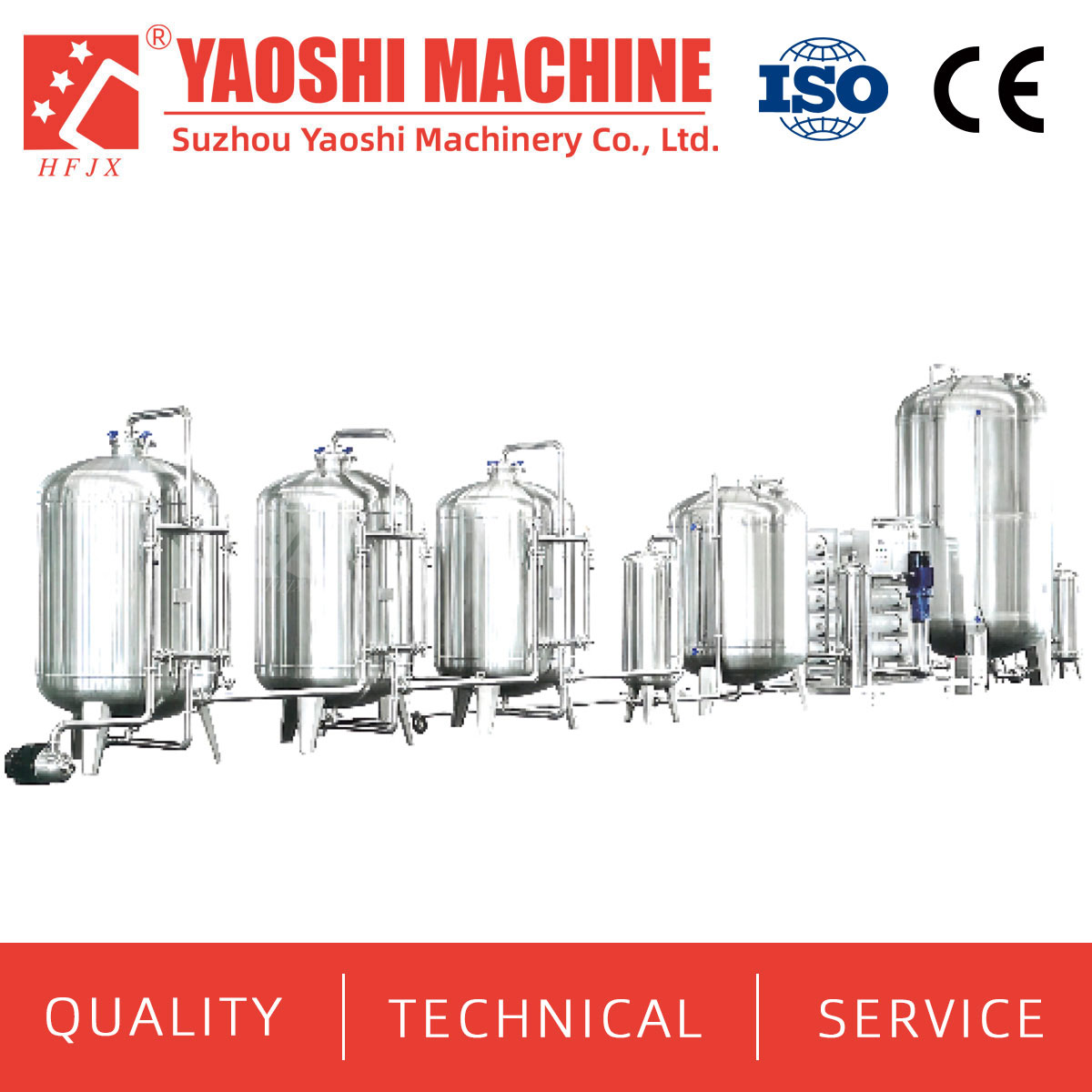
Treatment capacity should be based on source-water conditions and the complete production demand.
An automatic water filling machine cannot maintain output if empty-bottle supply is unstable. The project should define whether the plant will use inline PET blowing, ready-made bottles, an unscrambler or another feeding arrangement.
Confirm PET blow molding machine capacity for the selected bottle and preform rather than using a capacity associated with another design. Include molds, bottle transfer, compressed-air demand, cooling requirements and the buffer strategy between blowing and filling.
Confirm how bottles arrive, how they are stored and how they are introduced into the line. Manual feeding, bagged bottles, depalletized bottles and automatic unscrambling create different labor and floor-space requirements.
The quotation should state the condition and rate at which the filler expects to receive bottles. Otherwise, a bottle-supply limitation may be incorrectly treated as a filler performance problem.
Choose one reference bottle for the primary capacity guarantee and list the expected capacity basis for every additional bottle. The specification should include water type, bottle drawing, cap, neck finish, filling condition, rinsing requirement and closing method.
For a rinse-fill-cap configuration, confirm whether the stated BPH applies to the integrated machine and whether cap feeding, bottle transfer parts, discharge conveyor and change parts are included. Additional formats should be listed individually rather than described as “standard bottles.”
The supplier should distinguish continuous stable capacity from short-term maximum speed. If the automatic water filling machine can recover above the required line rate after a brief downstream stop, that recovery condition should also be defined.
The filler produces bottles, but downstream machines may be rated in labels, packs, cases, layers or pallets per hour. Confirm the stable capacity of the labeling machine and packaging equipment, then convert all capacities to a common production basis.
Required pack rate = good bottles per hour ÷ bottles per pack
Required pallet rate = completed packs per hour ÷ packs per pallet
Calculate every pack format separately. A six-bottle film bundle, a larger tray pack and a carton may create different grouping cycles, material-replenishment requirements and stable output on the same packaging machine.
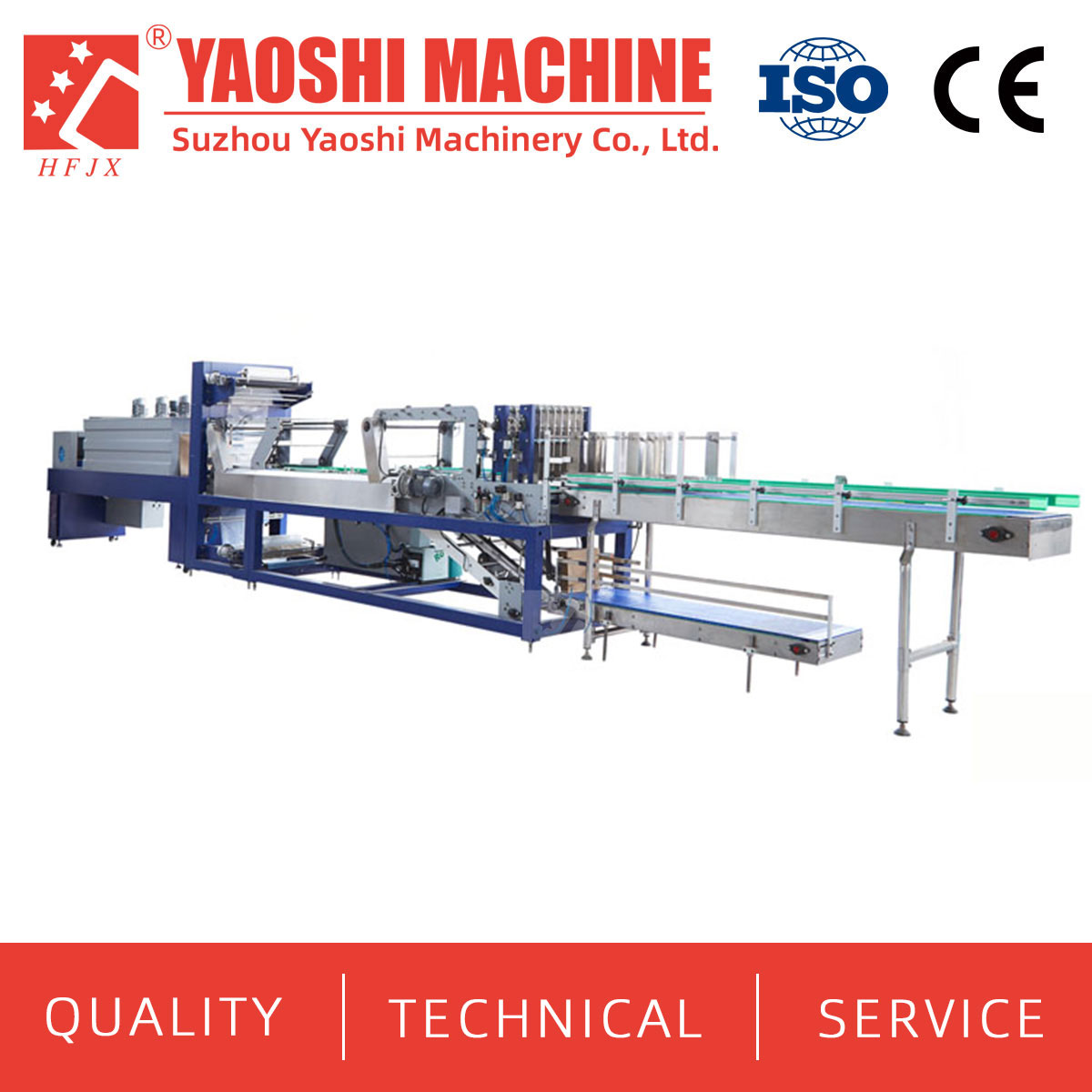
Secondary packaging capacity must be converted from bottles per hour into the required packs per hour.
| Downstream section | Capacity inputs | Typical planning question |
|---|---|---|
| Conveying and accumulation | Bottle size, transfer rate, usable container count and stop duration | How long can the filler continue during a short downstream stop? |
| Labeling | Bottle condition, label type, stable rate and replenishment method | Can the labeler recover after a reel or material interruption? |
| Coding and inspection | Required checks, reject method and bottle spacing | Does rejection disturb the downstream flow? |
| Secondary packaging | Bottles per pack, lanes, material and packs per hour | Which pack pattern creates the highest machine demand? |
| Palletizing or manual handling | Packs per layer, layers per pallet and pallet-change cycle | Can finished packs leave the packer without blocking it? |
A balanced line does not require identical catalogue speeds. Downstream equipment may need recovery capacity because label, film, carton or pallet handling creates short interruptions. The correct speed margin depends on stable machine performance, stop frequency, stop duration and usable accumulation.
Conveyor length alone does not define useful buffering. Convert the usable number of stored bottles or packs into time at the planned production rate:
Buffer time = usable accumulated quantity ÷ current flow rate
A buffer can absorb a temporary stop. It cannot correct a labeler or packer whose sustainable rate is below the incoming bottle rate. Where data is available, compare lost production during common stops with the downstream recovery rate and buffer capacity.
An operating plant has information that a greenfield project does not. Before replacing the filler or adding capacity, collect production data by SKU.
Actual stable filler speed
Good bottles or packs per shift
Blocked and starved time at the filler
Stops by labeler, packer and palletizer
Reject quantity and reason
Changeover and cleaning duration
Usable conveyor accumulation
If the filler is frequently blocked, installing a faster filler may not increase saleable output. The investment may need a downstream upgrade, additional accumulation or control changes. If the filler is frequently starved, review water or bottle supply before increasing filling capacity.
Give every supplier the same SKU and output table. Require a response for each format rather than accepting one headline BPH.
| Quotation field | Supplier response required |
|---|---|
| Reference bottle | Volume, dimensions, neck finish, cap and drawing revision |
| Capacity basis | Nominal, stable or guaranteed output and measurement point |
| Additional formats | Expected rate, change parts and changeover requirements |
| Upstream boundary | Water and bottle condition required at the filler |
| Downstream boundary | Included conveyors, labeling, packing and finished-product handling |
| Utilities | Required quality, pressure, temperature, peak demand and connection point |
| Acceptance | Test format, materials, duration, quality checks and output calculation |
A lower filler price may exclude cap feeding, change parts, conveyors or control integration included elsewhere. Normalize equipment and service scope before drawing a commercial conclusion.
The factory acceptance test should identify the bottle, cap, available test medium, run duration, output measurement and quality checks. If every commercial format cannot be tested at the supplier’s factory, state what will be verified later at site.
Site acceptance should confirm the water supply, empty-bottle feed, connected conveyors, downstream signals and stable good output at the agreed boundary. Record whether lost time results from the supplied equipment, buyer-provided materials, site utilities or equipment outside the supplier’s scope.
Requesting BPH without identifying the reference bottle
Using bottle volume while omitting height, diameter and neck finish
Treating nominal filler speed as saleable line output
Calculating demand from scheduled hours instead of effective production time
Using one average BPH for several bottle and pack formats
Ignoring bottle supply, cap feeding, labeling and packaging constraints
Applying a universal downstream speed margin without stop data
Comparing quotations with different line boundaries
Leaving the acceptance format and measurement point undefined
Daily, monthly and peak demand by SKU
Planned shifts and effective production time
Bottle drawings, samples and dimensional tolerances
Cap and neck-finish information
Target good-output BPH for every bottle
Water source and treatment scope
Inline blowing or purchased-bottle plan
Label and secondary-pack formats
Existing equipment for an expansion project
Factory layout, utilities and required project boundary
Required FAT, installation and site-acceptance scope
This information allows the supplier to select a bottled water filling machine against a defined production duty instead of responding with a generic model list.
No single output should be assumed across all formats. Bottle volume and geometry affect filling, transfer and downstream handling. Ask for a capacity basis for each approved bottle.
Not unless the contract defines that result. A nominal filler rating is different from stable connected-line output and good packaged output.
There is no universal percentage. Calculate the required recovery capacity from expected short stops, usable buffers, format-specific stable speeds and the incoming bottle rate.
Provide the reference bottle drawing, cap, target good-output BPH, production schedule and exact upstream and downstream scope.
State the expected demand, timing and formats. Then compare adding shifts, reserving expansion space and purchasing additional machine capacity rather than applying an unsupported allowance.
Yaos Machinery supplies water filling equipment and connected bottled-water line equipment. Before requesting a final configuration, prepare the bottle and cap files, demand by SKU, effective production hours, packaging formats, line boundary and available utilities. Ask the quotation to show the capacity basis for each bottle and the constraints used for the complete-line output.


+86-512-58530618

Wukesong Road, Sanxing Town, Zhangjiagang City, Jiangsu Province, China


