



- Product Description
- Specifications
- More Details
Product Description
The industrial RO water treatment system is designed for bottled purified water production and other applications that require controlled reduction of dissolved salts and impurities. Combining multi-stage pretreatment with reverse osmosis (RO) membrane filtration and optional post-treatment disinfection, the system provides a practical solution for processing different water sources according to their quality and intended use.
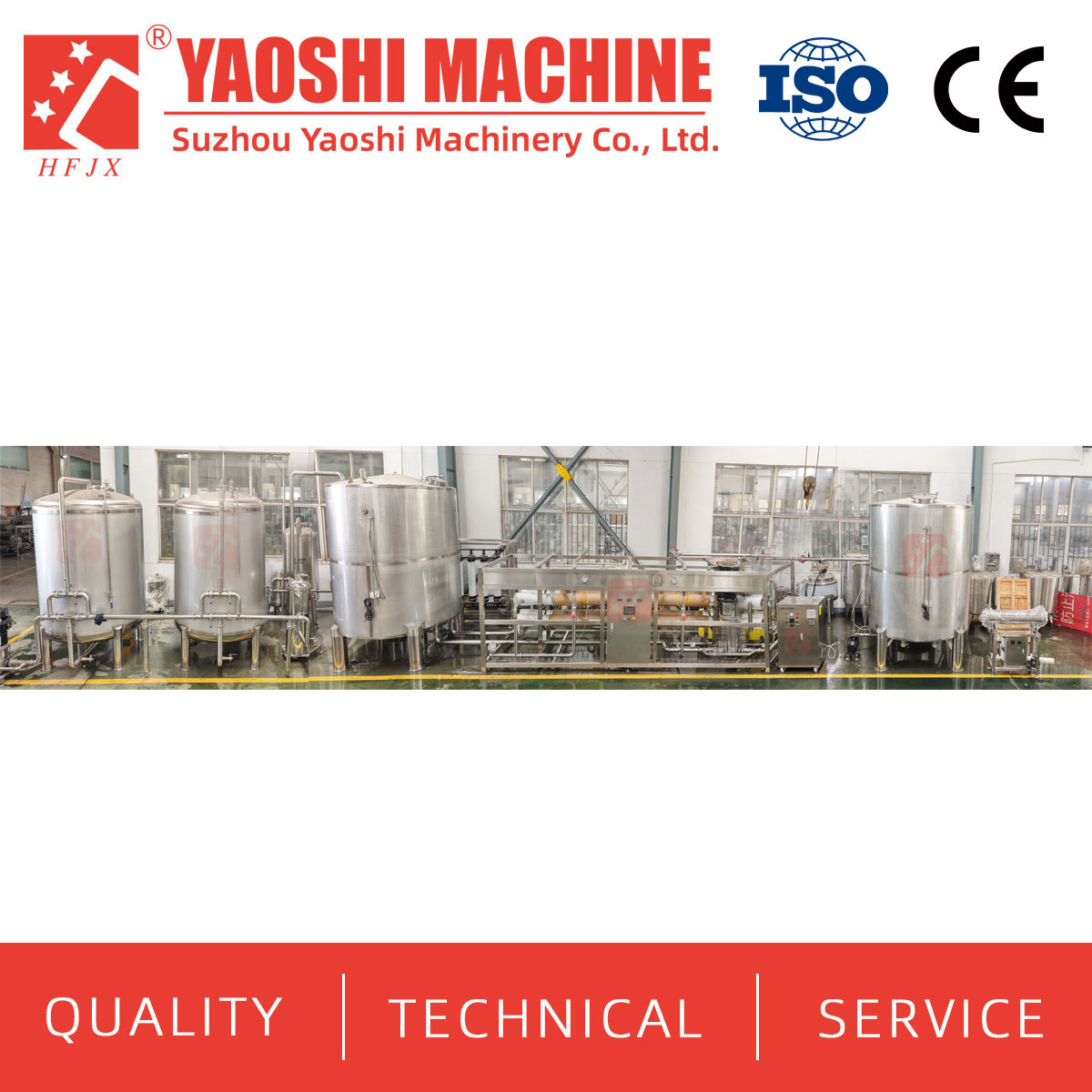
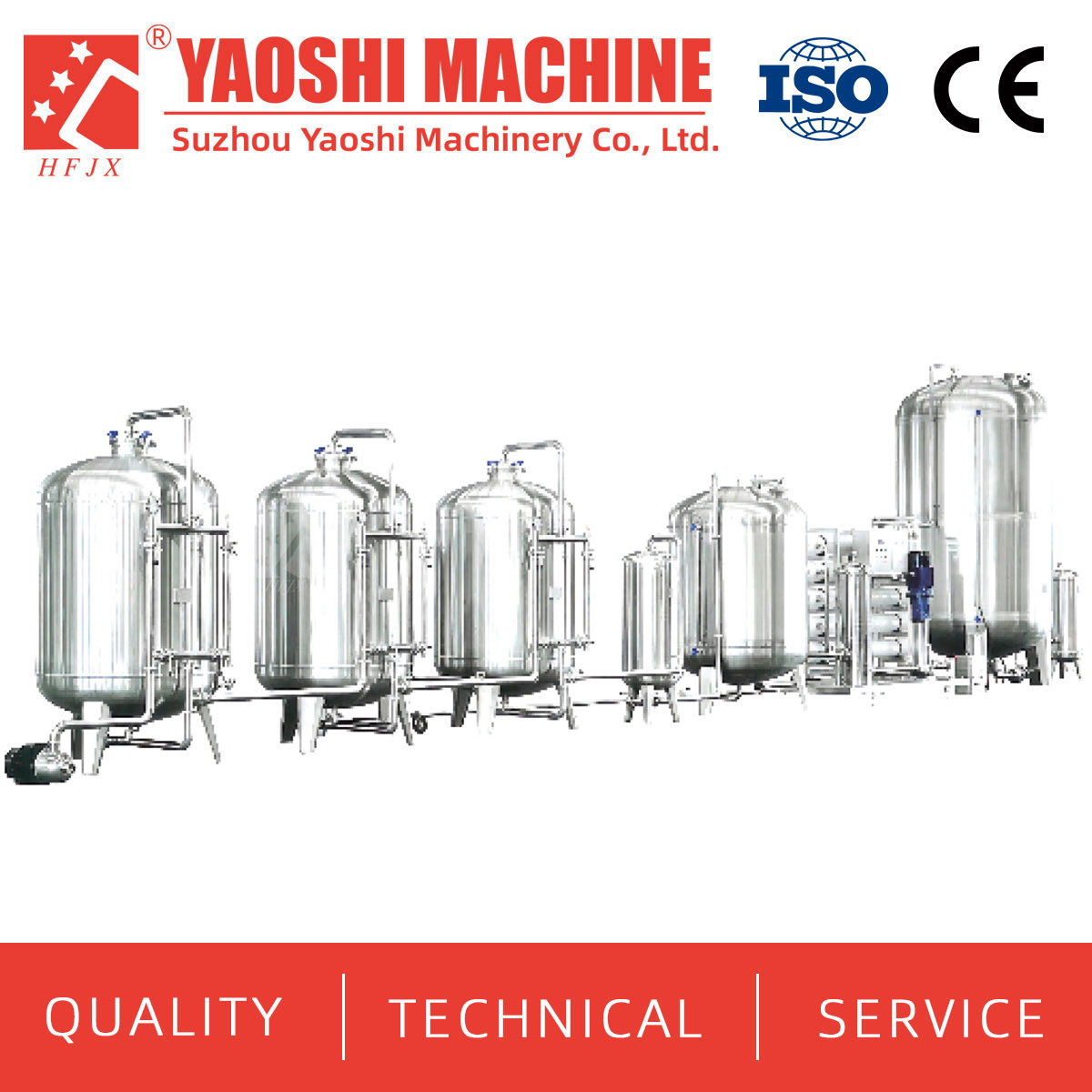
With a stated processing capacity of 0.5–150 tons per hour, this bottled water treatment system can be configured with quartz sand filters, activated carbon filters, water softeners, precision filters, an RO unit, UV sterilizers, ozone generators, and water storage tanks. The selected configuration depends on raw water analysis, required production capacity, and finished-water quality specifications.
Suitable for projects using spring water, groundwater, river water, or other approved water sources, the system can be integrated into a complete bottled water line to support continuous water treatment before filling and packaging.
Features
1. Multi-Stage Water Pretreatment
The water pretreatment system can combine multimedia filtration, activated carbon filtration, and water softening to address suspended solids, certain organic compounds, residual oxidants, and hardness. Appropriate pretreatment helps reduce the risk of fouling and scaling in downstream RO membranes.
2. Reverse Osmosis Membrane Filtration
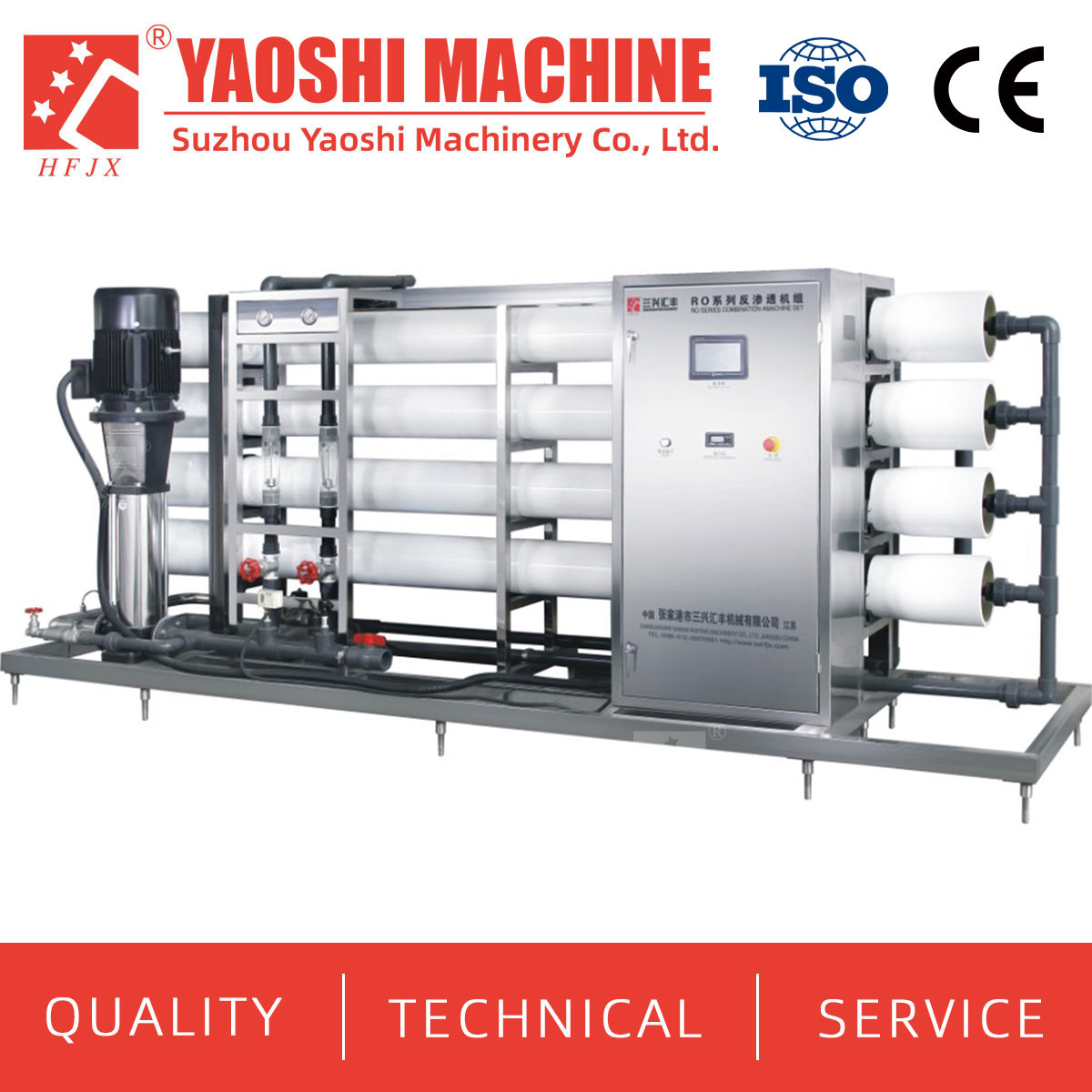
The RO water purification system uses pressure to drive water through a semipermeable membrane, reducing total dissolved solids (TDS) and selected dissolved contaminants. Actual removal performance depends on the source water, membrane specifications, operating conditions, and system design.
3. UV and Ozone Disinfection Options
The system can incorporate UV water sterilization and ozone disinfection as part of the overall water treatment process. These technologies can help control microorganisms when correctly selected and operated for the application. The final disinfection configuration depends on the required water quality and production process.
4. Integrated Treatment Equipment
The system brings together key treatment stages, including filtration, softening where required, RO membrane separation, and water storage. A chemical cleaning device can be included with the RO main unit to support membrane maintenance.
5. Flexible Processing Capacity
With a stated capacity range of 0.5–150 tons per hour, the equipment can be selected according to the required water output and bottling line demand. The actual rated capacity should be confirmed for the specific model and source-water conditions.
Specifications
Item | Description |
|---|---|
Product Type | Industrial RO Water Treatment System |
Main Application | Bottled purified water production |
Processing Capacity | 0.5–150 tons/hour |
Raw Water Sources | Spring water, groundwater, river water, or other suitable sources, subject to water analysis |
Pretreatment Equipment | Quartz sand filter, multimedia filter, activated carbon filter, and water softener as required |
Fine Filtration | Precision filter before the RO unit |
Main Treatment Unit | Reverse osmosis system with RO membranes |
Cleaning Equipment | Chemical cleaning device for the RO unit, as specified |
Disinfection Equipment | UV sterilizer and/or ozone generator, according to configuration |
Storage Equipment | Raw water tank and finished-water tank, as required |
Process Configuration | Selected according to raw water quality, required capacity, and target water quality |
Typical Treatment Process
The typical process flow is:
Raw Water Tank → Raw Water Pump → Multimedia Filter → Activated Carbon Filter → Water Softener (if required) → Precision Filter → RO Main Unit → UV/Ozone Disinfection (as configured) → Finished-Water Tank
The final process sequence may vary according to the water source and treatment requirements.
 Main equipment functions:
Quartz Sand / Multimedia Filter: Reduces suspended solids and turbidity to help protect downstream equipment.
Activated Carbon Filter: Helps reduce residual chlorine, certain organic compounds, color, and taste- or odor-related substances, depending on the feed water and filter media.
Sodium Ion Exchange Softener: Exchanges calcium and magnesium ions for sodium ions to reduce water hardness and help control scale formation in RO membranes.
Precision Filter: Captures remaining particles before water enters the RO unit. The filter rating should be selected according to the membrane and system design.
Reverse Osmosis Unit: Uses a semipermeable membrane to reduce dissolved salts and selected impurities in the feed water.
UV Sterilizer: Uses ultraviolet light to inactivate susceptible microorganisms without adding a chemical disinfectant.
Ozone Generator: Produces ozone for disinfection where required by the treatment design.
Water Storage Tanks: Provide raw-water storage and treated-water storage as required by the production process.
Applications
The industrial reverse osmosis water treatment system can be considered for the following applications, subject to water testing and process design.
1. Bottled Purified Water Production
Provides RO-based water treatment for commercial bottled purified water plants, with pretreatment and disinfection stages selected according to source-water quality and finished-water requirements.
2. Gallon Water Production Lines
Can be integrated with a gallon water solution where purified water is required before container filling.
3. Groundwater and Spring Water Treatment
Processes groundwater and spring water after evaluating hardness, turbidity, dissolved solids, organic matter, and other relevant parameters. Pretreatment requirements depend on the analysis results.
4. River Water Treatment
Can serve as part of a river-water treatment line. Additional sediment removal, clarification, or other pretreatment may be necessary if the incoming water contains high levels of suspended solids or organic matter.
5. Beverage and Food Processing Water
Can provide treated process water for suitable beverage and food production applications where RO treatment is compatible with the required water specification.
6. Mineral Water Projects Requiring Process Assessment
For bottled mineral water production, the treatment process must be selected with particular care. A full RO stage can reduce naturally occurring minerals, so conventional filtration, disinfection, or another suitable treatment route may be more appropriate when the natural mineral profile must be preserved.
FAQ
1. What Is the Processing Capacity of This RO Water Treatment System?
The listed processing capacity is 0.5–150 tons per hour across the product range. The actual output depends on the selected model, feed-water quality, operating conditions, and required finished-water specification.
2. What Types of Raw Water Can the System Treat?
The system can be designed for suitable groundwater, spring water, river water, and other source-water types. A water analysis is recommended before selecting the filtration stages, RO membrane configuration, and disinfection equipment.
3. Does Reverse Osmosis Remove Minerals from Water?
Yes. Reverse osmosis filtration reduces many dissolved salts and can also reduce naturally occurring minerals, including calcium and magnesium. If the final product must retain a defined mineral composition, the process should be designed around the applicable product requirements and water-quality standards.
4. Does the System Include UV and Ozone Sterilization?
The product configuration lists both UV sterilization and ozone equipment. The exact equipment combination and process sequence should be confirmed in the selected system specification to ensure that the treatment process meets the intended application.
5. Can This System Produce Ultrapure Water?
An RO unit can be part of a higher-purity water treatment process, but RO filtration alone does not automatically guarantee ultrapure water. Additional polishing stages and water-quality verification may be necessary to meet a specific ultrapure-water requirement.
6. How Should an RO Water Treatment System Be Maintained?
Routine maintenance generally includes monitoring inlet and outlet pressure, water flow, and treated-water conductivity; inspecting and replacing filter elements when required; maintaining pretreatment equipment; and cleaning or replacing RO membranes according to operating conditions and the manufacturer's instructions.
Request a Water Treatment Solution
Choosing the right RO water treatment system starts with understanding the source water and the required output. Provide your raw-water source, available water analysis, required processing capacity, target water quality, and daily operating hours to determine the appropriate filtration, membrane, and disinfection configuration.
Contact Yaoshi Machinery to discuss your bottled water treatment equipment requirements.

More Details
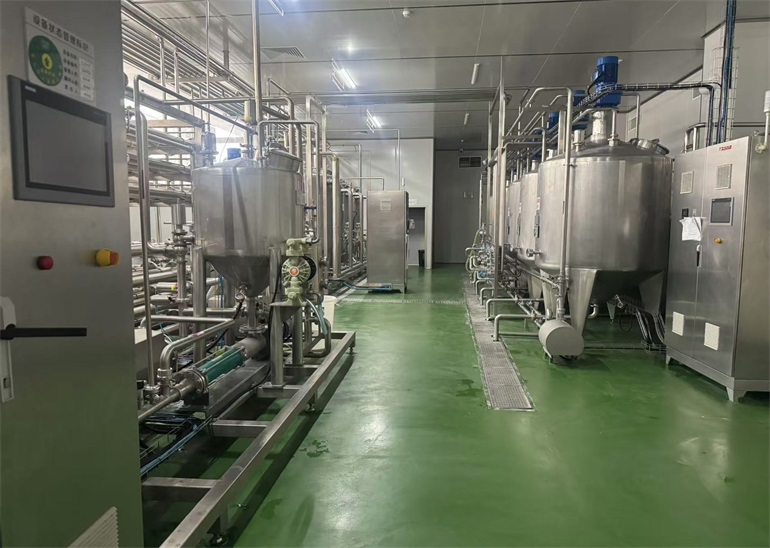
Water treatment
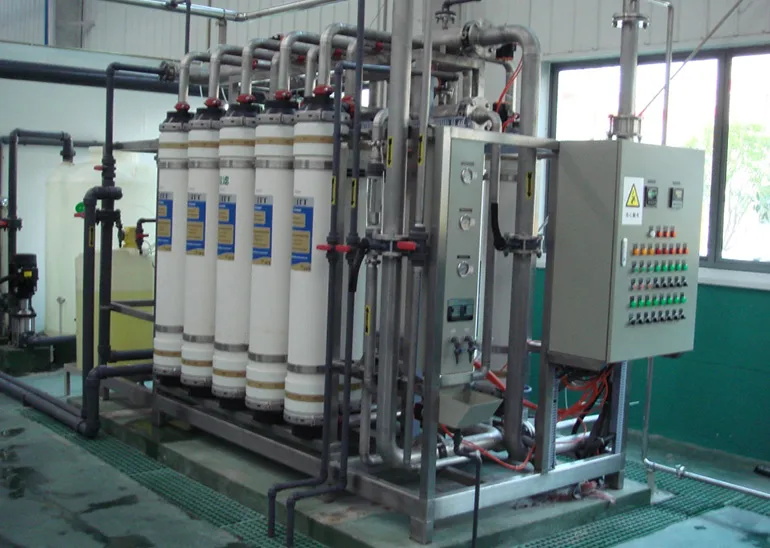
Mineral water filtration
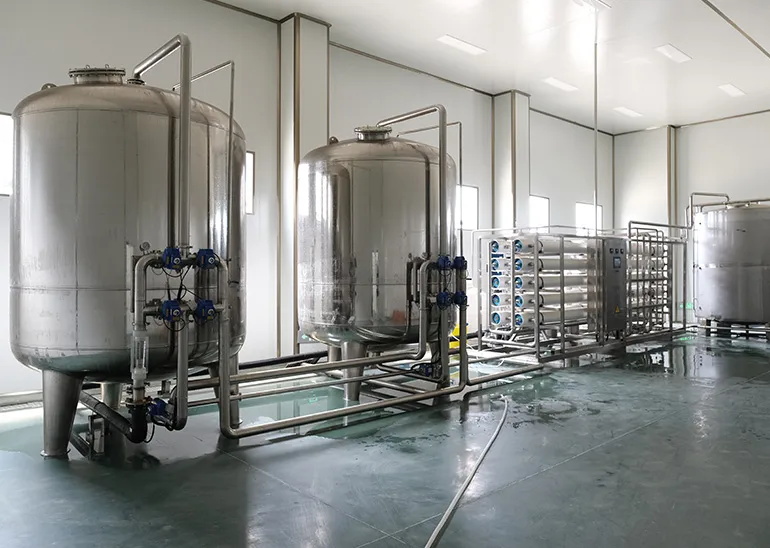
Pure water filtration
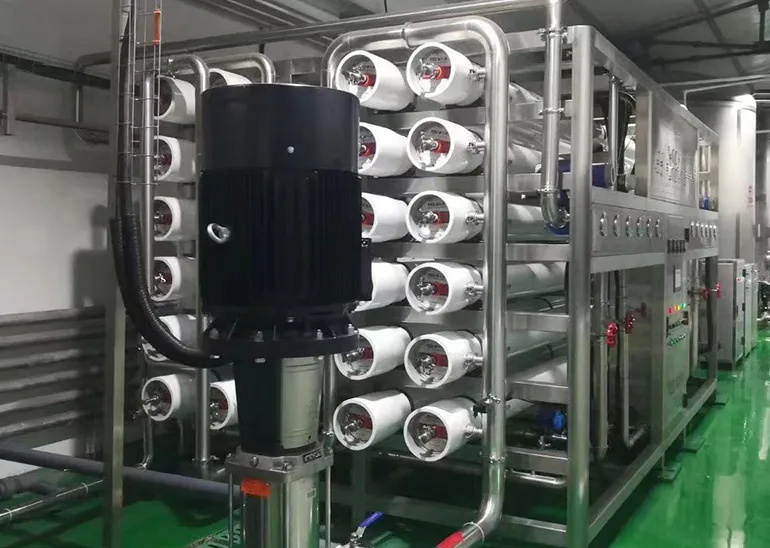
Pure water filtration
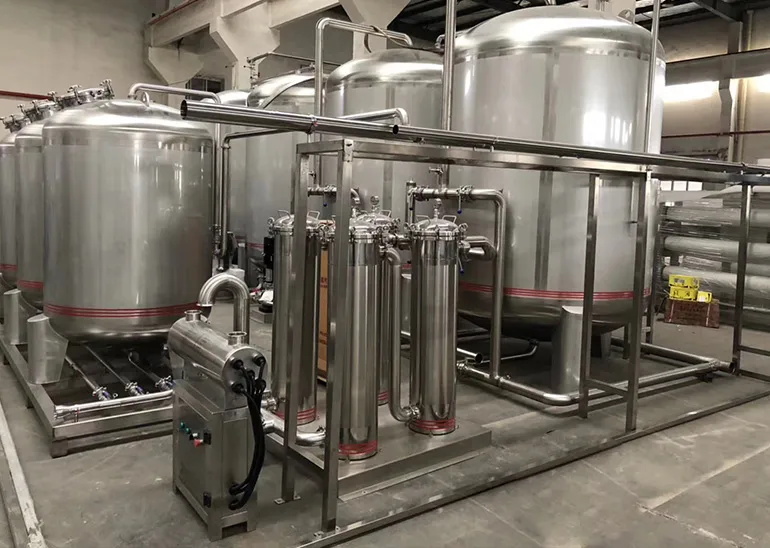
Drinking water filtration
-
Q: Are you a trading company or a manufacturer?

A: We are a direct-operated factory located in Zhangjiagang City so we can provide you with high-quality machines at a reasonable price, welcome to visit us.
-
Q: Are all your products produced by yourself or compressed by purchasing other products?
A: We have independent R&D and production teams focusing on manufacturing machines, and we have our own processing center, and all products are manufactured by our technical team.
-
Q: What is the capacity of your factory?
A: About 100+ production lines per year.
-
Q: How about spare parts?
A: We will send one year’s worth of easily damaged spare parts with the machine and ship them together. During the warranty period, we will provide spare parts at a cost including freight.
-
Q: How long does it take to install?
A: According to your machine order, we will send one or two engineers to your factory, which takes about 10 days to 25 days.
-
Q: How to install the machine after it arrives?
A: We will send engineers to your factory to install the machine and train your employees how to operate the machine.
-
Q: When can I get the machine after payment?
A: Usually the production time is about 30-60 days, depending on the type of machine you ordered. The shipping time is subject to your port of destination.
-
Q: If we buy your machine, what is your guarantee or warranty on the quality?
A: We provide you with high-quality machines with a 1-year warranty and lifetime technical support.


