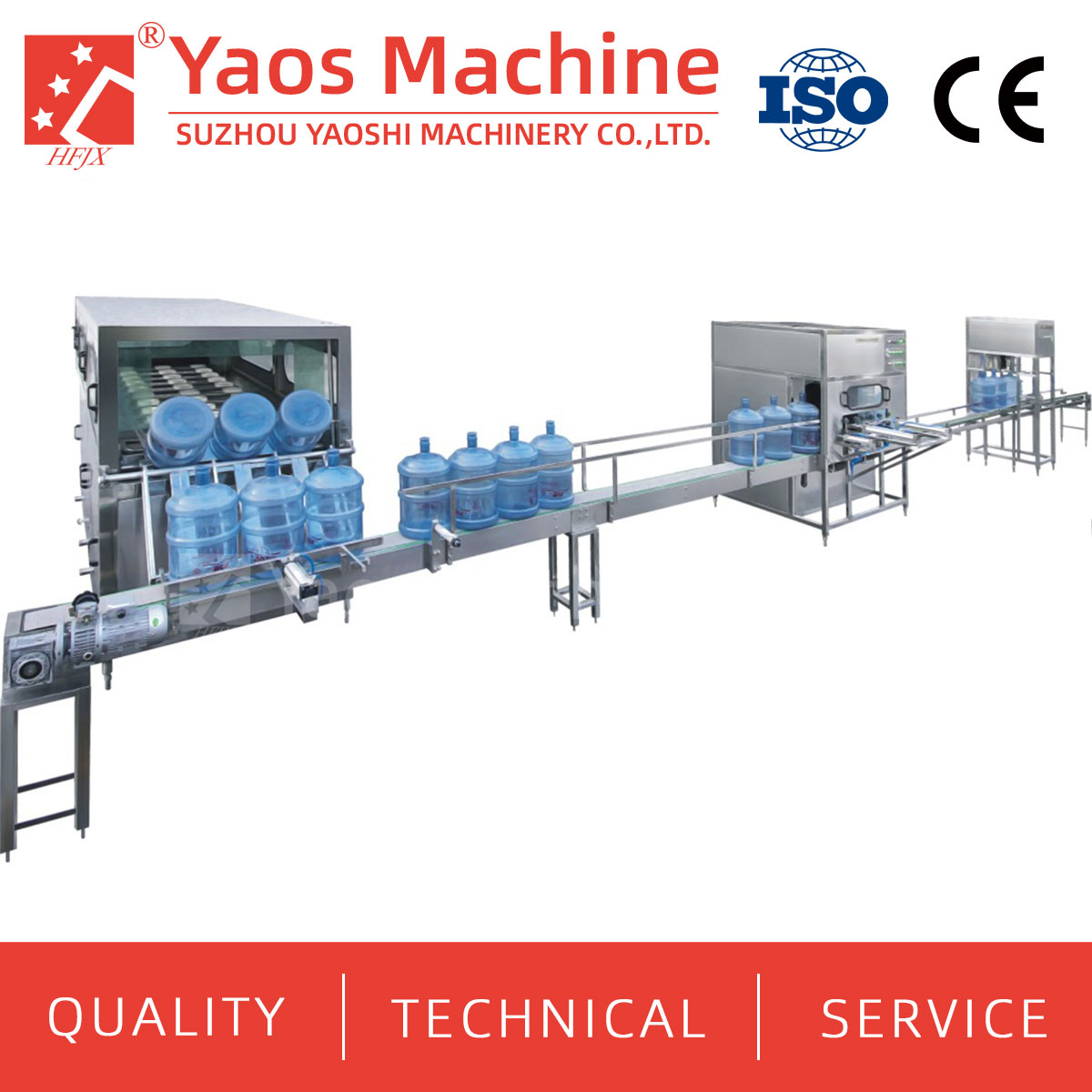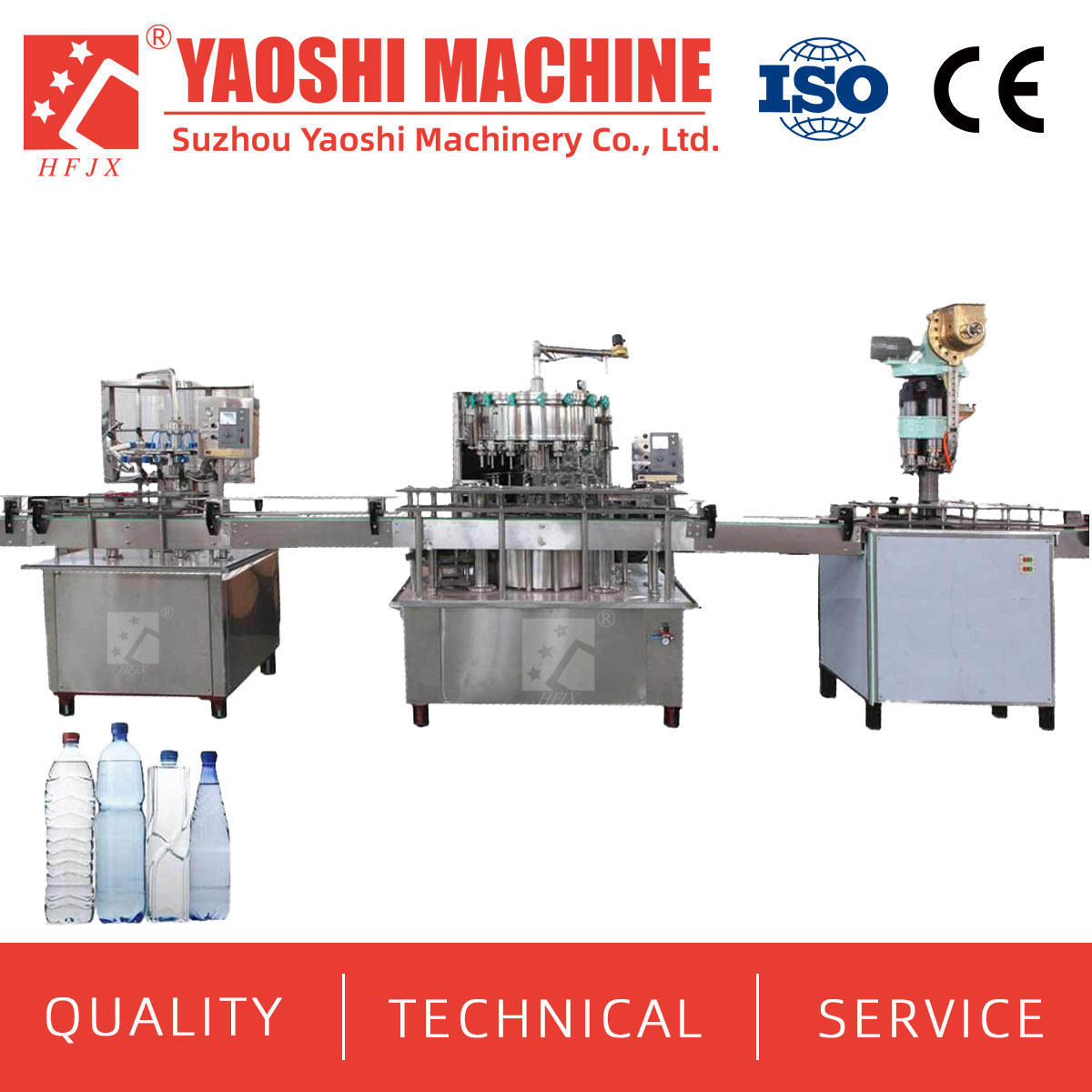
A water filling machine production line is an integrated system of machines that wash, fill, cap, label, and pack bottles in a continuous sequence. Understanding how each component functions and how they interconnect is essential for anyone planning a new bottling facility or upgrading an existing one.

Every water bottling line consists of several key machines arranged in a logical sequence. The order and specifications of these machines determine the final output quality and production efficiency of the line.
Empty bottles enter the line through a rinsing station that removes dust and loose particles. For PET bottles, a simple inverted rinse with filtered water or air is sufficient. Glass bottles require a hot caustic washer that sanitizes both the interior and exterior surfaces before filling begins.
The filler is the centerpiece of the line. Water filling machines use gravity, pressure, or volumetric methods depending on the product type. The number of filling heads determines line throughput directly. Standard configurations range from 12 to 80 heads for water applications. Fill valve materials must be compatible with the product pH range and CIP chemicals used on site.
After filling, bottles move to a capper that applies caps or closures. PET bottles typically use pre-threaded screw caps applied by a spindle capper. Glass bottles may use crown caps, screw caps, or ROPP aluminum closures depending on the product and market requirements. The capper must apply consistent torque to prevent leakage while avoiding cap thread damage.
A typical water bottling line follows these operational stages in sequence:
1. Bottle supply and unscrambling from bulk storage or blow-molder feed
2. Rinsing or washing with treated water at controlled temperature and pressure
3. Filling with precise volume control at a regulated flow rate
4. Capping with specified torque and cap orientation verification
5. Labeling using self-adhesive, sleeve, or glue-applied labelers
6. Coding with inkjet or laser printers for batch and date tracking
7. Packing into boxes, crates, or shrink-wrapped trays for transport
Modern water filling production lines use distributed control systems that coordinate each machine through a shared network. The PLC manages start and stop sequences, detects jams, and logs production data for shift analysis.
Each machine in the line communicates its status to the central controller through fieldbus protocols such as Profinet or EtherCAT. These industrial networks provide deterministic response times suitable for high-speed bottling applications with multiple coordinated axes.

A single HMI panel displays the status of every machine in the line. Operators can adjust fill volume, conveyor speed, and capping torque from one screen. The system logs production counts, rejects, and downtime events for shift reporting. Historical data can be exported for OEE calculation and continuous improvement programs.
Advanced lines support Ethernet-based remote access. Production managers can view real-time line performance from a mobile device or office computer. This reduces the need for on-site supervision during night shifts and weekend operations. Alarm notifications can be sent to maintenance staff via email or SMS when line faults occur.
Quality checks should be placed at critical points along the production line. A checkweigher after the filler verifies fill weight and rejects underfilled or overfilled bottles. A vision inspection station checks cap presence, label position, and print quality before the packing station. Metal detectors or X-ray inspection can be added for bottled water exported to markets with strict contaminant regulations.
In-line sensors monitor CIP fluid temperature, flow rate, and chemical concentration during sanitation cycles. This ensures that cleaning procedures meet food safety standards without requiring manual sampling. Automated CIP validation records are useful for third-party food safety audits.
Water filling production lines require a reliable supply of compressed air, treated water, and electrical power. Compressed air is used for pneumatic actuators, bottle handling, and valve control. A dedicated air compressor with dryers and filters should be sized for peak demand. Electrical load calculations must account for all motors, heaters, and control systems operating simultaneously.
Parameter | Small Capacity | Medium Capacity | High Capacity |
|---|---|---|---|
Line Speed | 2,000 to 4,000 BPH | 6,000 to 15,000 BPH | 18,000 to 36,000 BPH |
Filling Heads | 12 to 18 | 24 to 40 | 50 to 80 |
Automation Level | Semi-automatic | Semi to full | Full automatic |
Floor Space | 80 to 150 m2 | 200 to 400 m2 | 500 to 800 m2 |
Operators | 4 to 6 | 2 to 3 | 1 to 2 |
Investment Range | $40,000 to $100,000 | $120,000 to $400,000 | $500,000 to $1,500,000 |
What is the typical lead time for a complete water filling production line
Lead time depends on line complexity and customization. Standard lines with common specifications ship in 8 to 12 weeks. Custom lines with special bottle formats, multiple filling technologies, or integrated CIP systems may require 16 to 24 weeks from order to delivery.
Can a water filling line be expanded later for higher capacity
Most modular lines are designed for capacity expansion. You can add filling heads, install a faster capper, or extend the conveyor system to increase throughput. Plan the electrical panel capacity and floor space during initial installation to accommodate future expansions.
What maintenance is needed for a complete production line
Daily maintenance includes lubrication of conveyor chains and inspection of filling valve seals. Weekly tasks involve checking belt tension, cleaning sensors, and verifying capper torque settings. Major preventive maintenance is scheduled every 3,000 operating hours with full system inspection and replacement of wear parts.
A water filling machine production line consists of multiple interdependent machines that must be specified as a coordinated system. Matching the line speed, automation level, and quality control features to your production volume and container type is critical for long-term reliability and operating cost efficiency.
Start by defining your target output in bottles per hour, then select each machine component to match that speed specification. Investing in a properly integrated line with adequate CIP and automation features reduces downtime and maintenance cost over the equipment lifetime. A well-planned production line delivers consistent output quality and lower per-bottle cost from the first year of operation.
Request a Rapid Sourcing Quote from yaosmachine. Suzhou Yaoshi Machinery Co., Ltd. designs and manufactures complete water filling production lines with CE and ISO 9001 certification, supported by an 18,000 m2 factory and an experienced engineering team.Contact yaosmachine Engineering Team for Free Custom Design Support.


+86-512-58530618

Wukesong Road, Sanxing Town, Zhangjiagang City, Jiangsu Province, China