Selecting between automatic and semi-automatic water filling machines affects production throughput, labor cost, and initial investment. Understanding the operational differences helps water bottling businesses match the right machine type to their production scale and budget constraints.

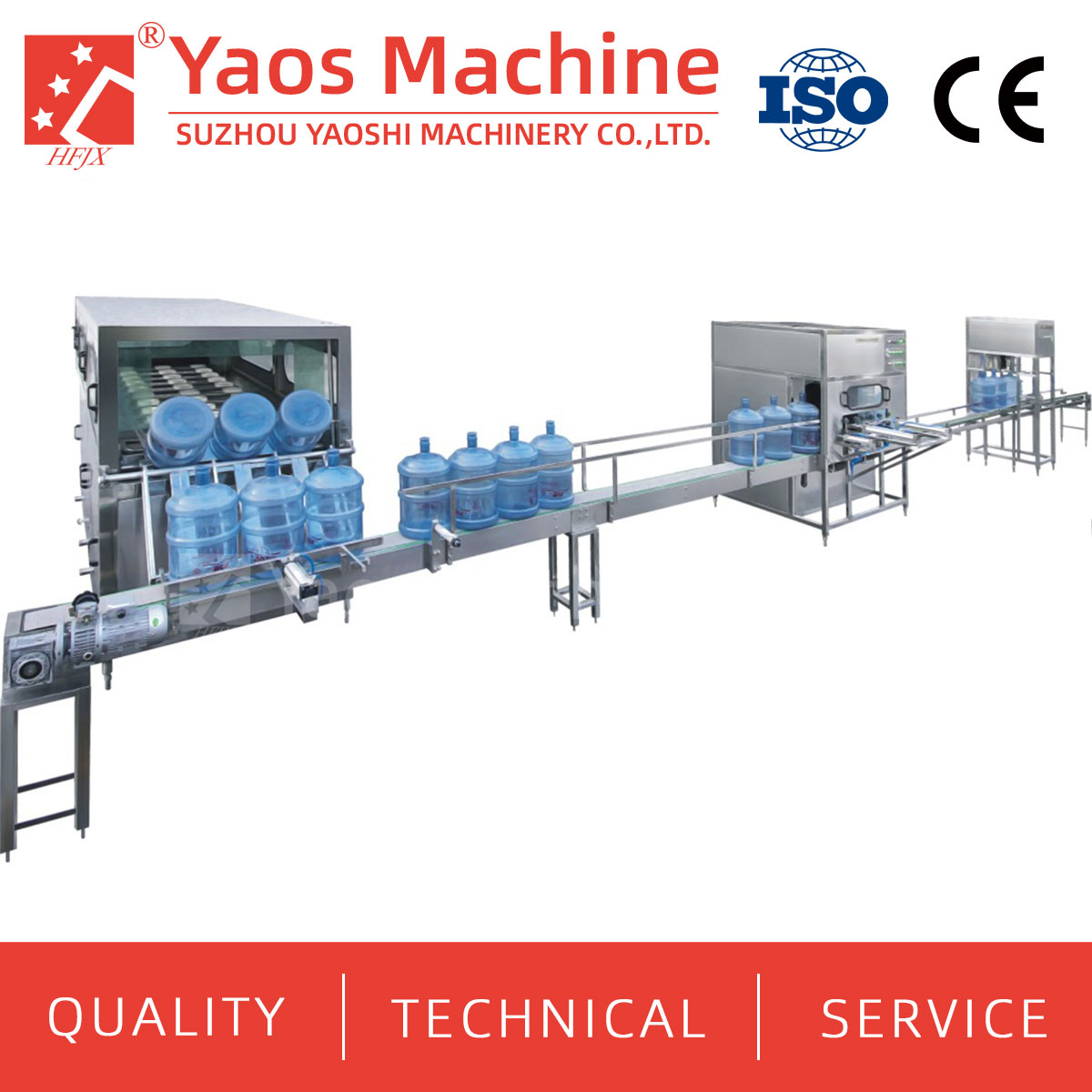
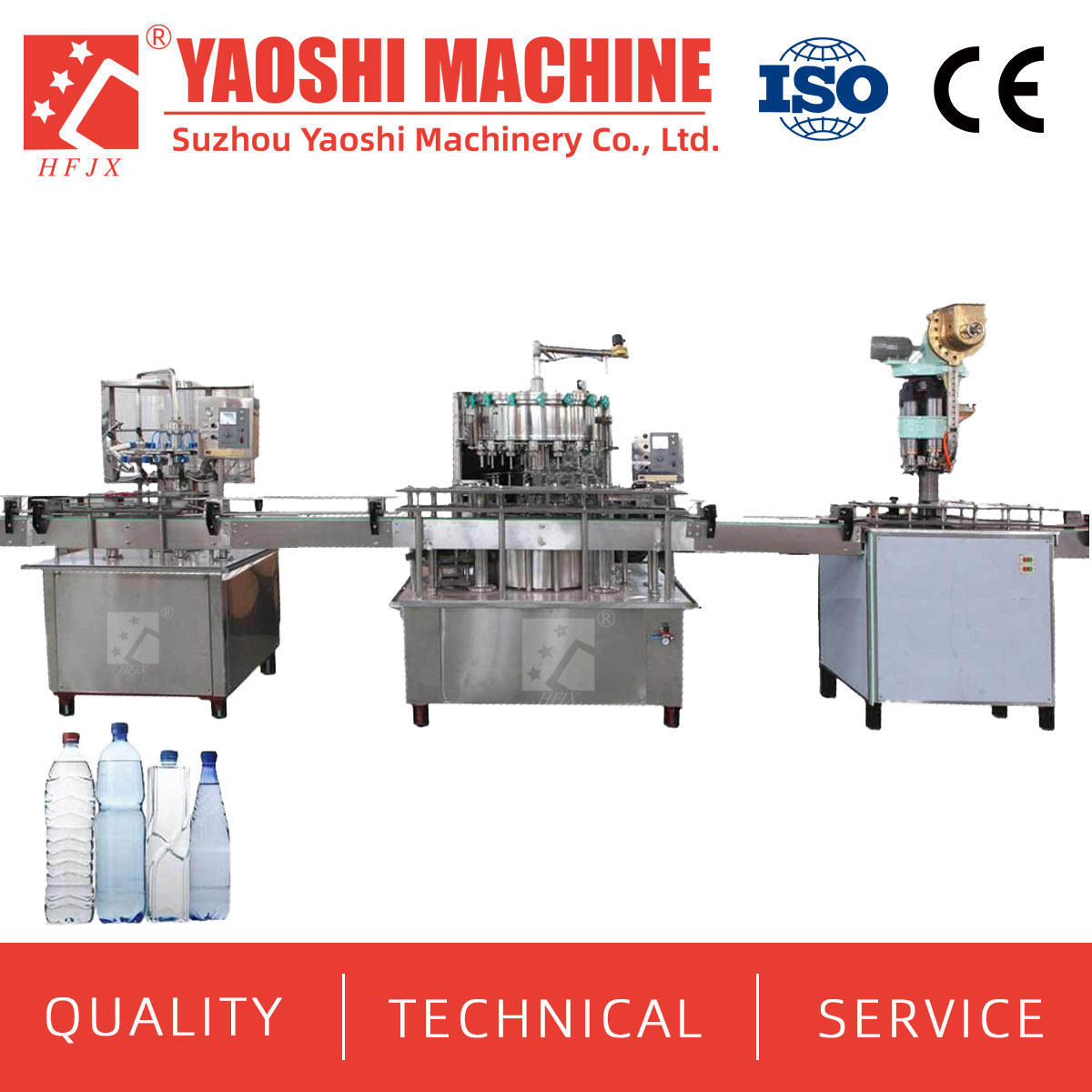
Automatic water filling machines operate with minimal human intervention across the entire production cycle. Bottles are fed, rinsed, filled, capped, and discharged through synchronized mechanical systems controlled by a programmable logic controller.
Automatic lines achieve 4,000 to 36,000 bottles per hour depending on the number of filling heads and bottle size. The PLC manages conveyor speed, fill time, and capping torque to maintain consistent output across long production runs. This throughput supports regional and national distribution networks.
One operator can monitor an entire automatic line from a central HMI panel. Additional staff are needed only for material replenishment and quality sampling. A typical automatic line reduces direct labor by 60 to 80 percent compared to semi-automatic equivalents of similar fill accuracy.
Modern automatic machines include automatic bottle rejection for underfills, CIP cycle scheduling, remote monitoring via Ethernet, and recipe storage for multiple SKUs using the PLC memory bank. These features reduce the need for operator decisions during normal production and improve quality traceability. Data logging capabilities also support compliance with food safety audit requirements.

Automatic machines integrate checkweighers, fill-level sensors, and vision inspection cameras that verify each bottle before it reaches the capping station. Semi-automatic lines rely on operator visual inspection and periodic weight checks. The automated approach reduces the risk of underfill complaints in retail channels and provides documented quality records for each production batch.
Semi-automatic machines require manual loading and unloading of bottles at one or more stations. The operator positions bottles under filling nozzles, initiates the fill cycle, and transfers filled bottles to the capping station manually.
Semi-automatic lines typically handle 500 to 2,000 bottles per hour. They are ideal for startups, small spring water brands, and businesses that produce multiple SKUs in short batches. The lower throughput matches the natural pace of manual bottle handling at the line.
Format changes on semi-automatic machines take 10 to 20 minutes and require no special tooling or change parts. This makes them practical for producers who run different bottle sizes or label designs within a single shift without extended downtime.
Semi-automatic machines have fewer moving parts and no servo drives. Local mechanics can service them without PLC programming knowledge. Spare parts are widely available and replacement costs are significantly lower than equivalent automated components. This keeps the total cost of ownership predictable for small-batch producers who operate fewer than 100,000 bottles per month.
Automatic machines cost three to five times more than semi-automatic models of similar fill accuracy. A basic semi-automatic filler starts at approximately $8,000, while entry-level automatic lines begin around $30,000. The price gap narrows when conveyors and accumulation tables are included.
Automatic machines contain more moving parts, sensors, and pneumatic components. Maintenance requires trained technicians familiar with PLC programming and servo drive calibration. Semi-automatic machines use simpler linkages that local mechanics can service without specialized training programs.
The production capacity gap is the most significant differentiator. An automatic line running two shifts can produce over 1.5 million bottles per month, while a semi-automatic line producing the same volume would require six or more operators per shift. This labor cost difference drives most upgrade decisions as businesses scale.
Production volume is the primary decision factor. Businesses expecting steady growth above 500,000 bottles per year should invest in automatic equipment from the start to avoid buying twice. Seasonal producers with peak demand periods may benefit from semi-automatic machines that can be operated in multiple shifts without high automation depreciation costs.
Floor space is another consideration. Automatic lines require more linear space for conveyors and accumulation tables. A typical automatic line with rinser, filler, capper, and labeler occupies 25 to 40 linear meters. Semi-automatic layouts fit in 10 to 15 meters. Facilities with limited footprint may find semi-automatic configurations more practical for their layout.
Parameter | Automatic | Semi-Automatic |
|---|---|---|
Throughput Range | 4,000 to 36,000 BPH | 500 to 2,000 BPH |
Operators Per Shift | 1 to 2 | 3 to 6 |
Initial Investment | $30,000 to $300,000 plus | $8,000 to $25,000 |
Changeover Time | 15 to 30 minutes | 10 to 20 minutes |
Technician Training | PLC and servo knowledge | Basic mechanical skills |
Best Application | High volume production | Startups and small batches |
Can a semi-automatic machine be upgraded to full automation later
Semi-automatic machines are built with manual-load frames and lack the servo drives, PLC I/O capacity, and conveyor synchronization required for automation. Replacing the machine is almost always more economical than attempting an upgrade. Plan your automation level based on a three-year production volume forecast before purchasing.
Which machine type has lower ownership cost over five years
Automatic machines have higher upfront cost but lower per-bottle labor expense. For annual production above 500,000 bottles, automatic lines almost always deliver lower total cost of ownership. Semi-automatic machines remain more cost-effective for volumes under 200,000 bottles per year when labor costs are moderate.
Is fill accuracy better on automatic or semi-automatic machines
Both machine types achieve fill accuracy within plus or minus one percent when properly calibrated and maintained. Automatic machines maintain consistency across longer runs because the PLC compensates for temperature and pressure drift during the shift. Semi-automatic accuracy depends more on operator attentiveness and fatigue.
Choosing between automatic and semi-automatic water filling machines requires a clear assessment of your production volume, labor cost structure, available investment capital, and floor space requirements. Automatic lines suit high-volume operations that prioritize throughput and per-bottle cost efficiency over the long term.
Semi-automatic machines work well for startups and small-batch producers who need lower upfront cost and greater format flexibility in daily production schedules. Evaluate your expected growth trajectory before making a final decision to avoid replacing equipment within two years. Both machine types have proven track records in the bottled water industry when matched to the correct production context.
Request a Rapid Sourcing Quote from yaosmachine. Suzhou Yaoshi Machinery Co., Ltd. supplies both automatic and semi-automatic water filling systems with CE and ISO 9001 certification and an 18,000 m2 manufacturing facility for turnkey project support worldwide.Contact yaosmachine Engineering Team for Free Custom Design Support.


+86-512-58530618

Wukesong Road, Sanxing Town, Zhangjiagang City, Jiangsu Province, China