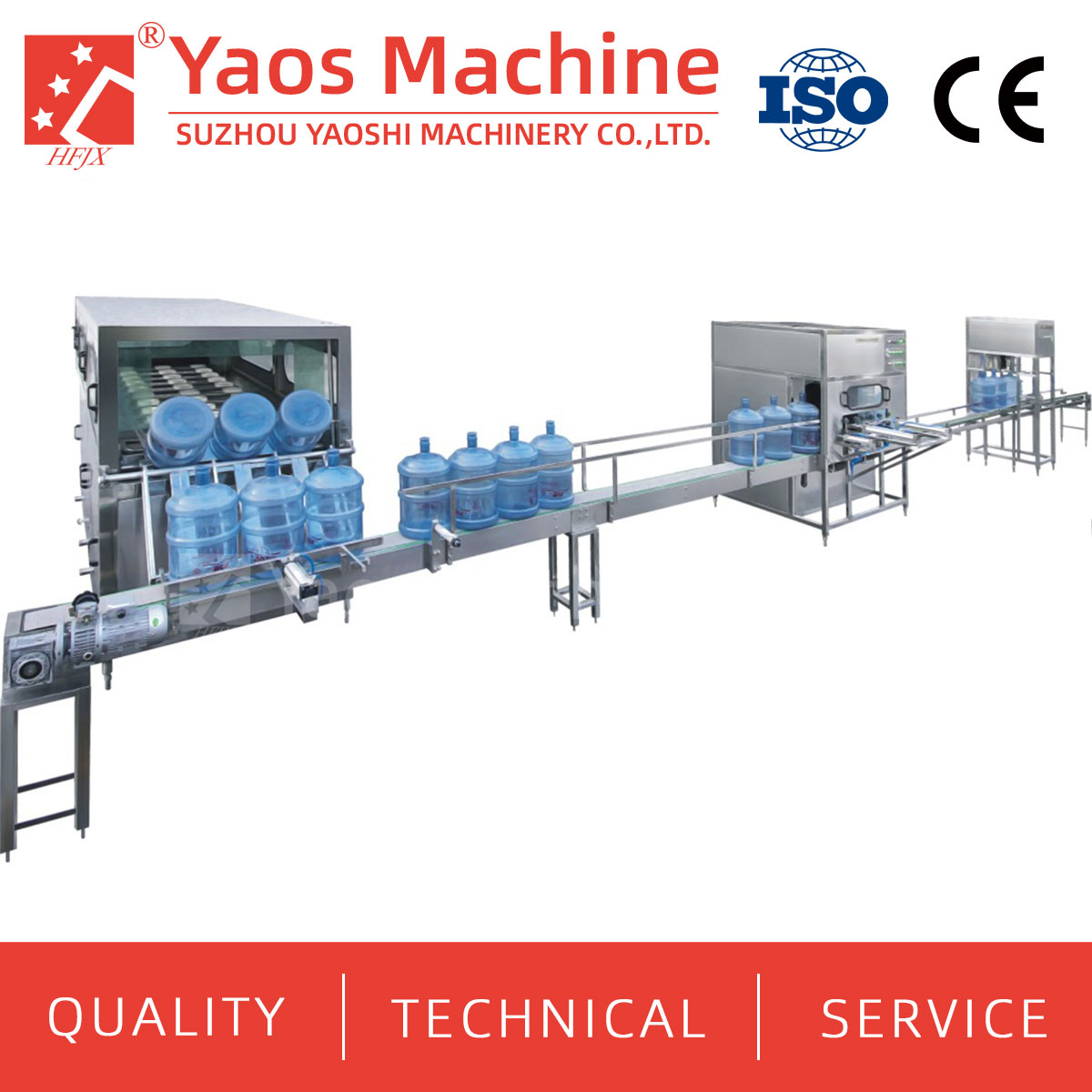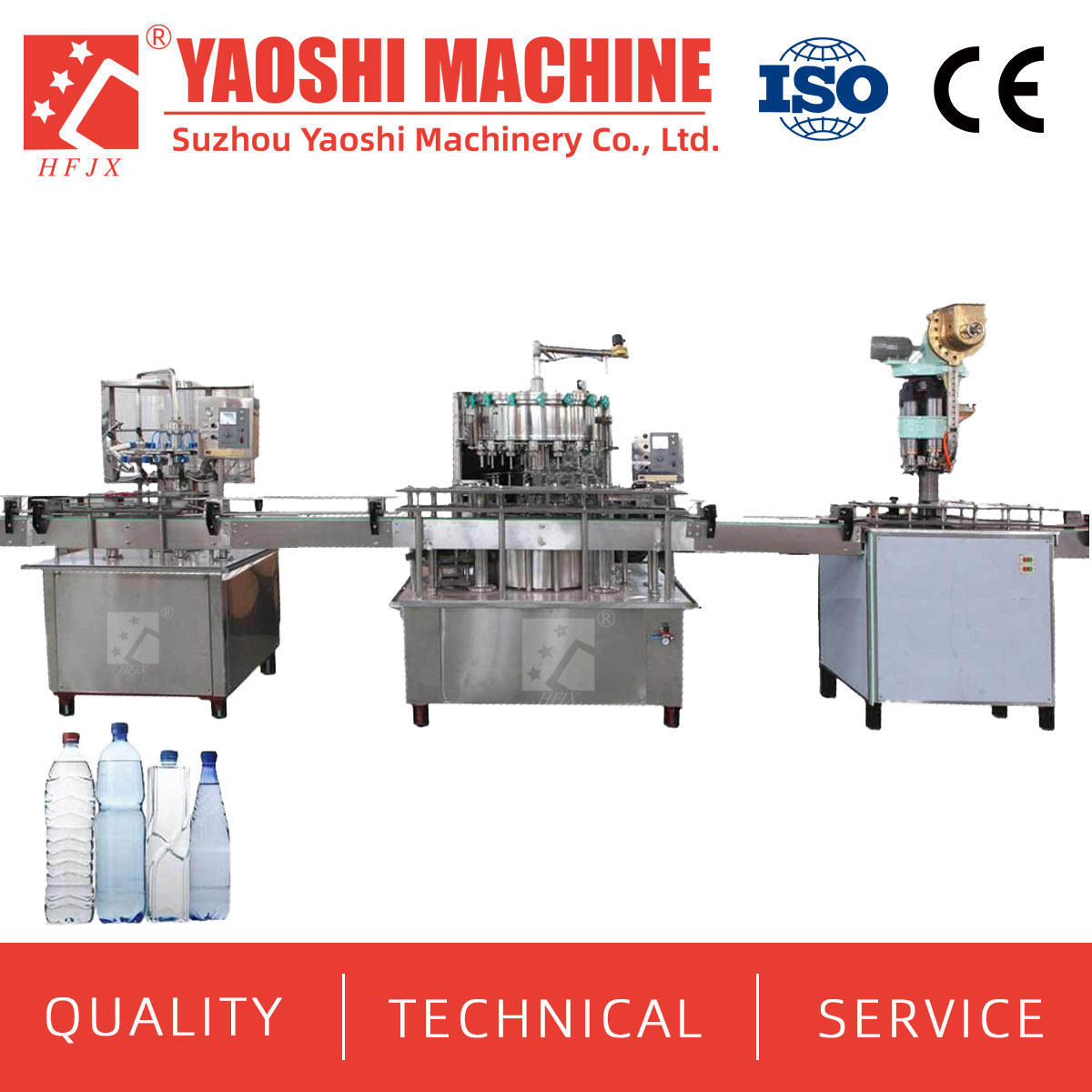
Automatic water filling machines achieve high throughput only when every subsystem operates within its design parameters. Efficiency losses come from mechanical wear, process parameter drift, and operator inconsistency. This article breaks down the practical methods to recover and sustain filling line efficiency above 90 percent.

Efficiency improvement starts with accurate measurement. Without baseline data, no intervention can be properly evaluated.
The standard metric for filling lines is Overall Equipment Effectiveness (OEE). It combines availability, performance, and quality into a single percentage. Availability measures actual operating time against planned production time. Performance compares actual bottle output to the rated machine speed. Quality tracks the percentage of bottles passing first-time inspection.
A typical water filling line without optimization runs at 65 to 75 percent OEE. Top-performing lines sustain 85 to 92 percent. The gap between these values represents the improvement opportunity.
Changeover between bottle sizes or product types is the largest source of planned downtime. Every minute saved here adds directly to available production time.
Prepare all change parts before the line stops. Having starwheels, guide rails, and cap chutes ready at the machine reduces changeover time by 30 to 40 percent.
Use quick-release clamps on all adjustable guide rails. Tool-less clamps cut adjustment time from 5 minutes to under 1 minute per rail.
Mark reference positions on the machine frame for each bottle size. Operators can then move components to marked positions without trial and error.
Standardize the changeover procedure into a written checklist. Teams following a documented sequence complete changeovers 50 percent faster than those working from memory.
Changeover time on well-organized lines drops from 45 minutes to under 15 minutes for a complete format change.

Running the filler at maximum rated speed does not always yield the highest output. The optimal speed balances fill quality with throughput.
Determine the actual maximum speed at which fill volume stays within ±2 mL tolerance. Run a speed ramp test starting at 70 percent of rated speed and increasing by 5 percent increments.
Record the reject rate at each speed level. The optimal speed is the highest value before reject rate exceeds 1 percent.
Set the filler operating speed 5 percent below that threshold. This safety margin allows for normal variation in bottle quality and product temperature.
Monitor the speed setting monthly. As valve condition changes, the optimal speed may shift downward.
The filler cannot run efficiently if bottles arrive irregularly from the blow molder or depalletizer.
Install a bottle accumulation table between the supply equipment and the filler. A buffer of 500 to 1000 bottles absorbs short interruptions in upstream supply. The accumulation table lets the filler continue running during brief stops upstream.
Match the blow molder output to filler demand within 5 percent. Overproduction fills the accumulation table and activates the reject conveyor. Underproduction starves the filler and forces speed reduction.
Check the bottle quality at the infeed every hour. Deformed or damaged bottles cause jams at the starwheel entry. Removing defective bottles before they reach the filler prevents unplanned stops.
Micro-stops lasting 10 to 30 seconds are the most damaging efficiency losses because they often go unrecorded.
Set sensor response time to the longest acceptable delay for each application. Fast response times cause false triggers from bottle vibration.
Install separate sensors for bottle presence and bottle position. A single sensor trying to do both tasks is prone to false negatives.
Use background-suppression photoelectric sensors on the infeed conveyor. These sensors ignore shiny bottle surfaces and detect only the bottle body.
Clean all sensor lenses once per shift and document the cleaning schedule. Operators skip cleaning when it is not formally assigned.
Consistent operator action is a major factor in sustaining high efficiency. Without written procedures, each operator develops personal habits that may or may not align with optimal operation.
Written SOPs for start-up, normal operation, and shutdown sequences reduce variation between shifts. Each SOP should include a checklist format with time targets for every task. Operators who follow documented procedures achieve 8 to 15 percent higher efficiency than those who rely on training memory alone.
Include a troubleshooting reference card at each machine station. The card lists the five most common alarms, their likely causes, and the correct reset sequence. Quick reference materials reduce micro-stop duration from 45 seconds to under 15 seconds per event. This reduction alone can recover 30 to 60 minutes of production time per shift depending on stop frequency.
Schedule a 10-minute shift handover at the machine. The outgoing operator walks through current conditions, recent faults, and pending maintenance items. This practice prevents repeat faults caused by unreported issues.
Does running the filler at lower speed improve overall efficiency?
Running 10 to 15 percent below rated speed reduces reject rate and micro-stop frequency. The net effect is often higher OEE despite lower instantaneous throughput. Each line must be tested to find its OEE peak.
What is the fastest way to identify efficiency losses on a filling line?
A two-hour observation session during normal production reveals the most common losses. Stand at the filler exit and record every stop with its duration and cause. Pattern recognition from this data points to the highest-impact corrective action.
How often should efficiency data be reviewed?
Daily review of OEE components catches developing problems early. Weekly analysis with the maintenance team identifies systemic issues. Monthly reviews set targets for the next period.
Can operator training measurably improve line efficiency?
Operators who understand OEE concepts and can diagnose basic faults maintain 5 to 10 percent higher efficiency than those who only follow basic instructions. Training sessions focused on sensor cleaning, changeover procedure, and fault identification deliver the best return.
What role does preventive maintenance play in efficiency improvement?
Preventive maintenance sustains the efficiency gains achieved through optimization. A machine that runs at 88 percent OEE after tuning will drift back to 75 percent within three months without consistent maintenance.
Improving automatic water filling machine efficiency requires systematic measurement of baseline performance, reduction of changeover time, optimization of filler speed, and elimination of micro-stops. Each percentage point of OEE gained translates into measurable production volume increase at no additional capital cost.
For plant managers looking to upgrade their filling line performance, Suzhou Yaoshi Machinery Co., Ltd., under its brand hfjx machine, supplies CE-certified automatic fillers designed with quick-change tooling and integrated OEE monitoring interfaces. The company's ISO 9001 certified factory in Zhangjiagang supports custom configuration for speed and format flexibility.


+86-512-58530618

Wukesong Road, Sanxing Town, Zhangjiagang City, Jiangsu Province, China