A buyer can identify a three-in-one filler and still have an incomplete equipment specification. The machine name does not state the juice formula, preservation route, accepted bottle and cap, or the conditions at the product inlet. Selecting a model from BPH alone leaves those decisions unresolved.
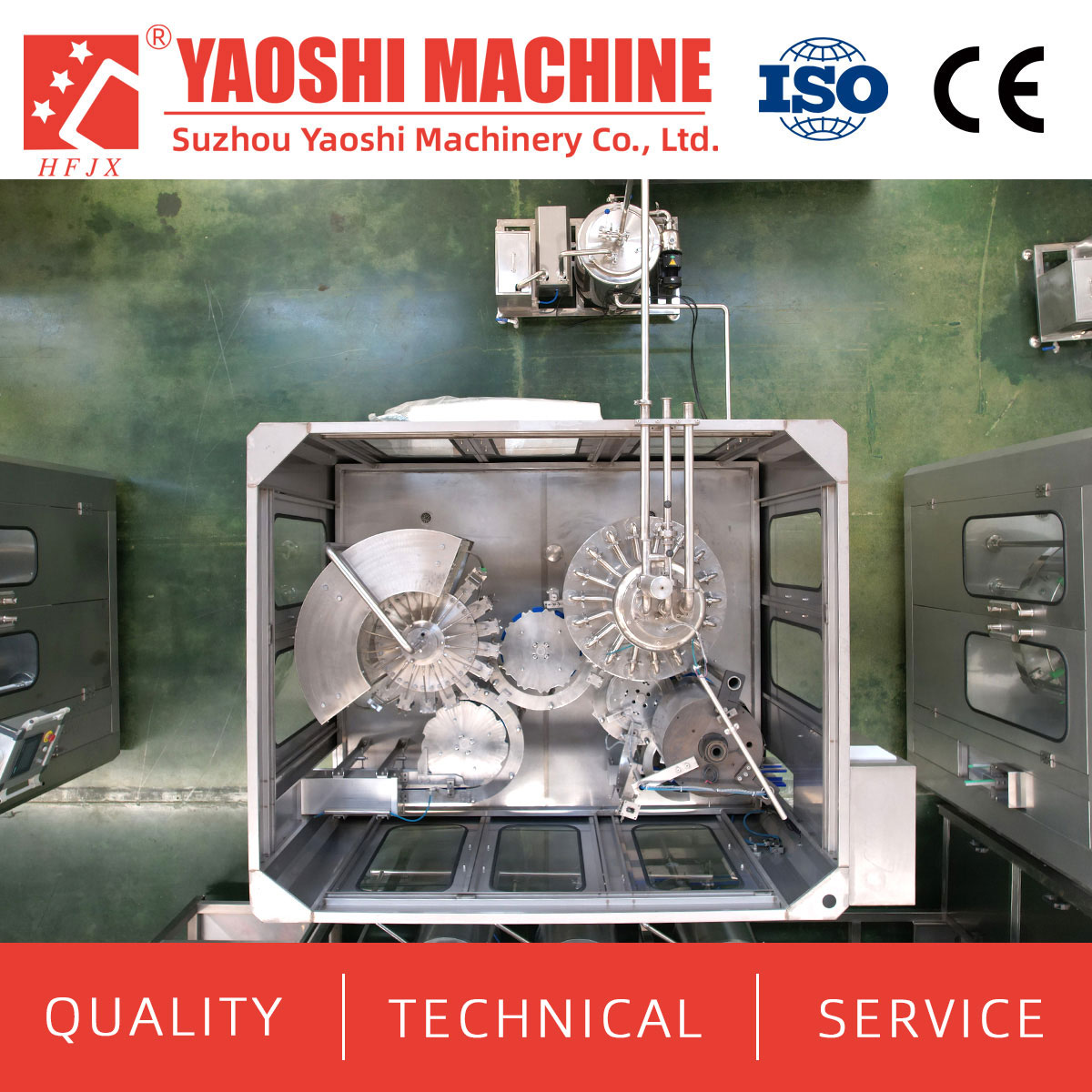
A 3 in 1 juice filling machine normally combines bottle rinsing, juice filling and capping. Those three operations define its central role in the line. Before choosing a model, provide a product-and-package matrix and ask the supplier to confirm how each operation is configured, which supporting functions are supplied, and what remains outside the main machine.
Yaoshi's hot-fill product pages describe integrated rinsing, filling and capping equipment. The exact treatment, filling configuration and closure system must match the approved recipe and package. A quotation should describe these functions individually rather than relying on the three-in-one label.
| Operation | Input the Buyer Must Define | Supplier Confirmation | Related Scope to Check |
|---|---|---|---|
| Rinsing | Bottle source, material, dimensions and required package preparation | Approved rinse method, medium, connections and drainage | Empty-bottle supply, media preparation and any additional package treatment |
| Filling | Juice properties, process, fill quantity and inlet conditions | Filling configuration, product limits, controls and output basis | Preparation, treatment, buffer, product transfer and return route |
| Capping | Cap drawing, seal design and bottle neck finish | Closure compatibility, feeding scope and acceptance checks | Cap supply, any required treatment and downstream bottle handling |
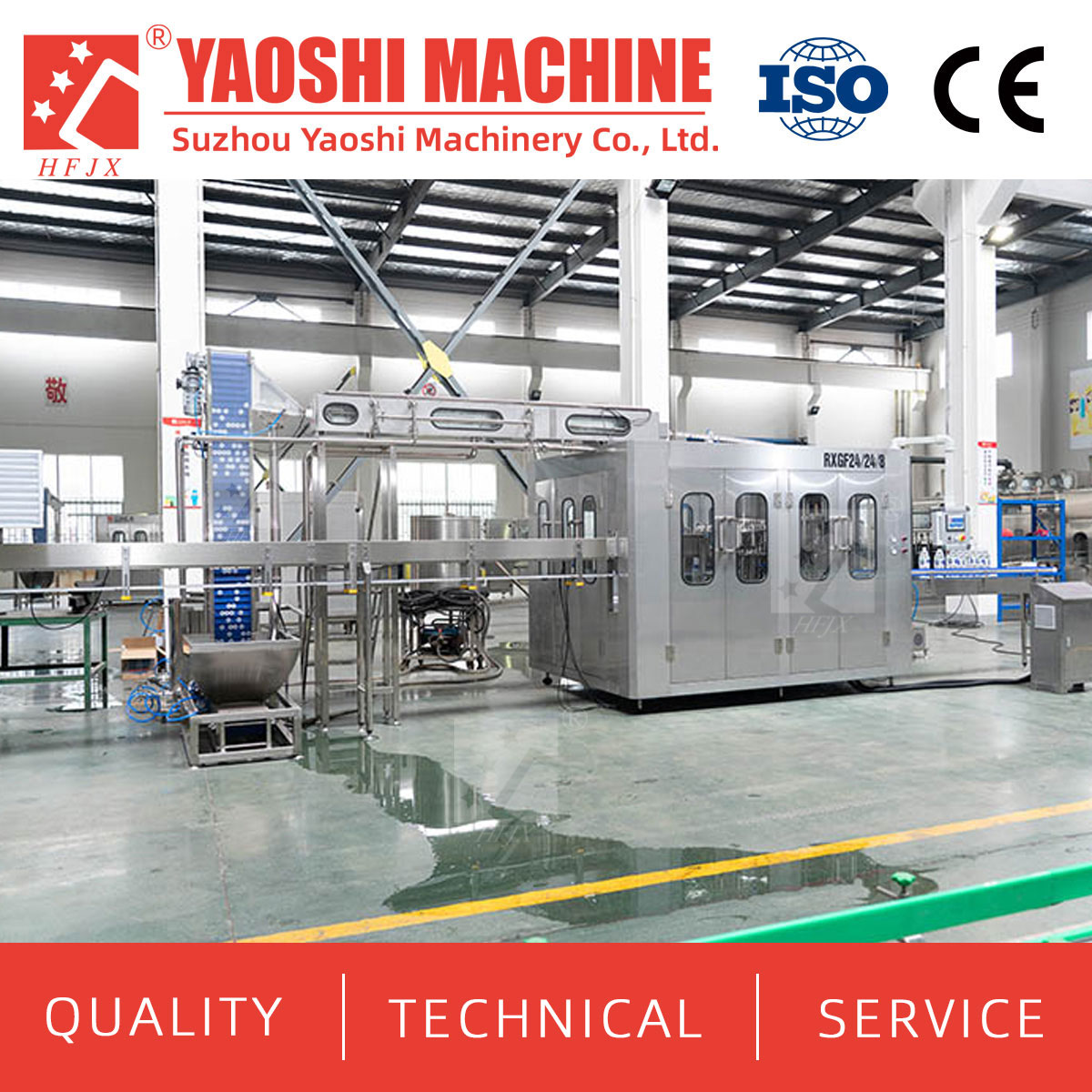
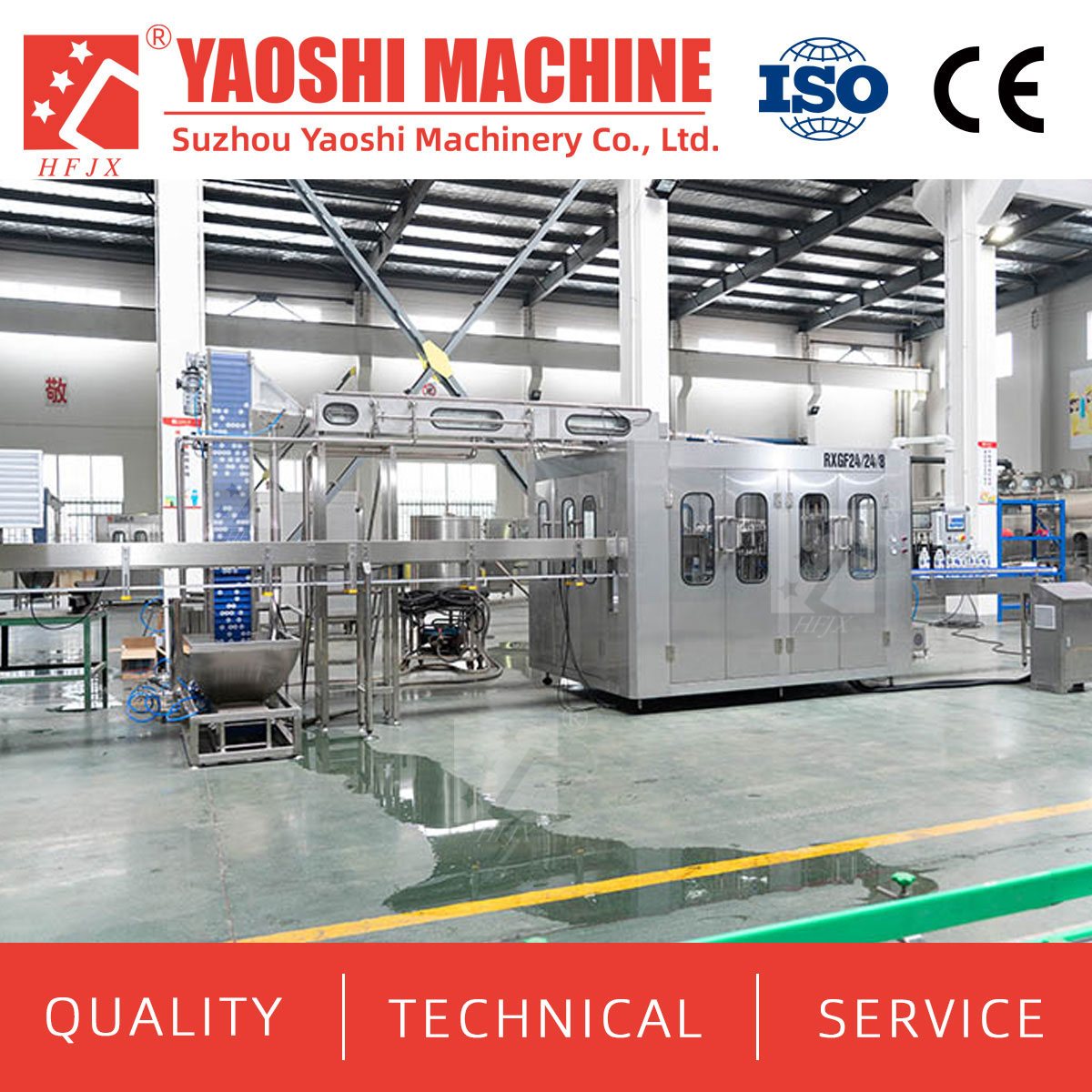
The juice filling machine range supports the initial equipment discussion. Ask the offer to identify the model, configuration, format parts and reference conditions for the buyer's actual project.

Official website equipment illustration. The pictured designation and the model in a quotation should be confirmed separately.
Tell the supplier whether bottles arrive directly from blowing, from stored purchased stock or through an existing feeding system. Supply material, bottle dimensions, neck finish, tolerances and samples. These inputs affect handling and the package-preparation duty.
Specify the required rinse or treatment method as part of the approved hygiene plan, then confirm the supplied medium, pressure and flow basis, drainage, monitoring and controls. Rinsing should not be described as validated sterilization unless the agreed system and supporting evidence establish that result.
If the project needs aseptic package preparation, list the separate treatment and protected-transfer functions in the proposal. A conventional rinse function does not establish the complete aseptic boundary.
Identify the recipe family and provide available pH, Brix, density and viscosity data with measurement conditions. State the actual inlet temperature range, foam tendency, settling behavior and sensitivity to air pickup where relevant. Mark unmeasured values as pending instead of supplying estimates as confirmed facts.
For pulp or fibers, add concentration, size distribution, maximum dimensions, hardness and acceptable product damage. Ask whether the supplier proposes filling a mixed product or separate pulp and liquid dosing, and what tests support that proposal. A pulp-containing juice does not automatically require a particular machine structure.
Yaoshi's general hot-fill product page also discusses a four-function option with separate pulp and juice filling. Treat that as an option to review with the formula. The final offer should name the supplied functions and product limits; do not infer an additional dosing stage from a three-in-one model name.
The selected beverage preparation equipment must deliver the agreed composition, flow and temperature to the filler. Identify the buffer, pump, pipes, valves and return or diversion route, including their design and test owners.
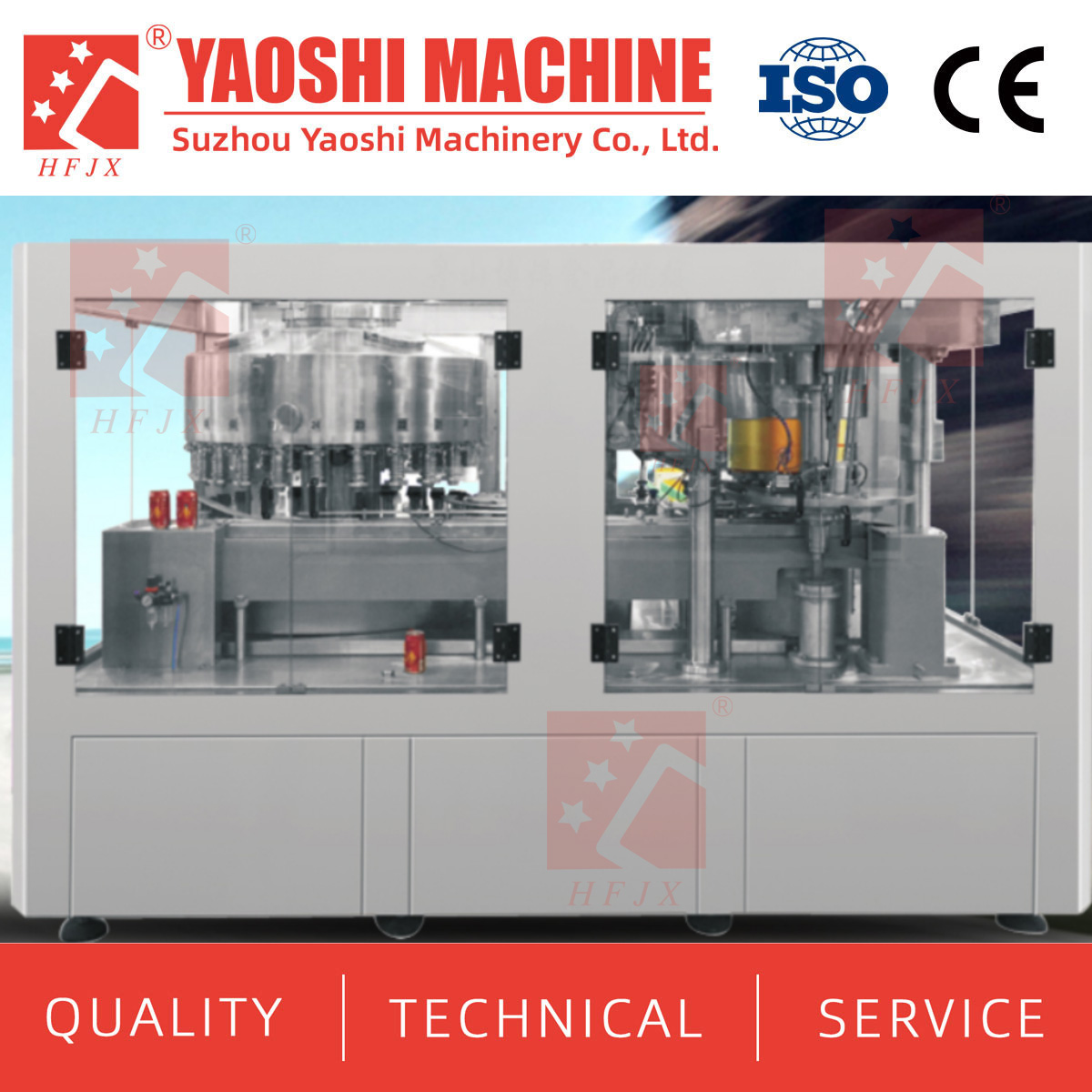
Preparation and product transfer establish the incoming duty of the filling section.
Send the cap drawing, material, dimensions and seal or liner information with the bottle neck drawing. Provide real samples for trials. A nominal neck size alone does not establish that the closure and container will work together.
Ask what cap feeding, sorting, checks and handling are included. Define closure acceptance with the buyer's package requirements and approved process. Hot-filled bottles and caps also need compatibility confirmation for the full filling, closing and cooling cycle.
For several SKUs, request a format matrix showing the approved bottle-cap combinations, change parts, adjustments and restrictions. Put uncertain combinations into the trial list before ordering.
The operations can be configured for different approved processes. For a hot-fill project, define product treatment, filler inlet conditions, circulation or return, closure and post-fill handling. For an ultra-clean or aseptic project, specify the additional product, bottle, cap and environmental requirements, along with cleaning, sterilization and validation responsibilities.
Yaoshi lists hot-fill, ultra-clean and aseptic routes within its juice filling solutions. The buyer should identify which route is approved or under review. The equipment supplier can then return the relevant configuration and supporting duties. Do not transfer conventional hot-fill catalogue values into an aseptic performance specification.
During a stop, the filler may need a coordinated response from the upstream process. Ask who controls product feed, holding, return, diversion and restart. The agreed sequence should identify conditions, alarms and records; it should not be summarized only as “automatic circulation.”
The following values are selected from Yaoshi's “Juice beverage hot filling machine” product table. They describe the named catalogue models and support an initial footprint and capacity discussion. They do not confirm output for a specific recipe, bottle or preservation process.
| Published Model | Listed Capacity | Listed Power | Dimensions (mm) | Weight |
|---|---|---|---|---|
| RCGF18-18-6 | 8,000 BPH | 4.4 kW | 2800 × 2150 × 2500 | 4,000 kg |
| RCGF40-40-12 | 24,000 BPH | 7.8 kW | 4500 × 3300 × 2600 | 8,000 kg |
Request a signed datasheet naming the offered model, reference bottle, product, operating conditions and output test. Public pages contain differing ratings and bottle-volume limits for some configurations. Resolve those differences before approving the range, utilities or parts. Do not derive a confirmed station count solely from the numbers in the model code.
Provide required accepted bottles per hour for each SKU, together with shift length, batch sizes, cleaning and changeover frequency. The supplier should distinguish catalogue speed, trial speed and complete-line output at the agreed count point.
Fill quantity also changes product demand. At 8,000 accepted bottles per hour and 500 ml per bottle, the filled volume is 4,000 litres per hour before product losses or return flow. Preparation and treatment capacity must account for that duty and the operating schedule. This arithmetic does not establish the final design margin.
Check the downstream condition and rate. Cooling, labeling and secondary packaging equipment must accept the proposed bottle flow. State whether the supplier's output responsibility ends at capped bottles, labeled bottles or finished packs.
| Buyer Input | Details to Submit | Decision It Supports |
|---|---|---|
| Formula | Recipe family, measured properties, pulp and representative samples | Filling configuration and product handling limits |
| Process | Approved or proposed route, inlet conditions and stop requirements | Product path, controls and preservation boundary |
| Bottle and cap | Revision-controlled drawings, samples, fill quantity and package limits | Handling, rinsing, closure and format parts |
| Output | Net accepted BPH by SKU, batches, shifts and changeovers | Model size and line balance |
| Cleaning | Product sequence, soil, allergens if present and plant cleaning requirements | Circuit coverage, manual tasks and verification plan |
| Site and scope | Layout, utilities, retained machines and connection data | Footprint, services, integration and quotation exclusions |
Ask the supplier to return an approved application matrix, model datasheet, equipment list and interface schedule. The machine list should identify bottle and cap supply, cleaning accessories, conveyors and any process or packaging modules included with the main unit.
Agree a factory acceptance test before manufacturing is finalized. Use representative juice, bottles and caps, with stated conditioning, run duration and output count point. Define fill checks, closure checks, particle distribution where relevant, rejects and changeover demonstrations. Test the agreed alarms and response to upstream or downstream stops.
Separate equipment tests from process validation and shelf-life work. Assign who provides samples, test materials, instruments and approval. Request manuals, drawings, settings or software backups as agreed, parts lists and recorded open items. The test should establish what the offered machine can repeat under agreed conditions.
Its central functions are bottle rinsing, juice filling and capping. The quotation should identify their actual configuration and supporting scope.
Only if explicitly listed. Preparation, treatment, transfer, cooling, labeling and packing are separate duties to allocate in the offer.
Ask for confirmation against particle size, concentration, viscosity and the proposed filling route. Some products may require different passages or separate dosing.
Rinsing alone does not establish sterilization. The approved treatment, process boundary and validation evidence determine the claim.
Request a confirmed range and change-part matrix. Compatibility depends on bottle geometry, neck, cap and operating conditions.
Obtain the signed model designation, configuration and technical datasheet for the offered build before approving parameters or parts.
No. An aseptic proposal needs the defined product, package and closure treatment, environment, controls and verification scope.
Submit formula characteristics, process route, bottle and cap drawings, and required accepted output for each SKU. Mark unresolved data for confirmation.
For a new juice project or a filler replacement, send Yaoshi Machinery your formula characteristics, intended process, bottle and cap drawings, and target output. Include retained equipment and site details when available. Request a confirmed application matrix, model datasheet, scope list and sample-test plan. Contact tony@yaos.ltd or +86 18915689808.


+86-512-58530618

Wukesong Road, Sanxing Town, Zhangjiagang City, Jiangsu Province, China