An equipment brochure can use the word “aseptic” without showing which product, package and operating conditions its evidence covers. Before selecting an aseptic juice filling machine, ask for a document trail connecting the proposed configuration to your actual recipe, bottle, cap and production procedure.
Use the questions below to assess a candidate system and prepare a technical RFQ. Each answer should name a document, test, responsible party or unresolved item. This is an evidence review, not a declaration that a supplier's public product page proves aseptic performance for your project.
Start with the formula family, available pH and Brix data, viscosity at stated conditions, pulp or particles, and relevant ingredient characteristics. Add the intended preservation objective, storage and distribution conditions, required bottle formats and production schedule. Mark process requirements still under development.
Ask who will approve the product process and the final package. The machinery supplier, product owner and qualified process or validation specialists need documented responsibilities. A reference test on another recipe or bottle can inform the review, but its applicability must be assessed before it supports the new proposal.
Use Yaoshi's juice filling equipment category to begin the equipment inquiry. Request the exact offered configuration and supporting evidence separately.
For every important statement, record the evidence requested, the revision received, the reviewer and the remaining action. Keep “not supplied” distinct from “not applicable.” This prevents an unreviewed claim from becoming an accepted technical requirement.
| Selection Question | Evidence to Request | What the Reviewer Should Confirm |
|---|---|---|
| What product does the process cover? | Approved product specification and process basis | Recipe range, particles, operating conditions and approval owner |
| Where is the sterile boundary? | Marked process diagram and package-flow drawing | Every product, bottle, cap, utility and access connection |
| How are bottles and caps treated? | Treatment description, monitored variables and validation report or plan | Applicability to the proposed package and machine configuration |
| How are equipment and circuits prepared? | Cleaning and sterilization matrix, procedures and cycle records | Coverage, manual tasks, acceptance and release conditions |
| What happens during an interruption? | Alarm list, cause-and-effect table and restart procedure | Response, affected-product handling and recovery approval |
| What proves performance? | Approved protocols, executed test reports and open-item register | Test conditions, results, deviations and closure evidence |
| Who completes site verification? | Responsibility and deliverables schedule | Supplier, buyer and third-party tasks before production release |
Ask the supplier to identify the incoming product condition and the treatment or supply requirement that precedes filling. Who determines the process? Which formula variations are covered? What happens to product outside the approved operating conditions?
For pulpy juice, include particle dimensions, concentration and handling behavior in the process review. Do not accept a general liquid test as proof for a product with different flow characteristics. Ask the qualified process team to define the relevant challenge conditions and approval method.
Request a marked product route covering preparation, treatment, holding and transfer to filling. Any buyer-owned tank, pump, valve or pipe inside that route must remain visible in the scope and verification schedule.
Ask for a drawing that traces the product, package and cap to the sealed container. It should show where the required sterile state is established, how it is maintained and where the closed package leaves the controlled area. Include utilities, sampling points, drains, access doors and connections to other suppliers' equipment.
Review the drawing against the quotation. An enclosure photograph does not establish the performance of its air system, package treatment, product transfer or operating procedures. Each boundary connection needs a design owner and verification evidence.

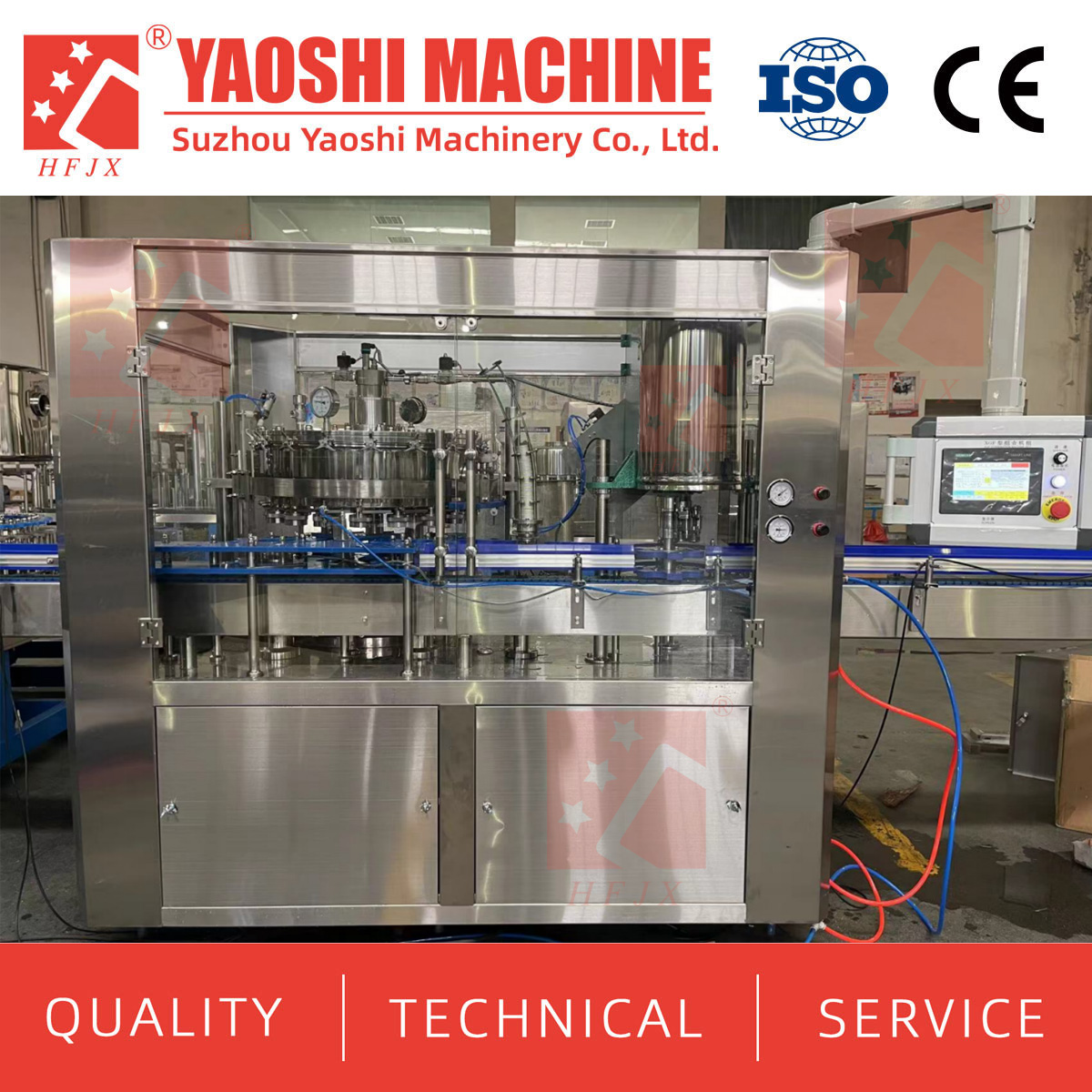
Official preparation-system image. It illustrates upstream equipment only and does not prove that the pictured installation is aseptic.
Supply bottle or preform drawings, material specifications and samples with the cap and seal details. Ask the candidate supplier to identify its proposed treatment method, compatibility limits, monitored conditions and protected route into the filler and capper.
Request the package-treatment validation scope: tested materials and formats, equipment revision, operating conditions, methods, results and reviewer. If the evidence relates to a different package or platform, ask how its relevance will be established for the offered build.
Residual treatment media, rejected packages, jams and interventions should be addressed in the agreed method where applicable. Do not fill missing values with another manufacturer's specifications.
Ask for a circuit and surface matrix showing cleaning, sterilization and other required preparation steps. Include product-contact circuits, package and cap treatment, controlled filling areas and the relevant service routes. Record any manual tasks, disassembly or external preparation.
The supplier should identify cycle prerequisites, measured variables, acceptance criteria, records and the authority to release equipment for production. Request evidence that the agreed sequence covers the actual supplied configuration, including connecting pipework.
Yaoshi's pretreatment equipment range can support a discussion of upstream and cleaning scope. A catalogue listing alone does not demonstrate that a complete aseptic cleaning or sterilization circuit has been supplied and validated.
Ask which conditions are monitored and recorded during production. Request the instrument list, calibration requirements, alarm limits, cause-and-effect table and data-retention arrangements. Critical settings should have defined access and change-control responsibilities.
Discuss representative events: loss of a required service, package-treatment failure, cap jam, access intervention or a prolonged stop. For each, ask whether the system prevents filling, diverts product, rejects packages or requires a defined recovery procedure. The exact action must follow the approved process and system design.
Specify how affected production is identified and who decides its disposition. Ask what records demonstrate successful recovery before production resumes. “Automatic restart” is incomplete without the release conditions and test evidence.
A design document describes the intended system. A protocol describes the proposed test. An executed report records results. Keep those evidence types separate when reviewing supplier submissions.
Request enough traceability to establish the tested machine or platform, product or test medium, package, operating conditions, methods, instruments, deviations and approval. The qualified review team should define the necessary physical, microbiological and package-integrity work for the project.
Factory acceptance testing (FAT) may demonstrate selected equipment functions and controls. Site acceptance testing (SAT) evaluates installed conditions and agreed integration. Neither term, on its own, establishes complete aseptic validation or a shelf-life claim. Identify what each test covers and what work remains before release.
To meet the equipment-data comparison need, the table below reproduces selected values from Yaoshi's published “Juice beverage hot filling machine” table. These are conventional hot-fill model references. They do not identify an aseptic configuration or demonstrate sterile operation.
| Published Hot-Fill Model | Listed Capacity | Listed Power | Dimensions (mm) | Evidence Still Needed for an Aseptic Offer |
|---|---|---|---|---|
| RCGF18-18-6 | 8,000 BPH | 4.4 kW | 2800 × 2150 × 2500 | Separate configuration, boundary, treatment, utility and validation documents |
| RCGF40-40-12 | 24,000 BPH | 7.8 kW | 4500 × 3300 × 2600 | Separate accepted-output basis with the approved product and package |
Do not use these BPH or power values as aseptic-line specifications. Public website tables contain differences for some other model ratings and volume limits. Obtain a signed datasheet tied to the actual offered build, and keep any unverified aseptic parameters open.

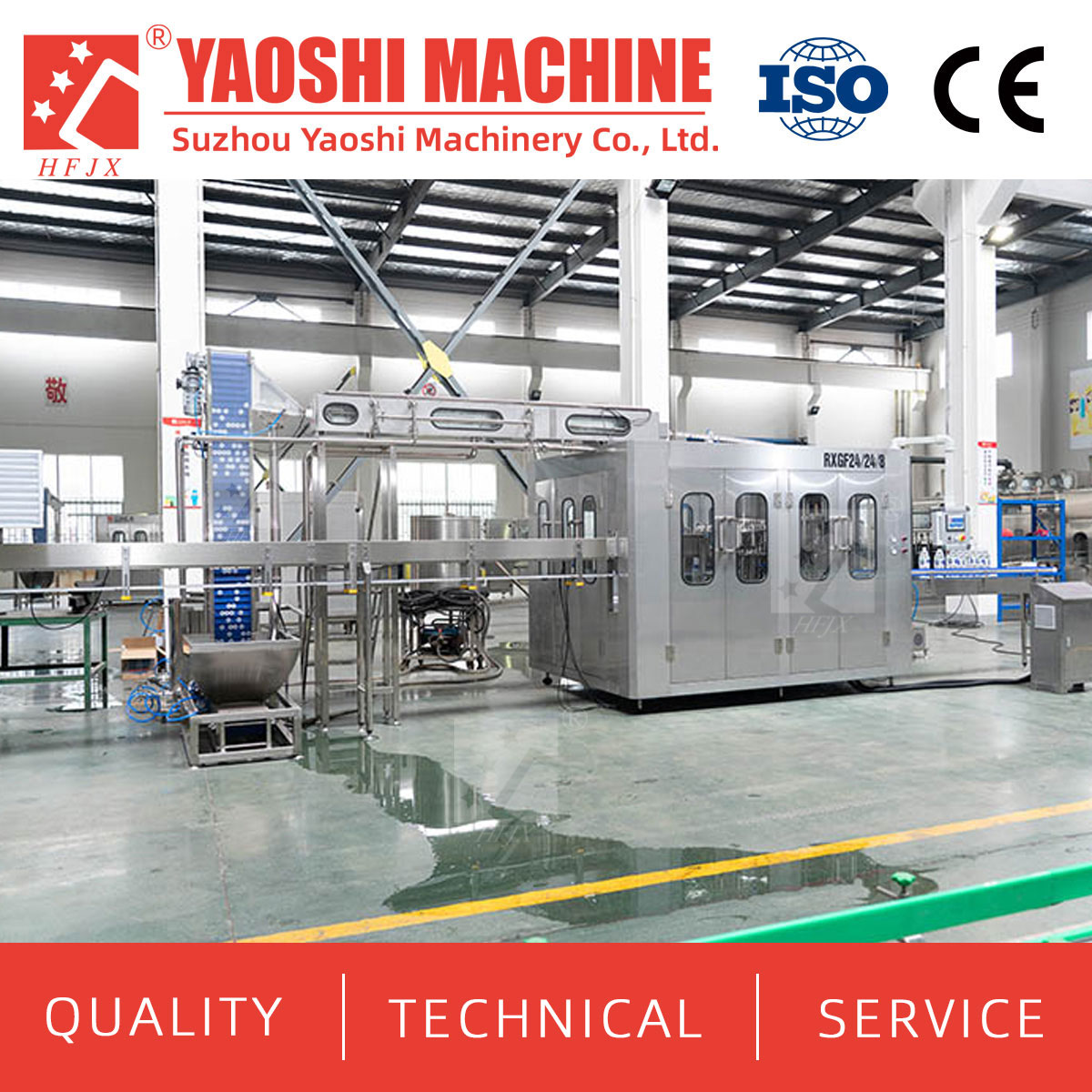
Official hot-fill equipment image, provided as a catalogue comparison reference. It is not evidence of an aseptic installation.
Ask each bidder to mark its responsibilities for product treatment, package treatment, utilities, site environment, installation, controls integration, testing, training and validation support. Name the buyer or third-party owner wherever those duties are excluded.
Yaoshi's public juice solution page refers to hot-fill, ultra-clean and aseptic routes. That wording is a starting point for questions. For an aseptic inquiry, ask which documented configuration, application and evidence can be offered for the specific project. This article does not infer an unverified capability from the page heading.
Collect a deliverables schedule covering drawings, process information, utilities, manuals, instruments, cycle records, controls, test protocols and executed reports. Assign dates, reviewers and closure actions for missing items.
| Evidence Status | Meaning | Next Buyer Action |
|---|---|---|
| Claim only | Brochure or statement without applicable records | Request the supporting documents and keep the requirement open |
| Design or proposed protocol | Intended configuration or test, not executed results | Review the method and assign completion before the relevant milestone |
| Reference results | Evidence from another build or application | Have qualified reviewers assess applicability and gaps |
| Project evidence accepted | Required documents and results reviewed for the agreed scope | Record approval, remaining site conditions and change-control rules |
Compare suppliers against the same product and package basis. A missing report does not prove failure, but it leaves a selection condition unresolved. Record the required action and owner before committing to the next commercial milestone.
No. Request the offered configuration, process boundary and applicable design and test evidence.
No. Review the selected process and its product, package, environment and verification requirements. Hot-fill catalogue data cannot establish an aseptic claim.
It can inform the review. Qualified reviewers should assess whether it applies and what additional project testing is required.
No. Its scope must be stated. Site verification, process validation and product-release work may require separate protocols and approval.
Request a marked boundary drawing covering the product, bottle or preform, cap, utilities, filling zone and sealed-package outlet.
It should classify the event, identify affected production, define recovery and release conditions, and record the required approval.
Only as a clearly labeled catalogue reference. Require a separate aseptic configuration and accepted-output basis.
Agree a project-specific evidence schedule with the qualified review team, including design, treatment, controls, cleaning, validation and responsibility documents.
Send Yaoshi Machinery your formula characteristics, intended process, bottle and cap drawings, and required output. Include the validation requirements and site data available to your project team. Ask for the proposed configuration, boundary drawing, evidence register and outstanding confirmation list before selecting a machine. Contact tony@yaos.ltd or +86 18915689808.


+86-512-58530618

Wukesong Road, Sanxing Town, Zhangjiagang City, Jiangsu Province, China