A hot-fill project can fail a package trial even when the filler reaches its stated speed. A bottle may change shape during cooling, a closure may not meet the agreed seal requirement, or the cooling section may discharge wet bottles that the labeler cannot accept. These conditions belong in the equipment specification before purchase.
For a fruit juice filling machine intended for an approved hot-fill process, evaluate the complete package cycle: product at the filler inlet, bottle filling, closure, any required holding or inversion, cooling, and the handoff to labeling. Then define how the product-contact route will be cleaned between runs. This article assumes hot filling is already selected or being evaluated for the actual recipe; it is not the default route for every juice.
Provide recipe characteristics, the preservation objective, storage conditions and the process status: approved, under development or pending validation. Record required product inlet conditions and their permitted operating window. The supplier should state how the proposed machine maintains those conditions and responds when they are not met.
Yaoshi describes hot filling, ultra-clean and aseptic routes in its juice process solutions. Select among them with the product and package team. A catalogue hot-fill temperature does not establish a complete treatment schedule or shelf life.
For the hot-fill route, name the parties responsible for product treatment, package compatibility and process validation. The equipment quotation should follow that approved basis and identify unresolved items before manufacturing.
Ask the bottle supplier to confirm the package for the proposed filling, holding and cooling conditions. Check thermal suitability and how the bottle accommodates the volume changes that occur as the sealed product cools. Neck finish, cap, seal, fill quantity and headspace should be evaluated together.
Do not approve a PET bottle from its nominal capacity or wall appearance. Submit its drawing, dimensional tolerances, material specification and production samples. Test shape, base stability, neck condition, closure and label area across the complete cycle. A successful room-temperature run cannot establish hot-fill compatibility.
For glass, obtain the container supplier's permitted conditions for product filling and cooling, including relevant temperature differences and handling limits. Confirm bottle entry conditions, cooling transitions and inspection criteria. Avoid assuming that every glass bottle accepts any cooling profile.
The juice filling equipment proposal should name the accepted bottle-cap combinations, format parts and operating restrictions. If the project includes several bottle sizes, each requires its own confirmation.
| Package Item | Information to Submit | What to Verify in Trials |
|---|---|---|
| PET bottle | Drawing, material, hot-fill suitability, neck finish and samples | Shape, base stability, neck condition and response during cooling |
| Glass bottle | Drawing, supplier thermal limits, entry condition and samples | Handling and package condition through the approved thermal profile |
| Closure | Cap drawing, material, liner or seal and application specification | Accepted closure performance before and after cooling |
| Fill and headspace | Approved fill target, reference conditions and package requirement | Quantity, headspace and package response after the full cycle |
| Label and code | Material, location and acceptable bottle conditions | Appearance, attachment and readability at the downstream handoff |
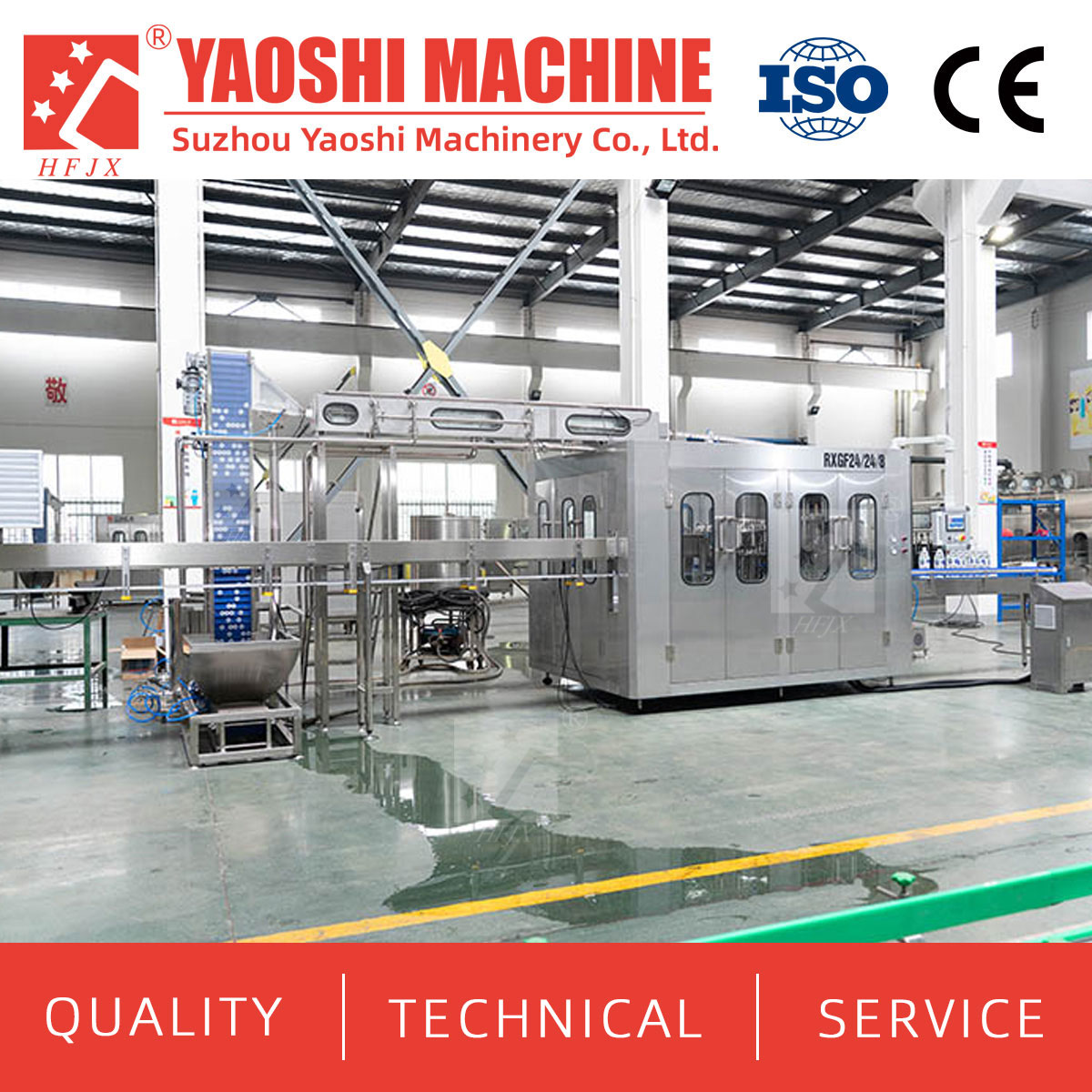
Yaoshi's hot-fill pages describe integrated rinsing, filling and capping, product circulation and CIP-related functions. Ask the technical offer to identify the supplied product path, temperature instruments, return arrangement and control logic for the approved recipe.
Define what happens if the upstream process loses the specified condition, bottles stop arriving or the downstream line blocks. Product may need to be held, returned, diverted or stopped according to the approved procedure. State the route, its owner and the restart criteria. Repeated product circulation also needs limits established for the actual formulation.
Any post-fill hold or bottle inversion should appear as a separate duty when required by the approved process. Confirm the controlled variables, records and responsibility for validation. Do not treat inversion alone as proof of package or closure sterilization.
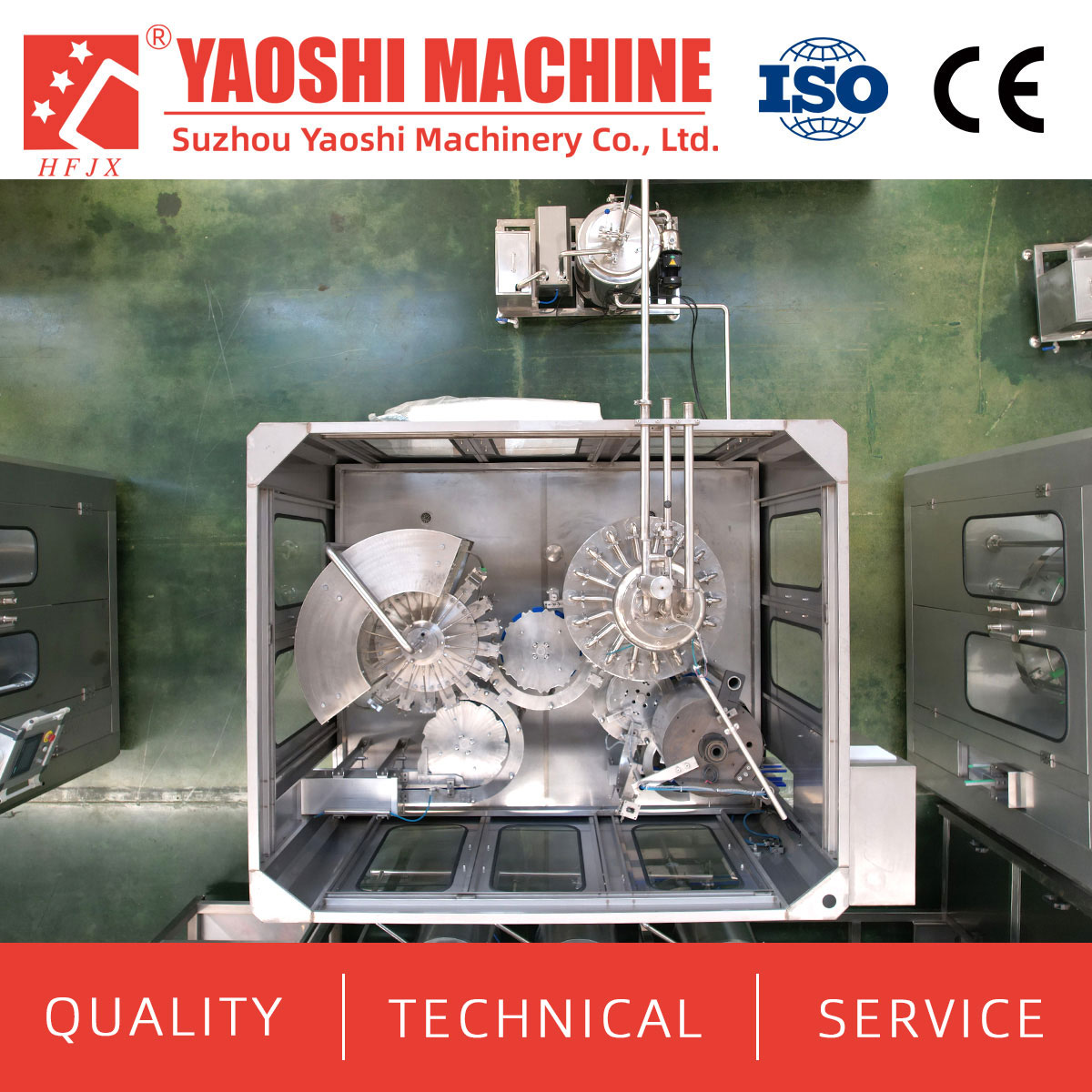
Official website hot-filling equipment illustration. Product circulation and closure requirements must be confirmed for the offered configuration.
A cooling quotation needs the product and bottle inlet conditions, container volume and geometry, bottle rate, required discharge condition and approved thermal profile. Provide available cooling-water conditions and the expected operating environment. A tunnel length alone does not define whether the required cooling result will be reached.
Ask the supplier to explain the proposed stages, residence-time basis, circulation and heat-removal services. Confirm what is included: pumps, tanks, filters, heat exchange, cooling equipment, controls, pipework and drainage. If the buyer supplies central cooling, mark its required capacity and connection point.
| Cooling Input | Why It Belongs in the Specification | Supplier Response Needed |
|---|---|---|
| Product and package inlet conditions | Establish the thermal duty at tunnel entry | Design basis and permissible variation |
| Bottle sizes and accepted rate | Set the package mix and flow to be handled | Duty and performance for each approved SKU |
| Required outlet condition | Defines the handoff to labeling and packing | Discharge acceptance method and count point |
| Site cooling services | Can constrain the result of the installed tunnel | Service quality, flow, temperature and supply boundary |
| Stop and restart conditions | Change residence time and package exposure | Control sequence and recovery checks |
Test the cooling result using representative production bottles. Record product or package temperatures at agreed points, bottle condition and closure results. Define how long stops and different formats are covered by the acceptance plan.
The cooling outlet should be specified in terms useful to downstream equipment: temperature, external moisture, shape and stable flow. Obtain those limits from the label, code and machine suppliers. One generic outlet temperature should not be assumed suitable for every label and container.
When drying is needed, identify the equipment and utilities in the offer. The labeling machine should receive an approved bottle condition at a documented connection point. The line test should verify label attachment, code readability and bottle stability after cooling, not only the number of bottles leaving the filler.
Hot product does not replace equipment cleaning. Sugar, pulp, fibers, color, flavor and other recipe components can create different cleaning duties. Provide the product sequence and relevant carryover or allergen requirements so the supplier can review the cleaning boundary.
List every supplied tank, pump, transfer pipe, valve, filler and return path. Ask which circuits receive CIP, which areas need manual work or disassembly, and how coverage will be checked. A “CIP connection” in the machine offer is different from a complete plant cleaning system with chemical preparation, circulation, heating, return and records.
Review the pretreatment and cleaning equipment scope with the preparation-to-filler circuit. For buyer-owned equipment, mark the connection and verification responsibilities in the same schedule.

Official preparation-system image. The photograph does not establish cleaning coverage; request the circuit diagram and inspection plan.
Define the cleaning sequence, monitored conditions and release checks through the approved plant procedure. Trial the demanding product change, such as pulp juice followed by a clear drink. Record residual-particle or other agreed carryover checks before accepting a claimed changeover time.
The following reference values are selected from Yaoshi's “Juice beverage hot filling machine” model table. They support initial model and footprint review. They are not specifications for bottle thermal resistance, cooler duty, CIP performance or a validated product process.
| Published Model | Listed Capacity | Listed Power | Dimensions (mm) | Listed Weight |
|---|---|---|---|---|
| RCGF18-18-6 | 8,000 BPH | 4.4 kW | 2800 × 2150 × 2500 | 4,000 kg |
| RCGF40-40-12 | 24,000 BPH | 7.8 kW | 4500 × 3300 × 2600 | 8,000 kg |
Ask for the reference bottle and product conditions behind capacity. Treat listed machine power separately from process heating, cooling, cleaning and other line loads. Some public temperature, capacity and bottle-volume statements differ across pages; use one reconciled technical agreement for the offered machine and approved application.
The test should follow the package through filling, closing and the approved post-fill cycle. Check accepted output, fill quantity, package shape, closure, cooling result and downstream label or code condition. Add interruption tests and a cleaning/changeover demonstration where they affect acceptance.
Issue one product-and-package matrix containing formula properties, process status, bottle and cap drawings, target output by SKU, thermal requirements, label specifications, cleaning expectations and site utilities. Request a model datasheet, cooling-duty proposal, cleaning circuit list, included/optional/excluded schedule and acceptance plan.
For factory acceptance testing, name the samples, measurement methods, duration and approval owners. Site acceptance should confirm the actual utility and interface conditions. Process validation and shelf-life work need their own agreed responsibility and evidence.
No. The actual recipe, preservation objective, distribution and package determine the process. Confirm that basis before selecting hot-fill equipment.
No. Obtain package suitability confirmation and test the intended bottle through the complete hot-fill, closure and cooling cycle.
No. Confirm container thermal limits, cooling transitions, handling and package acceptance with the glass supplier.
Provide product and package inlet conditions, bottle geometry, output, approved profile, required outlet condition and site cooling services.
No. Request separate utility entries for every supplied process, cooling, cleaning and packaging duty.
No. Cleaning coverage and procedures must address residues in the actual product-contact route.
Include it when required by the approved process. Specify its controlled conditions and validation responsibility rather than adding it automatically.
Send formula characteristics, the intended process, bottle and cap drawings, output by SKU and available cooling and cleaning services.
For a juice project with an approved or proposed hot-fill route, send Yaoshi Machinery your formula characteristics, process requirements, bottle and cap drawings, and target output. Add the package thermal limits, required cooling outlet condition and cleaning expectations. Request a coordinated filler, cooling and cleaning proposal with a sample-test plan. Contact tony@yaos.ltd or +86 18915689808.


+86-512-58530618

Wukesong Road, Sanxing Town, Zhangjiagang City, Jiangsu Province, China