


A beverage factory can increase filling speed and still produce fewer saleable bottles per shift. This happens when the new filler runs faster, but the team spends more time changing bottles, caps, labels, products and cleaning circuits. It also happens when manual capping or packing cannot accept the filler output.
The decision between a semi-automatic system and an automatic filling machine should begin with the production schedule. Factory owners and operations managers need to know which SKUs create repeatable volume, which remain short campaigns, and where operators currently handle containers or wait for equipment.
Automation is justified when it removes a measured handling constraint from a line that can support continuous flow. It becomes oversized when demand, packaging formats or downstream operations are not stable enough to use the installed capacity.

Automation level should be evaluated against output, labor and SKU-change requirements.
A semi-automatic filler controls the filling cycle, while an operator still performs one or more repeated tasks. These tasks may include placing bottles, starting the cycle, moving filled containers or transferring them to capping. The exact boundary depends on the proposed machine and should be written into the quotation.
An automatic filling line indexes containers, performs the filling cycle and transfers them to the next connected process with limited manual handling during normal production. Operators still prepare materials, monitor the process, complete quality checks, manage changeovers and recover faults. “Automatic” does not mean that the line runs without people.
| Decision factor | Semi-automatic filling | Automatic filling |
|---|---|---|
| Container movement | Operator handles or indexes at least part of the flow | Conveyors and controls manage normal transfer |
| Best production pattern | Short campaigns, trials or uncertain demand | Repeatable campaigns with sustained demand |
| SKU changes | Suitable when manual adjustment remains manageable | Works best when formats and change procedures are standardized |
| Labor use | More direct handling at the filling station | More monitoring, material supply and technical support |
| Line dependency | Can operate as a smaller production cell | Depends more heavily on upstream and downstream balance |
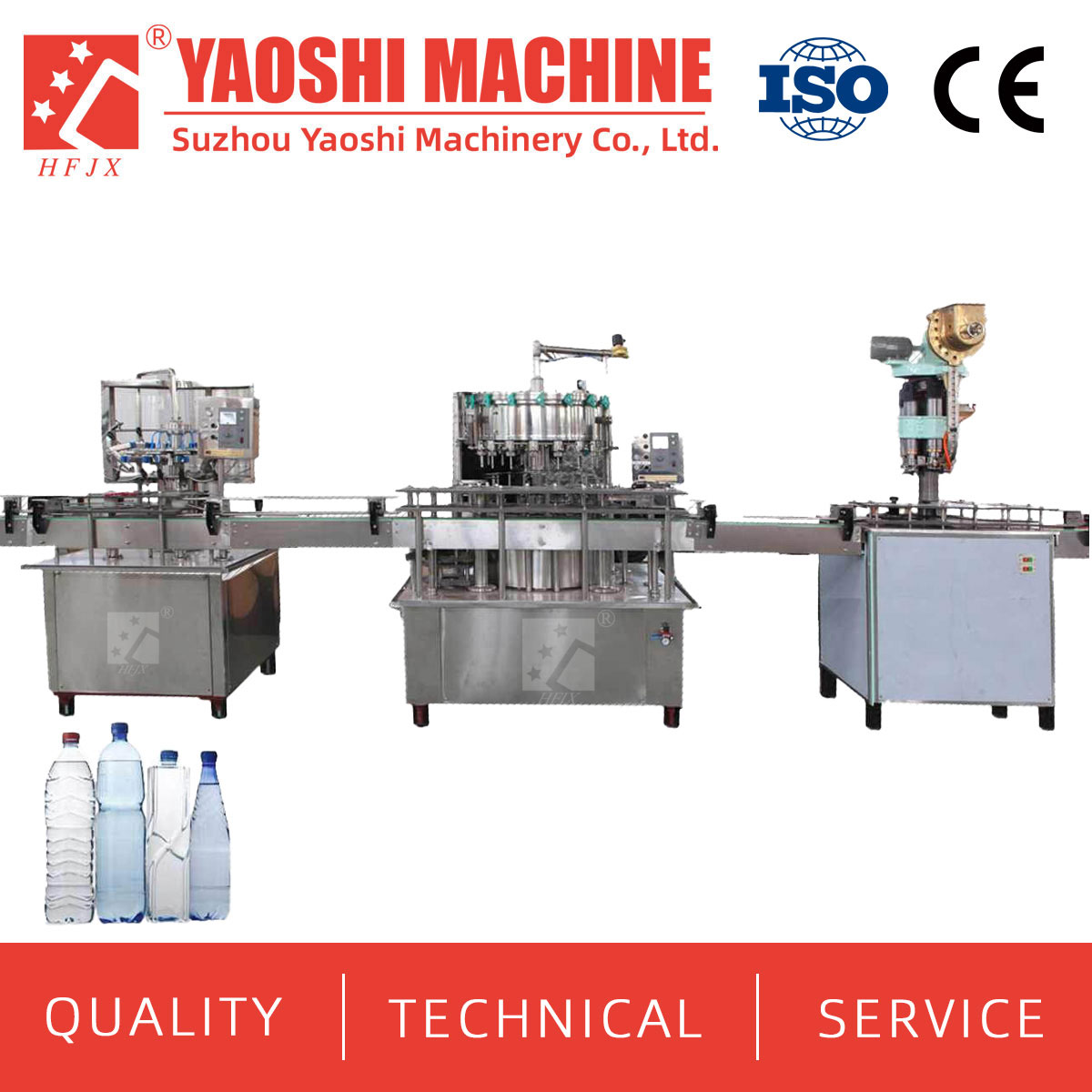
A linear filling configuration can support selected projects with moderate output or frequent format changes.
Do not use the largest monthly order as the only capacity basis. Create a production matrix that lists the bottle or can, fill volume, closure, label, secondary pack, batch size and production frequency for each SKU. Then estimate the effective hours available after product changes, format changes, cleaning, inspections and material replenishment.
A high nominal rate has little value during a short batch if setup and cleaning consume most of the production window. The same automatic filler may be a sound choice for a core 500 ml SKU produced for several shifts and a poor choice for a specialty bottle produced for two hours each month.
Multi-SKU plants should group products by operating pattern rather than treating every format equally. Core SKUs with recurring demand can support automated container feeding, filling, capping and downstream transfer. Low-volume products with unusual bottles, closures or cleaning requirements may remain on a semi-automatic cell.
This split is often more practical than forcing every SKU through one highly automated line. It protects the output of the main products while retaining a controlled route for trials, seasonal beverages and small customer orders.
List the work performed during one complete shift: container supply, product preparation, cap loading, filling, inspection, label and packaging material supply, cleaning, changeovers and fault recovery. Record where operators wait, carry containers or repeat the same movement.
An automatic filling machine can remove repeated bottle placement and discharge handling. It does not remove work that remains at manual capping, labeling, packing or palletizing stations. If those processes cannot accept the new rate, bottles will accumulate and the filler will stop.
Automation has a stronger case when direct handling limits output, available labor cannot cover planned shifts, or repetitive container movement creates an operating concern. A semi-automatic system remains reasonable when batches are short, one operator can support the required output, and the plant needs close control over frequent product changes.
A change from one SKU to another may require more than selecting a recipe. Bottle height, diameter and neck finish can affect guides and change parts. A new cap can require different feeding and application equipment. Product changes may require draining, cleaning or separating contact parts. Labels and pack patterns create additional downstream adjustments.
For every proposed format, ask the supplier to identify:
Settings changed through the control system
Mechanical parts that must be replaced or adjusted
Product-contact parts included in cleaning
Tools, lifting aids and operator access required
Checks needed before production can restart
An automatic line is easier to justify when the change sequence is documented and the plant can run enough bottles between changes. If container and closure specifications are still changing, a simpler system can prevent investment in change parts that may soon become obsolete.

An automatic filler must be balanced with container supply, capping and downstream equipment.
Filling is only one stage in a complete beverage production line. Product preparation must supply the required flow and condition. Empty containers and closures must arrive without repeated interruptions. Capping, inspection, labeling, coding, packaging and pallet handling must accept the planned output.
Before approving automation, compare stable capacity at every connected stage. Identify the expected buffer between machines and define the signals used when downstream equipment slows or stops. Increasing filler capacity without resolving the existing packer bottleneck creates a larger queue, not a more productive line.
Demand is still being validated or varies sharply by season
Most campaigns are short and require frequent manual changes
The plant handles several unusual bottles or closures
Downstream operations remain manual and set the output limit
The immediate goal is to replace hand filling with repeatable dosing
Core SKUs run in long, recurring campaigns
Manual container handling restricts output or shift coverage
Bottle, cap and product specifications are controlled
Upstream and downstream equipment can support the planned rate
The plant has maintenance, utilities and floor space for an integrated line
A factory may automate the stable, high-volume SKUs and keep a semi-automatic cell for low-volume formats. Another option is to automate filling and container transfer first while reserving interfaces and floor space for later capping, labeling or packaging upgrades. The sequence should remove the current bottleneck and avoid buying unused capacity.
Send every supplier the same operating case. A request that only states “automatic beverage filler” will produce proposals with different assumptions and scope boundaries.
Beverage type, product condition and filling temperature
Container material, volume, dimensions and samples or drawings
Cap, lid or closure specification
Target output for each container size
Batch size, SKU frequency and planned shift pattern
Current staffing and tasks the project should automate
Existing upstream and downstream equipment
Label and secondary-packaging formats
Factory layout, access and available utilities
Required scope for installation, testing, training and spare parts
Ask the supplier to state which SKUs are included, how capacity is defined, what each changeover requires, and where the supplied line begins and ends. This makes the automatic and semi-automatic options commercially comparable.
The first mistake is comparing machine speed without calculating saleable output after changeovers. The second is counting every operator as a potential saving while ignoring material supply, inspection and packaging work. The third is automating an unstable bottle or cap specification. The fourth is buying a fast filler before checking the labeler or packer.
A further risk is planning for possible growth without defining when that growth will require extra capacity. Reserve interfaces and expansion space where practical, but size the first project around a defendable production schedule.
Yaos Machinery can review a filling-machine project from the beverage, container, target output and required line boundary. For a multi-SKU project, the technical request should distinguish the core products from the short-run formats and show the equipment already in the factory.
The resulting proposal should explain whether the project is best handled by a semi-automatic station, an automatic filling machine, or a staged line. Final equipment selection still depends on confirmed product and package details.
No. A plant with many SKUs can use automatic filling when the main formats have stable demand and documented changeovers. Low-volume or unusual formats may be separated from the main line.
It reduces direct handling when container feeding, filling and discharge are connected. The plant must still account for materials, monitoring, inspection, cleaning, changeovers and maintenance.
Only up to the rate that manual packing and available accumulation can accept. If packing is the current constraint, increasing filler speed alone will not deliver the planned finished-product output.
Future demand should be included as a defined scenario, not an unsupported multiplier. Identify the expected products, timing and extra shift capacity before paying for a larger configuration.
Bottle dimensions, neck finish, closure, filling conditions, product-contact cleaning, labels and pack patterns can all change the work required. The supplier should describe the sequence for every quoted SKU.
Yes, if the first equipment has defined mechanical and control interfaces for later additions. The proposed stages should follow the actual bottleneck rather than an assumed standard sequence.
Send Yaos Machinery your beverage list, container and closure files, output by SKU, batch schedule, current staffing, existing equipment and factory layout. Request separate scope and configuration notes for the semi-automatic, automatic or staged option. Use the contact page to submit the project information.


+86-512-58530618

Wukesong Road, Sanxing Town, Zhangjiagang City, Jiangsu Province, China


