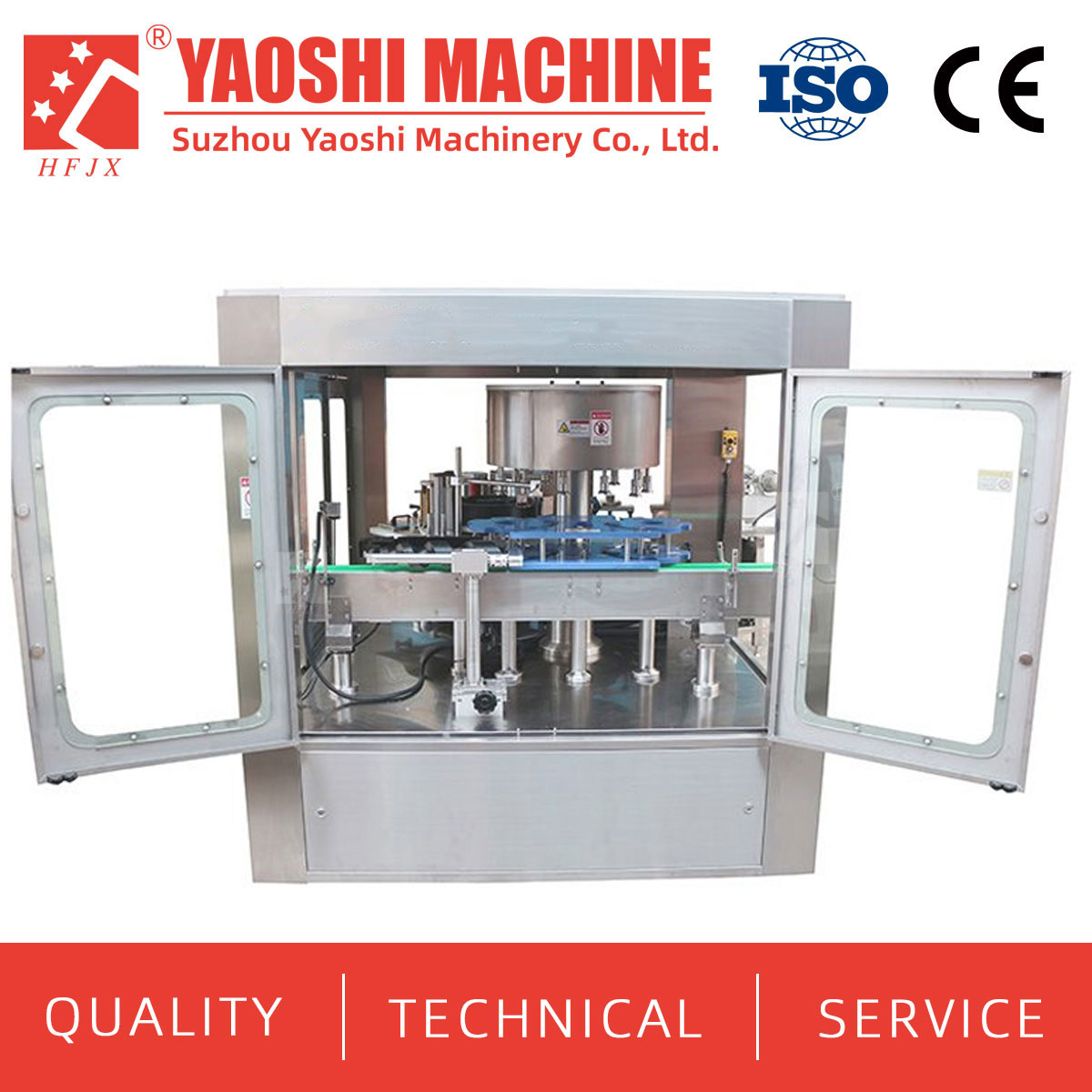
A labeler cannot be selected from bottle volume and speed alone. Bottle stiffness, sidewall shape, surface moisture, label construction and the required application position all influence handling and accuracy.
The practical way to specify a labeling machine is to treat the bottle, label and production line as one package. Yaos Machinery lists OPP hot-melt, shrink-sleeve and self-adhesive labeling options; the correct format depends on the approved package and artwork.

Automatic rotary OPP hot-melt labeling equipment for wraparound beverage labels.
Send dimensioned drawings and representative samples. Note the material, filled or empty handling condition, maximum diameter, height, label panel, surface features and tolerance range. Lightweight PET may need different support from a rigid glass bottle, while shaped containers require orientation or controlled spacing.
| Container detail | Potential effect |
|---|---|
| Material and stiffness | Guiding, pressure and deformation risk |
| Shape and label panel | Application position and bottle control |
| Surface condition | Adhesion, shrink or glue behavior |
| Tolerance range | Setup window and inspection limits |
Roll-fed OPP labels suit many wraparound beverage applications. Confirm cut length, overlap, glue area, bottle diameter and label material.
Sleeves can cover complex shapes and larger decoration areas. Confirm film, lay-flat width, artwork position, perforation and the downstream shrink process.
Pressure-sensitive labels may be used for one or more panels. Confirm roll direction, backing, label gap, application surface and whether container orientation is required.
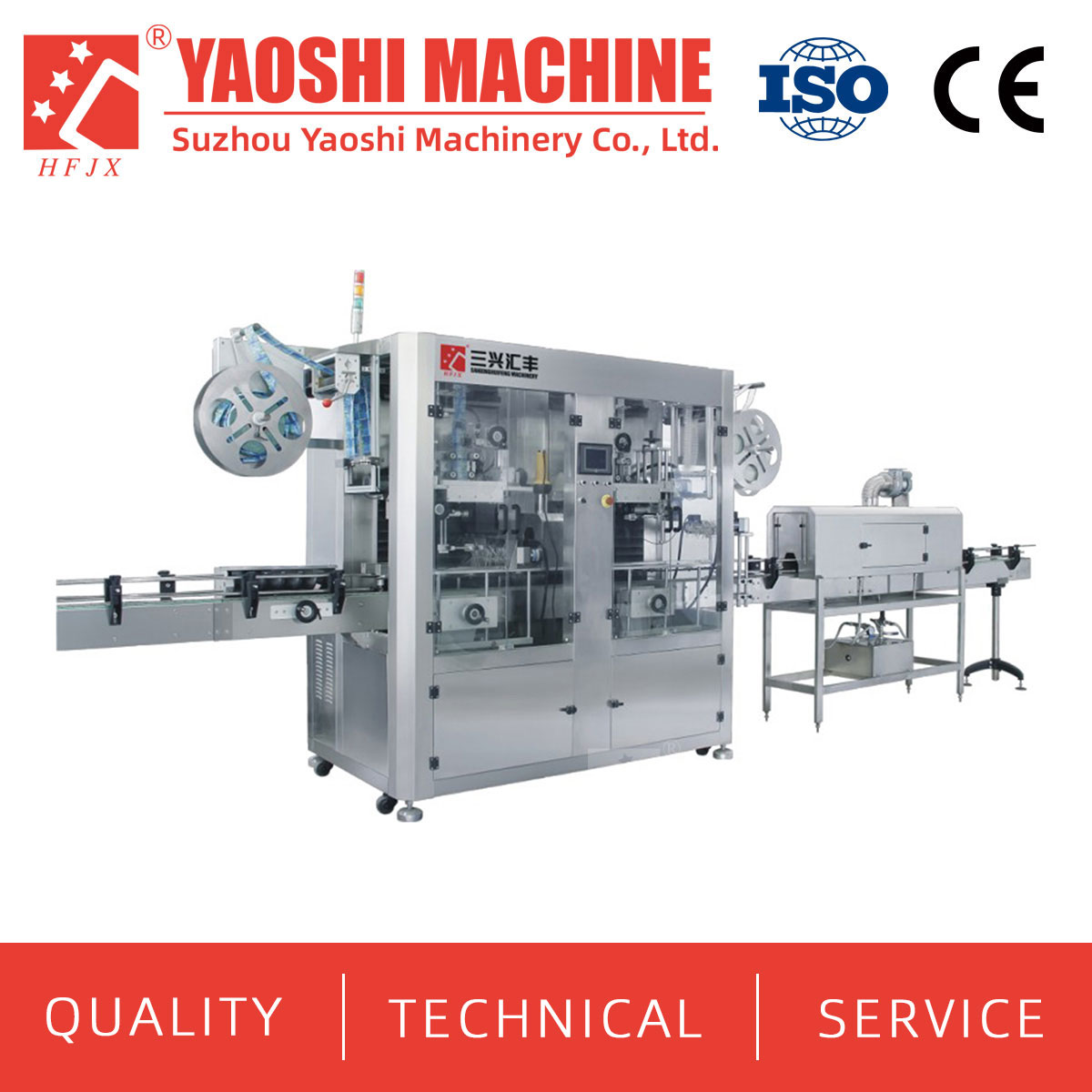
Shrink-sleeve labeling equipment requires a sleeve specification matched to the bottle and shrink process.
The labeler should accept bottles from the upstream conveyor and release them without restricting the packer. State the normal operating speed, short-term peak, bottle pitch and accumulation conditions. Wet or cold bottles may also affect label performance, so the position of drying or warming equipment should be identified.
Normal and peak bottle rate for every SKU
Upstream equipment and conveyor arrangement
Bottle condition at the labeling point
Reject detection and downstream accumulation
Expected changeover sequence and time window
Artwork approval does not confirm machinability. Provide production-intent label rolls or sleeves for testing and record the accepted application position, overlap, wrinkle, skew and adhesion criteria. The same control sample should be used for factory testing and site acceptance where practical.
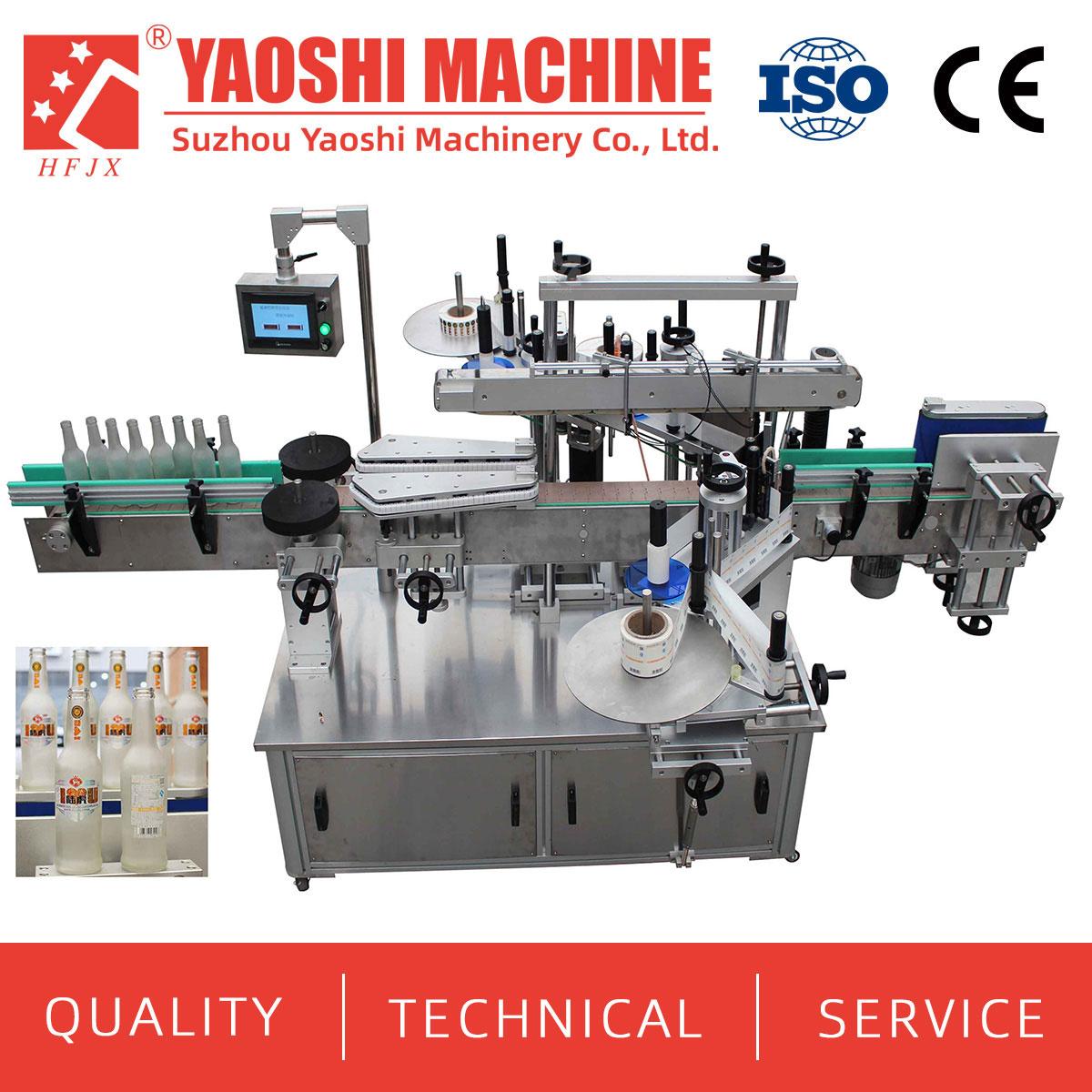
Double-sided self-adhesive labeling equipment for containers requiring two label panels.
Artwork, label dimensions and bottle panel should be released as one controlled package. A sleeve may distort after shrinking, an OPP label may place the overlap across important graphics, and a self-adhesive label may bridge a curved surface. These issues should be resolved with mock-ups and trials before the final machine setup.
Include coding areas, regulatory text, barcode orientation and inspection needs. If label suppliers will change, define the material properties that must remain consistent rather than approving only one visual sample.
The test should identify the SKUs, run sequence, line speed, label material and number of samples. Agree how skew, height, overlap, wrinkles, bubbles and damaged labels will be judged. Record the bottle temperature and surface condition because they may change after installation.
A good handover also includes recipe names, change-part identification, threading diagrams and cleaning points. These details shorten routine changeovers and help the plant distinguish a setup problem from a material problem.
For a labeling-machine proposal, send bottle drawings, filled samples if available, label specifications, artwork position, output by SKU and the line layout. Yaos Machinery can review those interfaces and related packaging equipment; project details can be submitted through the contact page.
SEO Title: Labeling Machine Selection by Container, Label Material and Line Speed
Meta Description: Choose a beverage labeling machine by matching the container, label material, application position, line speed and changeover plan.
Recommended Slug: labeling-machine-selection
Primary Keyword: labeling machine
Secondary Keywords: shrink sleeve labeler, OPP hot-melt labeler, self-adhesive labeling, bottle handling
Production-intent bottle and label samples
Acceptable label-position and appearance criteria
Bottle condition at labeler inlet
Final speeds and changeover list
De-AI Review: The draft was checked for generic opening formulas, unsupported superlatives, repetitive conclusions and unverified performance claims.


+86-512-58530618

Wukesong Road, Sanxing Town, Zhangjiagang City, Jiangsu Province, China