A canning line may reach its target filling speed and still stop repeatedly because lids do not feed correctly, foam reaches the can rim, or the seamer is not matched to the selected can. These problems cannot be solved by looking at the filler alone. The beverage, can body, lid, filling conditions and seaming section must be treated as one system.
A can filling machine is therefore selected from more than a cans-per-hour target. Beer, soda and energy drinks can all be packed in cans, but they do not always require the same filling conditions. Carbonation, product temperature, can dimensions and lid specifications determine how the filling and sealing section should be configured.
An automatic canning process starts with empty-can feeding and can preparation. The cans move to the filling section, where the beverage is delivered under conditions suited to the product. Lids are then supplied to the closing section, and the filled cans are seamed before moving to coding, inspection and secondary packaging.
The time between filling and closing matters, particularly for carbonated products. Foam, product on the can rim or unstable lid placement can interfere with the next step. The filler, lid feeder and seamer must run as a connected section rather than as three unrelated machines.
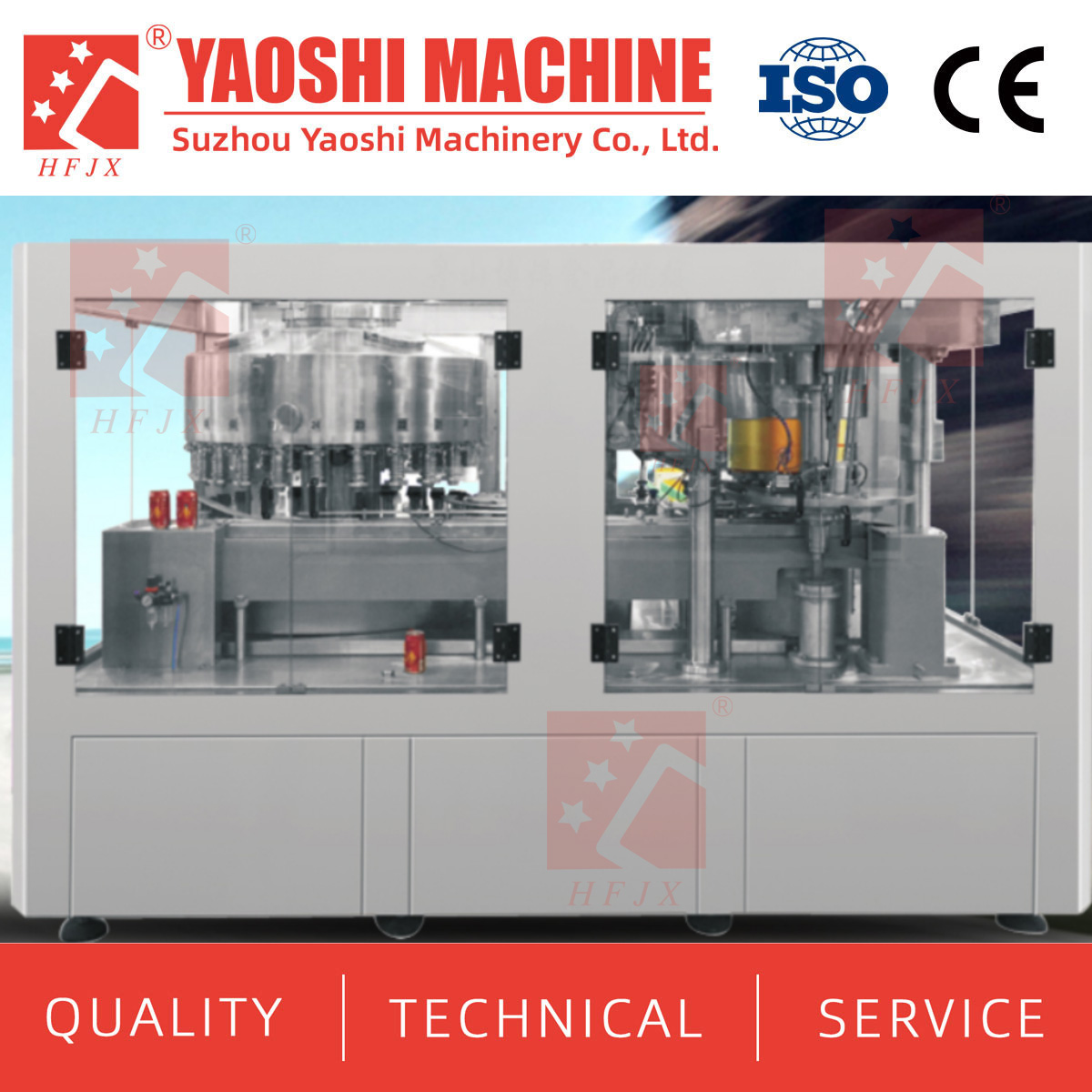
A 2-in-1 can filling and sealing machine combines filling and seaming functions within one equipment arrangement. It does not automatically include empty-can handling, product preparation, inspection, packing or palletizing. Those modules should be identified separately when defining a complete canning line.
| Beverage | Product Condition | Main Filling Concern | Package Information Needed |
|---|---|---|---|
| Beer | Contains dissolved carbonation | Foaming, product temperature and timely closing | Can body, lid, volume and required output |
| Soda | Carbonated | Pressure conditions, CO₂ retention and foam control | Can dimensions, lid and carbonation condition |
| Carbonated energy drink | Carbonated | Product temperature, pressure and formula behavior | Can, lid, product condition and output |
| Non-carbonated energy drink | Still | Product properties, filling level and process requirements | Can, lid, viscosity and filling temperature |
The table is a starting point, not a machine specification. The same package does not make the beverages technically identical. An energy drink may be carbonated or still, while two carbonated formulas can behave differently during filling. The final equipment arrangement must be based on the actual product and package.
A beer can filling line must connect correctly with the upstream beer process and the downstream packing section. Product temperature and carbonation affect foaming during filling. After the fill, the lid must be placed and the can seamed without creating an unstable transfer between the two operations.
Package details are just as important as the beverage. The can material, diameter, height, opening and lid type determine how cans are guided, positioned and closed. A capacity description such as “330 ml beer can” is not enough to define the seaming configuration because cans with the same nominal volume can use different dimensions or ends.
A beer project may include empty-can handling, filling, seaming, conveying, coding and secondary packaging. The exact line boundary depends on the equipment already installed in the brewery. Buyers adding a canning section to an existing plant should define the point where the new equipment receives product and the point where finished cans leave the proposed scope.

Soda, cola, sparkling water and other carbonated soft drinks need filling conditions that limit uncontrolled foaming and carbonation loss. Yaos Machinery's CSD filling machine range uses an isobaric filling principle for suitable carbonated beverage applications. The product and container are brought to compatible pressure conditions before filling.
Product temperature, carbonation condition and can transfer all affect the result. A filler selected only because the liquid has low viscosity may not be suitable for a carbonated product. The closing section also has to receive each filled can and lid in a stable position.
The downstream line can include coding, inspection, film wrapping, carton packing or palletizing, depending on the project. These items should appear as separate parts of the equipment list. A buyer comparing quotations should check whether “can filling line” means the filling and seaming monoblock or a larger scope that continues through finished packaging.
“Energy drink” describes a market category, not one fixed filling process. The first question is whether the product is carbonated. A carbonated energy drink needs pressure and foam conditions assessed in a similar way to other carbonated beverages. A still energy drink requires a filling method suited to its formula, viscosity and filling temperature.
For carbonated formulas, the line plan should state the product temperature, carbonation condition, can specification and lid. These details affect the filling process and the transfer to seaming. The project should not assume that settings developed for one soda or beer can be copied to another formula without evaluation.
For still formulas, the supplier needs to understand the product properties and required processing method. If the beverage requires heating, special cleaning, nitrogen dosing, tunnel treatment or another additional step, that requirement must be confirmed by the product owner before the equipment is specified. It should not be added because another energy drink line uses it.
This distinction prevents a common procurement error: asking for an “energy drink can filling machine” without explaining the beverage itself. Formula category, carbonation and filling temperature provide more useful information than the product name alone.
Can volume is only one packaging dimension. Equipment configuration also depends on material, body diameter, height, opening and the selected lid or end. These details affect empty-can handling, filling position, lid feeding and seaming.
The can and lid should be supplied as drawings, specifications or physical samples before the seaming arrangement is finalized. If several can sizes will run on one line, each combination should be listed. A change in height may affect guides and conveyors, while a change in diameter or end can require a different setup in the filling and closing section.
The seam must be evaluated under the buyer's quality procedure during commissioning and production. The machine supplier should not invent acceptance values without the applicable can, lid and customer standard. This keeps the equipment discussion tied to the actual packaging material.
A beverage can filling line can contain more than the filler and seamer. The upstream process may include water treatment or beverage preparation. Empty cans may require feeding and preparation before they reach the monoblock. After seaming, the line may continue through conveying, coding, inspection and secondary packaging.
Product preparation or beverage processing
Empty-can feeding and preparation
Filling and seaming
Filled-can conveying
Coding and inspection
Film wrapping or carton packing
Palletizing when required
Additional treatment equipment should only be included when the beverage process requires it. The quotation should identify which modules are included, which are optional and which will be supplied by the factory. This is more useful than calling every proposal a turnkey line without defining the boundary.
A usable equipment proposal starts with six groups of information.
State whether the product is beer, soda or an energy drink, whether it is carbonated, and its expected filling temperature. Include relevant formula characteristics that may affect filling or cleaning.
Provide the can material, volume, diameter, height, opening and lid specification. Drawings or samples reduce uncertainty during equipment configuration.
Give the target in cans per hour together with the corresponding can size. If the factory plans several sizes, list the required output for each one instead of giving one general speed.
Clarify whether the request covers a standalone filler, a filling and seaming monoblock or a complete line. Existing product tanks, conveyors, coding and packing machines should be identified.
Share the available layout, proposed line direction, connection points and local utilities. These conditions determine whether the selected modules can be installed and maintained in the available space.
Define the required date code, film or carton format and palletizing plan. Downstream equipment must accept the same can and keep pace with the filling section.
A speed target without a beverage and can specification does not define the application. The same machine description may represent different conditions for a small soda can and a larger beer can.
The seamer must be matched to the actual can and lid. Nominal volume cannot replace end specifications or samples.
Carbonated and still energy drinks require different filling assessments. Formula, temperature and process details matter even when the package looks identical.
The filler and seamer must transfer cans at compatible speed and position. Buying them as unrelated machines can leave an unresolved interface in the most time-sensitive part of the line.
A fast filling section cannot deliver its expected output when coding, conveying or packing repeatedly stops the line. Each module should be reviewed against the same can and production target.
Commissioning should test the line with the confirmed beverage, can and lid. Operators need to observe empty-can feeding, filling behavior, lid placement, transfer to the seamer and the condition of finished cans. Different products and can formats should have clearly recorded operating setups.
After a changeover, the factory should recheck guides, filling behavior, lid feeding and seam results under its quality procedure. Downstream machines should also be tested with the new format. These checks are more useful than assuming that a successful dry run proves the complete product process.
Yaos Machinery supplies can filling and sealing equipment for applicable beer, carbonated soft drink, soda and energy drink projects. Its product range also covers beer filling machines, beverage processing, conveyors, packaging machines and other equipment used around a canning section.
The project can be defined as a filling and seaming monoblock or as a connected production line. The equipment scope depends on the beverage, can, lid, output, factory layout and machinery already available. No single configuration should be treated as a default for all three beverage categories.
A can filling machine can be configured for applicable beer, soda, carbonated soft drinks and energy drinks. The filling method must match the product's carbonation, temperature and other relevant characteristics.
Possible product flexibility must be evaluated from the actual formulas, filling conditions, cleaning requirements, can sizes and lids. Sharing a can format does not automatically make the products suitable for one setup.
Carbonated products require filling conditions that manage pressure, foam and CO₂ retention. Still products are selected according to their own flow, temperature and process requirements.
Some equipment combines filling and seaming in a 2-in-1 arrangement. A quotation should state whether the seamer, lid feeder and other line modules are included.
Provide material, volume, diameter, height, opening and lid specifications. Drawings or samples are preferred when finalizing the equipment.
That depends on the range of can bodies and ends, as well as the required change parts and adjustments. Every proposed can-and-lid combination should be reviewed before the line is confirmed.
The scope may include product preparation, can feeding, filling, seaming, conveying, coding, inspection, packing and palletizing. The final list depends on the factory and existing equipment.
Send the beverage and carbonation condition, filling temperature, can and lid details, target output, required line scope, factory layout and secondary packaging format.
To evaluate a beer, soda or energy drink canning project, prepare the beverage conditions, can and lid drawings or samples, target cans per hour, required line boundary and factory layout. These details allow the supplier to define the filling method, seaming arrangement and supporting equipment.
Contact Yaos Machinery to request an equipment list, preliminary line scope or quotation. Email tony@yaos.ltd, call or message +86 18915689808, or use the contact page.


+86-512-58530618

Wukesong Road, Sanxing Town, Zhangjiagang City, Jiangsu Province, China