



A quotation that says “one liquid filling machine for beverages” leaves most of the engineering work undefined. Still water, carbonated drinks and hot-filled juice can share a bottle volume while requiring different product conditions, filling controls and container handling. A replacement project adds another constraint: the new filler must connect to equipment that is already installed.
Before requesting a price, the procurement manager should define the product at the filling point, the approved container and closure, the required output, and the line boundary. These inputs determine whether a proposed liquid filling machine is technically relevant or merely matches a broad product name.
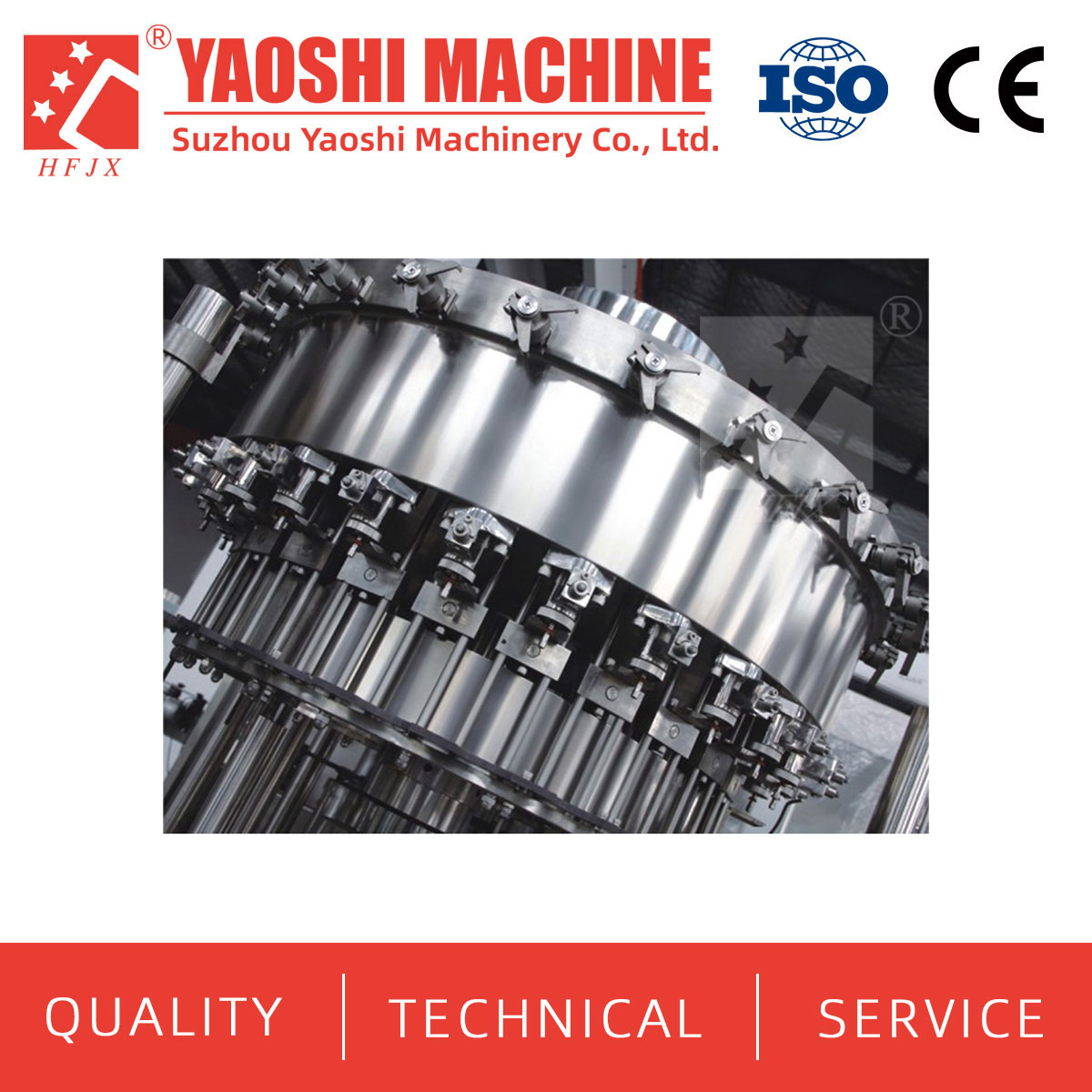
A liquid filling machine configuration should be selected from the beverage, container and required output.
The commercial beverage name is not enough. The supplier needs to know how the liquid behaves when it enters the filler. Record whether the product is still or carbonated, its filling temperature, viscosity range, foaming tendency, and whether it contains pulp, fibers or other particles.
Product preparation also matters. A filler cannot correct unstable temperature, carbonation or composition arriving from an upstream tank or processing system. The proposed machine should therefore state the required inlet condition and how that condition will be maintained during normal production, startup and short stops.
Still or carbonated product
Viscosity at the stated filling temperature
Foam behavior and required headspace
Particle type, size and concentration where applicable
Product sensitivity to oxygen, heat or extended circulation
Required cleaning sequence between products
Filling methods should be discussed as process options, not selected from a generic chart. The supplier must confirm the method against the actual beverage, package and quality target.
| Product condition | Approach to discuss | Main questions before selection |
|---|---|---|
| Still, low-viscosity beverage | Gravity, normal-pressure or pressure-gravity filling where applicable | Required fill level or volume, flow behavior, dripping and bottle stability |
| Carbonated beverage | Controlled-pressure or isobaric filling | Product temperature, carbonation, pressure, foam and closure timing |
| Hot-filled juice or tea | Hot-filling configuration linked to the approved process | Filling temperature, bottle heat resistance, recirculation, closure and cooling steps |
| Product with pulp or particles | Dedicated product path and filling-valve review | Particle dimensions, distribution, blockage risk and cleaning access |
| Product requiring a controlled hygienic environment | Ultra-clean or aseptic process only when the complete process requires it | Product treatment, container decontamination, environmental boundary and validation responsibility |
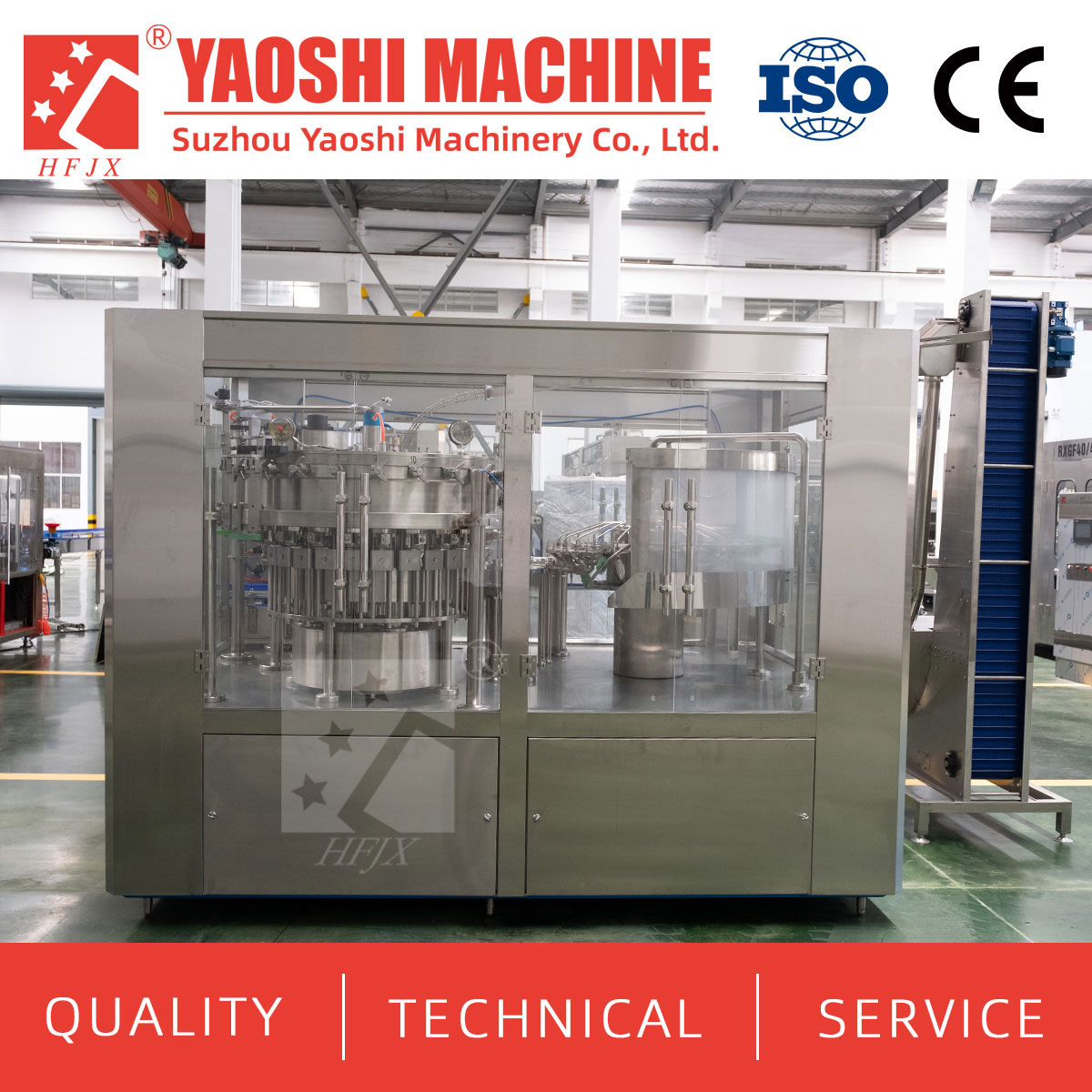
Carbonated products require filling conditions matched to temperature, pressure and foam behavior.
For carbonated products, review the CSD filling machine configuration against product temperature, pressure and foam conditions. For juice and tea, the juice filling machine configuration depends on the approved hot-fill, ultra-clean or aseptic process.
The table identifies topics for engineering review; it does not confirm that one machine or supplier configuration covers every row. Hot filling, ultra-clean filling and aseptic filling are complete process decisions. They cannot be selected only to obtain a longer equipment list or a higher automation level.
Provide dimensioned drawings and production-intent samples for the bottle, can, cap or end. Nominal fill volume does not describe container height, diameter, neck finish, opening, base geometry or tolerance. These details affect infeed, support, filling-valve access, change parts, transfer and closure application.
PET, glass and cans also behave differently on a line. Lightweight PET may deform or become unstable under unsuitable handling. Glass requires controlled transfers and a response to breakage. Can projects depend on an approved can-body and end combination as well as the filler-to-seamer interface.
The package file should include:
Container material, volume, height and maximum diameter
Neck finish or can-body specification
Cap, crown or can-end drawing
Dimensional tolerances and approved suppliers
Required fill point, headspace or visible fill-level criterion
Label position and secondary-packaging format
A single bottles-per-hour figure is incomplete. State the container size, beverage and filling condition associated with the target output. A line filling small still-water bottles does not create the same liquid demand or cycle conditions as a larger hot-filled bottle or a carbonated package.
Calculate saleable demand for each SKU, then identify effective operating hours after cleaning, inspections, material replenishment and format changes. The quotation should distinguish the proposed filler capacity from the expected stable output of the connected line.
For multi-SKU production, list batch size and change frequency. A machine with a higher stated speed may produce less during a shift if each change requires extensive mechanical adjustment or product-contact cleaning.
Machine format should follow output, available space, package handling and the required connection to rinsing and capping. An inline arrangement can suit selected projects that value access, phased expansion or variable production. Rotary equipment is commonly considered where continuous container flow and higher output are required. An integrated rinsing-filling-capping unit can reduce transfers between separate machines when the package and process suit that arrangement.
These labels do not confirm performance. Ask the supplier to explain container flow, the number and type of change parts, cleaning access, closure integration and the basis of the proposed output.

A hot-filling configuration must be reviewed with the product process, container and cleaning requirements.
| Project type | Primary review | Information the buyer should provide |
|---|---|---|
| New beverage line | Process sequence and capacity balance from product preparation to pallet handling | Product matrix, packages, target output, layout, utilities and required scope |
| Replacement filler | Mechanical, process, control and utility interfaces with retained equipment | Site measurements, drawings, videos, signals, elevations and shutdown window |
Define whether the project includes water treatment or beverage processing, container making or feeding, rinsing, filling, closing, conveying, inspection, labeling, coding, packaging and palletizing. “Complete line” should mean a written list of included, optional and excluded equipment.
Record infeed and discharge elevations, conveyor direction, container pitch, available accumulation, product connections, drains, control signals, emergency-stop circuits and utilities. Measure maintenance access and the removal route. A new filler may fit the footprint but still fail to connect to the retained capper or conveyor.
Cleaning requirements come from the beverage, process and plant sanitation plan. Identify the product-contact boundary, cleaning method, chemicals, temperatures and whether circuits connect to an existing CIP system. Confirm who approves and validates the cleaning sequence.
A plant changing between allergens, flavors or products with particles may need a different change procedure from a line dedicated to one beverage. Ask which parts are cleaned in place, which require removal, how the system drains and what must be inspected before restart.
Product and container trials can expose foam, dripping, deformation, unstable transfers, particle blockage or unsuitable closure timing before installation. Provide representative beverage and approved packaging materials where practical.
The acceptance plan should name the test product or approved substitute, container, closure, operating condition and run duration. It should state how fill result, package damage, rejects and connected-line behavior will be measured. A speed demonstration without agreed product and package conditions is not a complete acceptance test.
Using the beverage name instead of describing its filling condition
Requesting one machine for several products without a product matrix
Providing bottle volume but no drawing, closure or sample
Comparing nominal filler speed instead of stable line output
Leaving cleaning, change parts and product trials outside the proposal
Failing to define retained equipment in a replacement project
Treating installation, pipework, wiring and testing as assumed scope
Yaos Machinery presents filling-equipment categories for water, juice, carbonated beverages, beer, cans and other liquid applications. The final configuration depends on the confirmed beverage, package, output and process boundary.
For a new line, provide the complete production sequence and factory layout. For a replacement filler, include the existing equipment and every connection that will remain. The proposal should then identify the filling approach, machine arrangement, included formats, interfaces and facts still requiring a product or container test.
Do not assume this from bottle size alone. These products can require different pressure, temperature, circulation, hygiene and closure conditions. The supplier must review each SKU and state which combinations are included.
No. Carbonation, foam, particles, temperature, oxygen sensitivity and cleaning requirements can change the equipment configuration even when viscosity is low.
BPH is useful only when tied to a defined container and product condition. The project should also state the required stable output of the complete line.
It can be considered when the container, closure, process and required output support synchronized operation. Confirm cleaning, change parts and the boundaries with upstream and downstream equipment.
Unverified interfaces are a common risk. Mechanical elevations, container transfers, product connections, controls, utilities and the shutdown plan should be confirmed before manufacture.
Send product conditions, container and closure files, output by SKU, cleaning needs, existing equipment, layout, utilities and the required project scope.
Send the beverage description, filling temperature, container and closure drawings, target output, SKU schedule and factory layout through the contact page. If the project replaces an existing filler, add interface drawings, control information and the available shutdown period. Request a technical scope that states the proposed filling method, included formats, line boundary and acceptance basis.


+86-512-58530618

Wukesong Road, Sanxing Town, Zhangjiagang City, Jiangsu Province, China


