



A replacement filler, labeler or packer may look compatible on a layout and still fail during commissioning. The machine can arrive with the correct nominal speed yet meet a different conveyor height, container pitch, control protocol or accumulation condition from the operating line.
A successful bottling equipment retrofit therefore starts with an interface survey, not a machine quotation. The buyer and supplier need a controlled record of the existing mechanical, electrical, process and production conditions before the old machine is removed.
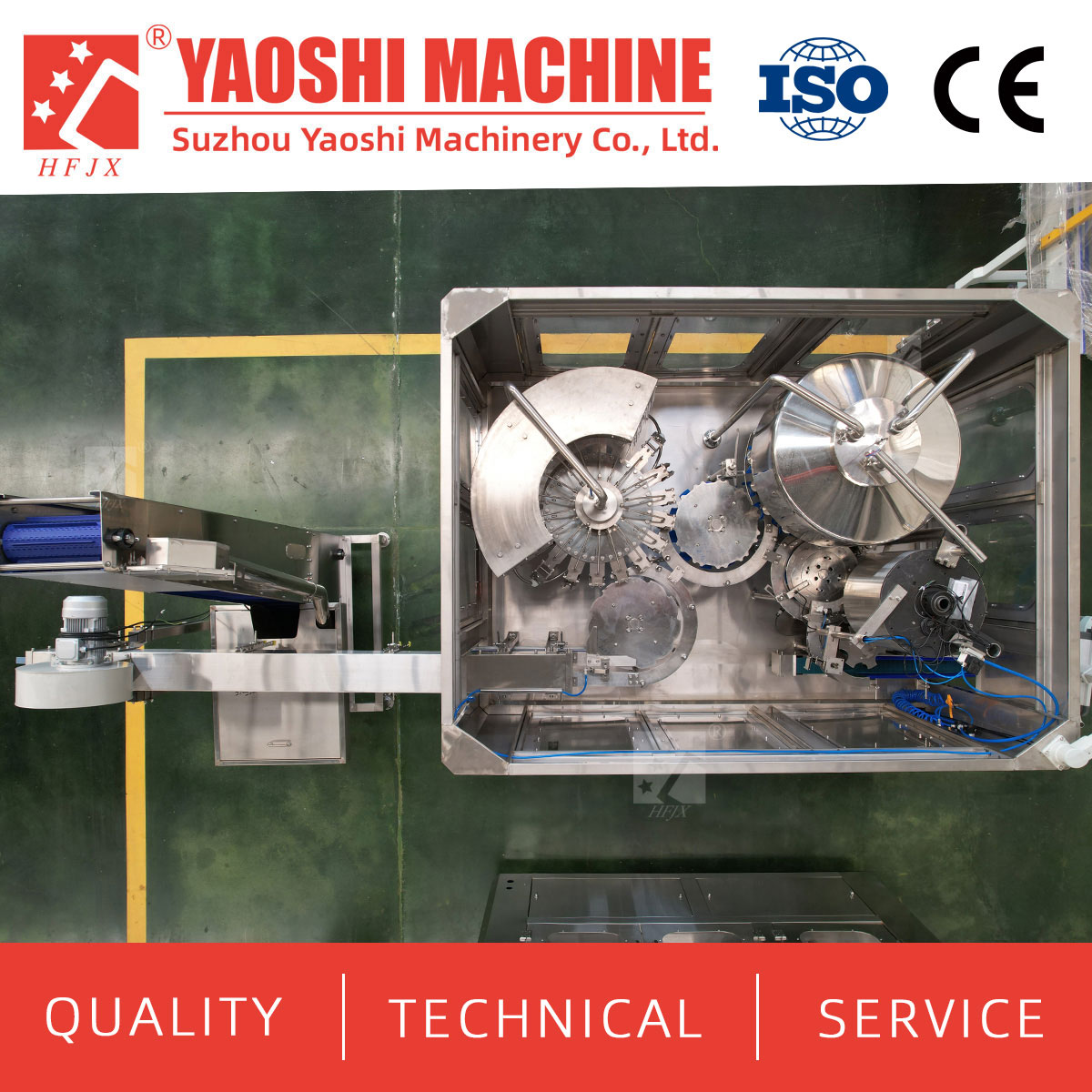
A replacement filler must match both the beverage process and the retained line equipment.
Start with the operating problem. Is the machine being replaced because of obsolete controls, poor format compatibility, hygiene requirements, maintenance difficulty, product change or insufficient output? Each reason produces a different specification.
State a measurable result for the project and separate it from optional improvements. If the objective is higher saleable output, confirm that the new machine is the real line constraint. If the objective is a new bottle or pack format, verify every retained transfer, guide, sensor and change part that touches that format.
Do not assume that a faster machine will make the line faster. A replacement can move the bottleneck to the upstream process, labeler, packer or palletizer. The project scope should address the limiting interface, not only the equipment being removed.
Original drawings are useful, but they may not show later conveyor moves, new cable trays, field wiring, guard changes or local pipework. Complete the site survey during production and compare actual conditions with the available documents.
Record stable production rate, short stops and recurring faults by SKU.
Film container flow at normal speed, during stops and during restart.
Measure infeed and discharge elevations from a defined site datum.
Photograph machine boundaries, panels, pipe connections, drains and access routes.
Save current PLC and HMI backups where access and ownership allow.
Confirm all active and planned products, containers, labels and pack formats.
The survey should also identify undocumented conditions. Mark unverified dimensions and signals as open items instead of converting them into assumptions in the request for quotation.
| Document | Required information | Why it matters |
|---|---|---|
| Current line layout | Machine positions, operating direction, aisles, columns, doors and nearby services | Confirms footprint, access and maintenance clearance |
| Interface elevation drawing | Conveyor top, container support point, infeed and discharge centerlines and datum | Prevents transfer steps, unstable containers and excessive field modification |
| Container and closure drawings | Dimensions, tolerances, material, neck or finish and all formats | Defines guides, change parts and handling method |
| Process diagram | Product supply, return, cleaning, drains and utility connections | Defines hygienic and piping boundaries |
| Electrical drawings | Supply, panels, safety circuits, field devices and cable routes | Shows what can be retained and what must be modified |
| Controls architecture | PLC, HMI, network, signal list, line controller and data interfaces | Assigns machine-to-machine communication responsibility |
Use revision numbers and survey dates. If the supplier bases its design on a preliminary drawing, the quotation should state what must be confirmed before design release.
The overall length and width are only the beginning. Confirm floor level, anchoring area, overhead clearance, door swing, electrical-panel access, maintenance removal zones and operator position. Check whether the complete machine or its largest shipping section can pass through the building entrance and between columns or existing equipment.
At the infeed and discharge, record line direction, conveyor width, elevation, guide arrangement, container pitch and transfer method. A short field-fit conveyor section may be appropriate, but its design, drive, guides, sensors, supports and controls must appear in the scope.
A new bottling machine must connect to the retained product supply, container feed and closure system. Confirm product inlet position, pipe size, required pressure and temperature, cleaning supply and return, drain points, closure feeding height and discharge elevation. Review whether the existing rinser, capper or seamer remains separate or is included in the new machine block.
A replacement labeling machine needs more than the correct container diameter. Confirm bottle condition at entry, product temperature where it affects condensation, orientation requirements, label material, reel or magazine data, code position, reject handling and the spacing available between containers.
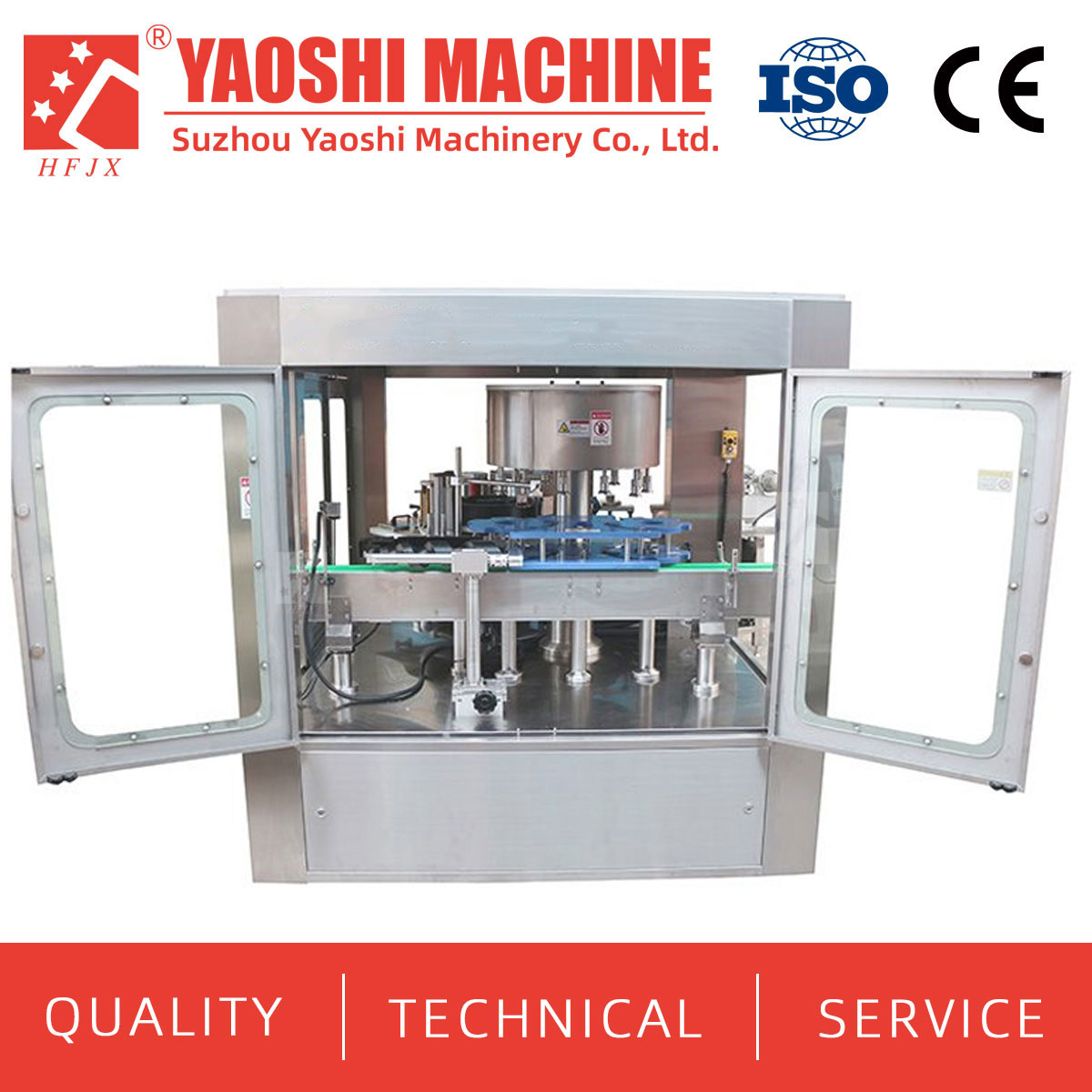
Labeling-machine selection must account for the label format, container presentation and existing conveyor arrangement.
For a new liquid packaging equipment section, define incoming container count, lane arrangement, pack pattern, film or carton specification, handle or tray requirements, discharge orientation and palletizing interface. Verify that upstream conveyors can create the grouping and spacing required by the packer.
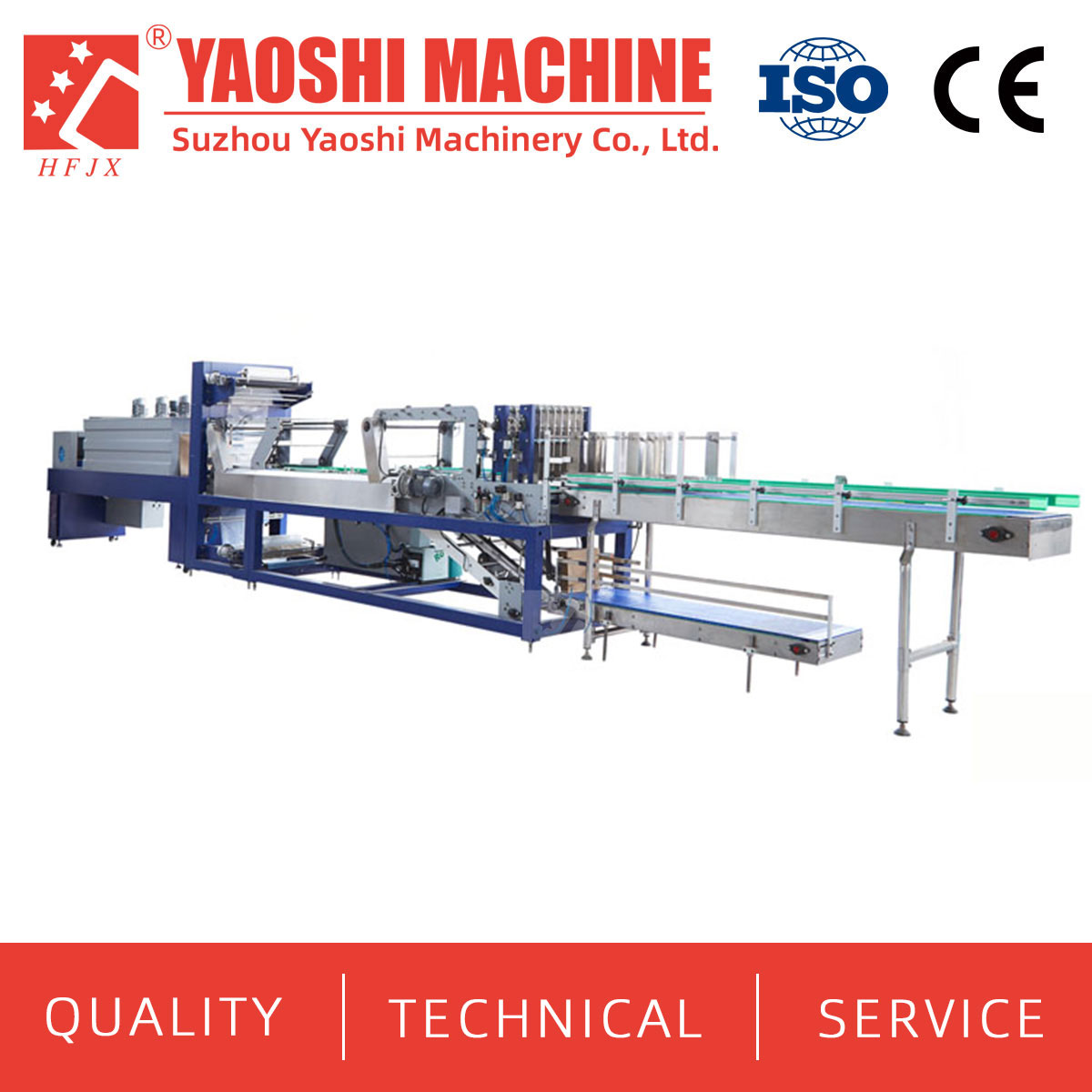
Packer replacement affects container grouping, accumulation, consumables and the downstream palletizing interface.
Record site voltage, frequency, earthing arrangement, available supply capacity, panel location and responsibility for cables and cable trays. Identify which electrical components will be removed with the old machine and which field devices belong to the retained line.
The controls survey should name the line controller, machine PLC platforms, industrial network, remote I/O, speed-reference method and data requirements. Create a signal list that covers at least ready, run, fault, blocked, starved, speed reference, permissive and reset conditions. Avoid relying on a statement such as “standard upstream and downstream signals.”
Safety circuits require their own review. Define the emergency-stop zones, guard interlocks, safe isolation points and reset behavior at each interface. State who assesses and validates the modified safety system under the applicable destination requirements.
Compare stable rate rather than brochure maximums. Record the actual rate by product and format for the machine being replaced, the two adjacent machines and any known line bottleneck. Include changeover time, minor stops and restart behavior.
Buffering must be assessed on both sides of the new equipment. A short conveyor may hold many small containers but provide little recovery time at a high line rate. Conversely, long physical conveyor length may offer poor accumulation if containers cannot queue safely. Document usable container count and the time it provides at the planned operating rate.
| Condition | Question to resolve |
|---|---|
| Upstream stops | How long can the new machine continue before it becomes starved? |
| Downstream stops | How long can discharge continue before the new machine becomes blocked? |
| Restart | Which machine starts first, and how is speed increased without surging? |
| Format change | Does usable accumulation change with container size or stability? |
| Rejects | Where are rejected containers removed, and does rejection disturb spacing? |
If the proposed machine is faster, require the supplier or line integrator to show how adjacent conveyors, sensors and control logic support the new rate.
For a filler retrofit, state beverage characteristics relevant to filling, operating temperature, carbonation where applicable, cleaning method and production sequence. Confirm the capacity and condition of retained tanks, pumps, treatment or blending equipment.
List compressed air, process water, cooling water, chilled water, steam or hot water, carbon dioxide, power and drainage as applicable. For each service, provide available quality, pressure, temperature and capacity at a named connection point. The quotation should state required peak and normal demand, not only a general utility list.
Confirm product-contact materials, pipe slope, drainability, cleaning connections and responsibility for field welds or adapters. A hygienic machine design cannot compensate for an undefined connection to the existing process.
Retrofitting an operating plant creates a fixed shutdown window. The project schedule should separate work that can be completed before shutdown from work that requires the line to stop.
Pre-fabricate adapters, conveyor sections, supports and cable routes where dimensions are verified.
Define isolation, draining, cleaning and removal responsibility for the old machine.
Confirm rigging route, lifting equipment, temporary storage and disposal or relocation.
Allocate time for mechanical work, wiring, utilities, dry testing, wet testing and production ramp-up.
Prepare test containers, closures, labels, film, cartons and approved product or test medium.
Set a contingency plan if a critical interface cannot be completed within the shutdown.
| Scope item | Required RFQ response |
|---|---|
| Site survey | Who measures, who approves and which dimensions remain open? |
| Adapters and conveyors | Who designs, supplies, installs and controls each connecting section? |
| Electrical work | Where does supplier wiring end and local-contractor wiring begin? |
| PLC and safety changes | Who owns source code, modifications, backups and validation? |
| Utility connections | Who brings each service to the boundary and makes the final connection? |
| Testing | Who provides materials, labor, instruments and acceptance records? |
Mark each item as supplier, buyer, local contractor or third party. Where two machines meet, appoint one party to own the interface design and another to approve it. Unassigned work is a schedule risk, even when the hardware cost is small.
Factory acceptance testing can verify the new machine configuration, format parts, controls, safety functions and agreed performance under available test conditions. It usually cannot prove every connection to equipment that remains at the buyer’s plant.
Site acceptance should therefore test actual transfers, blocked and starved signals, emergency-stop behavior, utilities, product or approved medium, all agreed formats and sustained connected-line operation. Define the test duration, output basis, quality checks, exclusions and correction process before purchase.
Using an old layout without checking the physical line
Stating conveyor height without defining the measurement datum
Comparing rated machine speed with stable connected-line output
Leaving PLC, safety and field-cabling changes outside both scopes
Testing only the main SKU and assuming every format will transfer correctly
Calling installation “included” without defining rigging, labor and local services
Scheduling no time for wet testing, operator training or ramp-up corrections
Confirm the available footprint, maintenance clearance, infeed and discharge centerlines, conveyor elevations from a common datum, operating direction, overhead restrictions and the route for bringing the machine into the plant.
Provide the current PLC and HMI platforms, network architecture, signal list, line-speed control method, safety zones, available drawings and responsibility for software changes and backups.
State usable container or pack count and the recovery time it provides at the planned rate. Include behavior during downstream stops, upstream starvation and restart.
FAT can verify the supplied machine, but actual interfaces with retained equipment normally require site testing. Include connected-line conditions in the SAT plan.
Include the retrofit objective, product and SKU matrix, actual site drawings, interface measurements, current and target rates, control architecture, utility conditions, installation boundary, shutdown plan and acceptance method.
Yaos Machinery supplies filling, labeling and packaging equipment for beverage-line applications. Send the current layout, interface elevations, product and format matrix, operating videos, electrical and controls information, utility data, target output and shutdown window through the contact page. Ask the proposal to identify included work, exclusions, open dimensions and third-party responsibilities in writing.


+86-512-58530618

Wukesong Road, Sanxing Town, Zhangjiagang City, Jiangsu Province, China


