



A quotation for a filler and a quotation for a complete line may show the same target output but assign very different responsibilities to the supplier and buyer. The important question is not simply how many machines to purchase. It is where the project starts and ends, which existing assets will remain, and who will make every interface work.
For a replacement project, a standalone beverage filling machine can be the right scope when the surrounding process, container handling and packaging systems are suitable. For a greenfield plant, a wider line scope can reduce coordination gaps. Neither option is automatically better; the correct choice depends on the interfaces the project team can define and control.
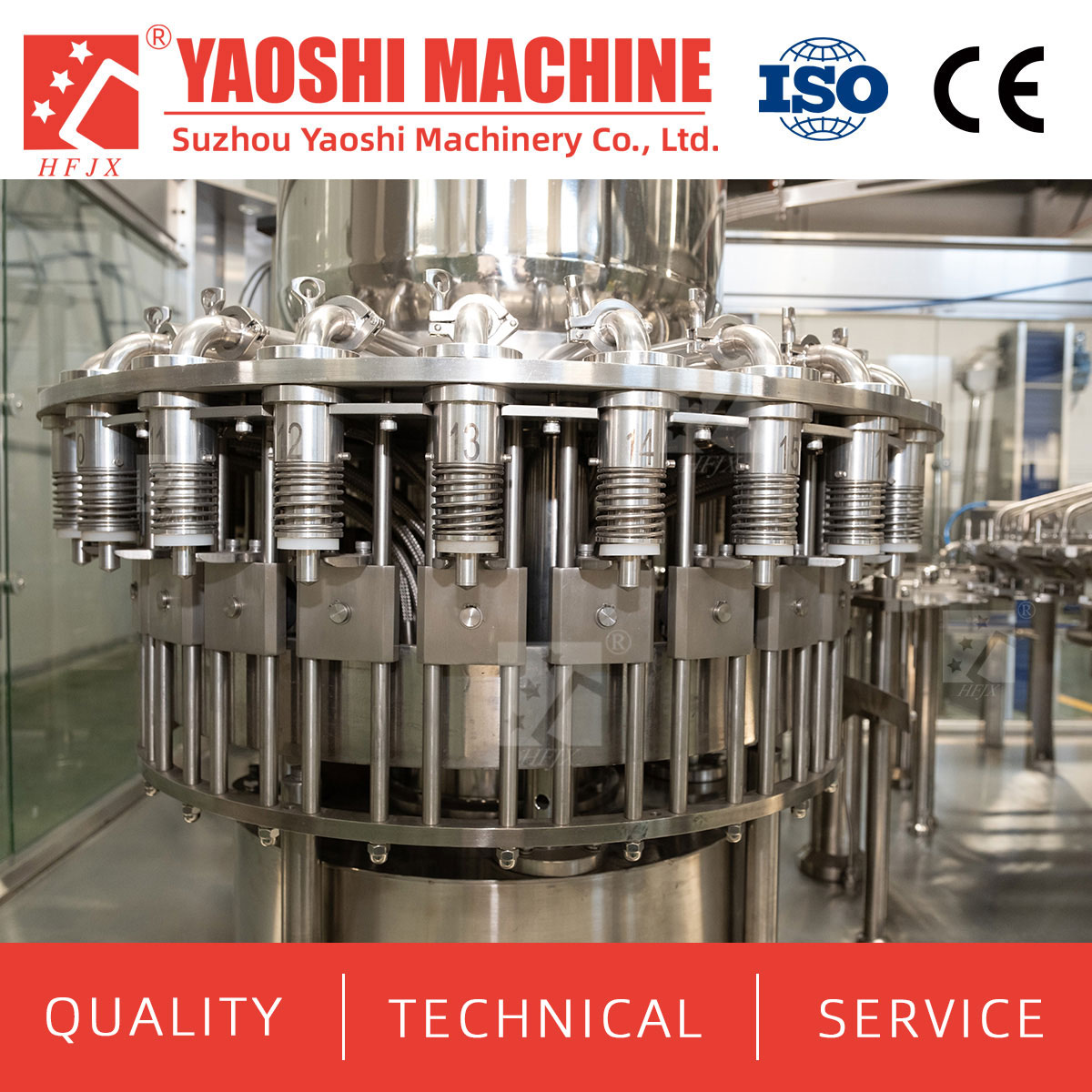
A standalone filler still depends on stable product supply, container transfer and downstream discharge.
A single-machine replacement usually starts with a known bottleneck, an obsolete filler, a new container or a product requirement that the existing machine cannot support. The plant may already have treatment equipment, conveyors, labeling, packing, utilities and an experienced controls team. In this case, replacing only the necessary equipment can limit disruption.
A greenfield project has a different risk profile. The filler cannot be specified in isolation because the plant also needs a defined process route, container supply, accumulation, inspection, secondary packaging and utility plan. A broader complete bottling line scope may therefore be more practical, provided that the proposal identifies every included and excluded item.
| Scope | Suitable situation | Buyer or integrator retains | Main risk to control |
|---|---|---|---|
| Standalone filler | Replacement in an operating line with compatible surrounding equipment | Upstream process, conveyors, downstream equipment, utilities and line integration unless listed otherwise | Mechanical, electrical, control and hygiene interfaces |
| Integrated rinsing, filling and closing machine | Container preparation and closure handling need coordinated operation in one core block | Product preparation, bottle or can supply, downstream packaging and site services | Transfers into and out of the machine, closure supply and capacity balance |
| Complete line | Greenfield plant or major expansion involving several new process and packaging stages | Items expressly excluded, often including some civil works, site utilities and local services | Unclear line boundaries, utility assumptions and acceptance criteria |
The phrase “complete line” has no reliable meaning without an equipment list and a responsibility matrix. It may describe the filling and packaging section only, or a wider scope from treatment and bottle production through palletizing. Ask each supplier to mark every item as included, optional, excluded or buyer-supplied.
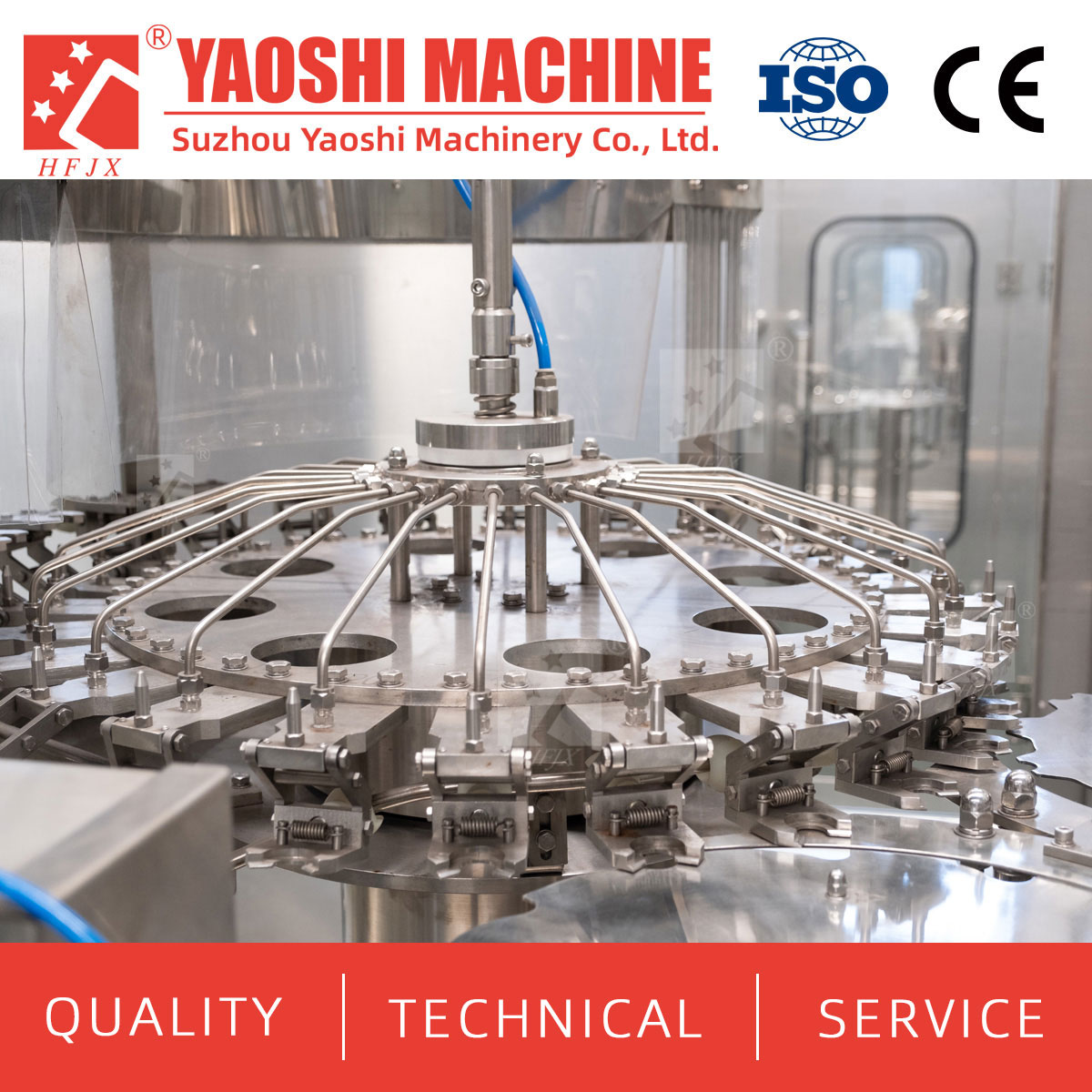
Combining rinsing, filling and capping reduces some internal transfer points, but it does not define the full production-line boundary.
Choose a standalone scope when the retained equipment has adequate capacity, its condition is understood and the plant can manage integration. Before requesting a quotation, confirm the existing line direction, conveyor height, container pitch, infeed and discharge arrangement, available floor space, access for installation and the planned shutdown window.
The controls boundary is equally important. Record which PLC controls line speed, how blocked and starved signals are exchanged, how emergency stops are linked, and whether production data must connect to a plant system. A filler that reaches its rated speed during an isolated test can still underperform if the existing line cannot feed or discharge containers consistently.
Replacement scope also needs a hygiene review. Product pipework, return lines, drain points and cleaning connections must match the new machine. If the product or filling temperature changes, confirm whether the retained tanks, pumps, heat treatment and cleaning arrangement remain suitable.
A wider scope is usually justified when several connected machines are new, when no party has complete integration responsibility, or when the required output depends on coordinated buffering and line control. One project layout can then define equipment positions, operating direction, accumulation, operator access, maintenance clearance and material flow.
However, broader equipment supply does not automatically include building work or plant services. The quotation still needs to state who provides foundations, floor penetrations, drains, cable trays, local pipework, utility distribution, lifting, unloading, installation labor and production materials for testing.
For the product side, provide the beverage type, formulation characteristics relevant to filling, required fill temperature, carbonation where applicable, cleaning regime and production schedule. The supplier should state the required product pressure, temperature range, flow stability and connection point at the machine boundary.
For container supply, state whether bottles arrive from a depalletizer, unscrambler or an inline blow molding machine. Include container drawings, materials, neck finish, closure data and all planned formats. The quotation should identify required change parts and the responsibility for air conveyors, neck guides, star wheels and transfer components.
Product preparation, holding tanks, pumps and final filtration
CIP supply, return route and cleaning responsibility
Bottle or can supply rate and transfer elevation
Closure feeding, storage and replenishment method
Upstream buffer capacity and stop-start signals
The line after filling may include closure inspection, fill-level inspection, coding, labeling, accumulation, case or film packing and palletizing. Specify pack patterns, label types, code position, bundle or carton formats and the acceptable container condition at each transfer point.
Conveyors should not appear as an unspecified allowance. The proposal needs conveyor type, approximate route, included length, transfer points, guide adjustment, lubrication approach where relevant, drives and controls. For secondary packing, ask which packaging machine, consumables and pack formats are included.

Downstream packing format and speed affect conveyor accumulation and the stable output of the complete line.
Do not ask only for total power. Require a utility schedule showing the specified voltage and frequency, connected load, estimated operating demand and connection points. The same principle applies to compressed air, process water, cooling water, chilled water, steam or hot water, carbon dioxide, drains and ventilation where the process requires them.
The buyer should provide available pressure, temperature, quality and capacity at the proposed connection points. The supplier should identify peak and normal demand rather than leaving the plant to size services from a single average figure. Confirm environmental conditions, local electrical requirements, floor loading, drainage and access restrictions before layout approval.
| Interface | Quotation must identify |
|---|---|
| Mechanical | Connection position, elevation, direction, dimensions, supports and supplied adapters |
| Product and CIP | Pipe boundary, pressure, temperature, flow, cleaning sequence and return route |
| Electrical | Supply conditions, panels, field cabling, cable trays and installation boundary |
| Controls | PLC ownership, signal list, line-speed control, alarms, emergency stops and data exchange |
| Utilities | Quality, pressure, peak demand, connection point and responsibility for distribution |
| Testing | FAT and SAT materials, duration, output basis, quality checks and pass criteria |
Assign one responsible party to each row. Where two suppliers meet, name who designs the interface and who verifies it. This prevents a gap from being treated as somebody else’s work during installation.
Capacity should be tied to a specific product, container, closure and operating condition. Separate nominal machine speed from the stable output expected at the stated project boundary. For a complete line, agree whether acceptance applies to the filler alone or to finished packs at the end of the quoted scope.
Also compare format parts, product-contact materials, inspections, spare parts, documentation, training, installation and commissioning. Ask for a formal exceptions list. A lower price may simply exclude conveyors, site cabling, testing materials or integration work included elsewhere.
Which existing equipment will remain, and has its actual condition and capacity been verified?
Where are the physical, product, electrical and control boundaries?
Who owns the overall line layout and performance calculation?
Which utilities are supplied to the machine, at what conditions and by whom?
Which items are included, optional, excluded or buyer-supplied?
How will FAT and SAT prove output, quality and interface operation?
Who resolves an interface problem involving two equipment suppliers?
Yaos Machinery supplies beverage filling equipment and related line equipment for water, juice, carbonated drinks and other beverage applications. Send the product matrix, container and closure drawings, target output, retained-equipment list, plant layout and available utilities through the contact page. Ask for a proposal that shows the equipment boundary, interface responsibilities, exclusions and acceptance basis in writing.
No. It combines core container handling and filling functions, but product treatment, container production or feeding, conveying, labeling, packing and utilities may remain outside the supply scope.
Yes, if the retained equipment can handle the required containers and stable output. Transfer height, line direction, accumulation, control signals and equipment condition must be verified before order placement.
No. Suppliers use the term differently. Treat the equipment list, layout and inclusions table as the definition of scope.
The responsible party should be named in the interface matrix. The conveyor scope should include route, transfer points, guides, drives and control integration rather than only an estimated length.
Provide products, containers, closures, output targets, SKU schedule, existing equipment, site layout, utilities, destination requirements and the expected installation and testing scope.


+86-512-58530618

Wukesong Road, Sanxing Town, Zhangjiagang City, Jiangsu Province, China


