Select a gallon labeler from the actual water container and label, then confirm handling and accepted output. A machine advertised for “gallon containers” may refer to a smaller jug rather than the 3- or 5-gallon barrel used on your water line.
For large water containers, begin with the labeling position: a body panel, wrap-around band, neck label or cap sleeve. These are different duties. Suzhou Yaoshi Machinery Co., Ltd. lists self-adhesive, shrink-sleeve and OPP labeling systems in its labeling equipment range. Their suitability for a large barrel must be confirmed against drawings and samples.
A self-adhesive label is a candidate where the required surface and application conditions allow reliable attachment. A sleeve is a candidate where the package and label can pass the specified application and shrinking process. Roll-fed glue labeling needs a separately confirmed label, container and handling configuration.
Do not choose full-body coverage when the requirement is only a neck or cap label. Likewise, a cap sleeve does not satisfy a body-label specification. Record each required label, its purpose and its location on the container drawing.
| Label Requirement | Configuration to Evaluate | Main Checks for a Water Barrel |
|---|---|---|
| Label on a defined body panel | Pressure-sensitive application | Panel size, curvature, surface condition, support and placement |
| Wrap-around body label | Confirmed wrap application or roll-fed glue system | Label band, seams, ribs, rotation/support and overlap |
| Body shrink sleeve | Large-format sleeve application and compatible shrink process | Layflat size, shape, handle clearance, shrink behavior and package condition |
| Neck or cap sleeve | Localized sleeve application | Cap/neck dimensions, placement, shrink result and opening function |
This table identifies candidates for testing. It does not establish that a standard machine accepts the complete barrel or the chosen sleeve size.
Provide volume, maximum dimensions, empty and filled weight, neck, shoulder, base, ribs, seams and handle geometry. Show the exact label panel or band, with the placement datum and acceptable variation. A nominal water capacity cannot define these interfaces.
For a round barrel, ask whether the chosen label zone is cylindrical, tapered or interrupted by ribs. For shaped containers, define orientation and the surfaces that can contact guides or stabilizers. Include the actual closure if it affects handling or neck labeling.
Send production samples, including representative variation. A label that appears neat on one selected container may behave differently across the approved supply. The proposal should identify accepted dimensions, tooling and any unconfirmed format.
State whether the containers are new or returnable and where labeling occurs relative to washing, filling, capping and drying. Record the container's temperature, moisture, appearance and other relevant surface conditions at application.
For a returnable program, discuss existing labels, adhesive or sleeve remnants and the required next-use condition. Ask who owns removal and surface preparation. Reuse suitability and label-removal behavior need tests for the actual barrel, material and plant procedure.
Have the label supplier confirm attachment or shrink performance under those conditions. Do not assume a label specification proven on small dry bottles will work on a washed large barrel.
For self-adhesive labels, provide dimensions, shape, material, adhesive, liner, gap, winding direction, roll core and roll diameter. Identify transparent or unusual materials so the supplier can review detection and dispensing.
For sleeves, provide the film, thickness, cut length, layflat dimensions, seam and artwork. Show the intended position and the required result after shrinking. Confirm barrel, closure and printed material compatibility with the proposed process rather than assigning a universal tunnel setting.
For roll-fed glue labels, supply the approved material, repeat, overlap, reel specification and container band. The supplier should confirm its specific application and handling method; a general OPP product heading is insufficient for a gallon-barrel commitment.
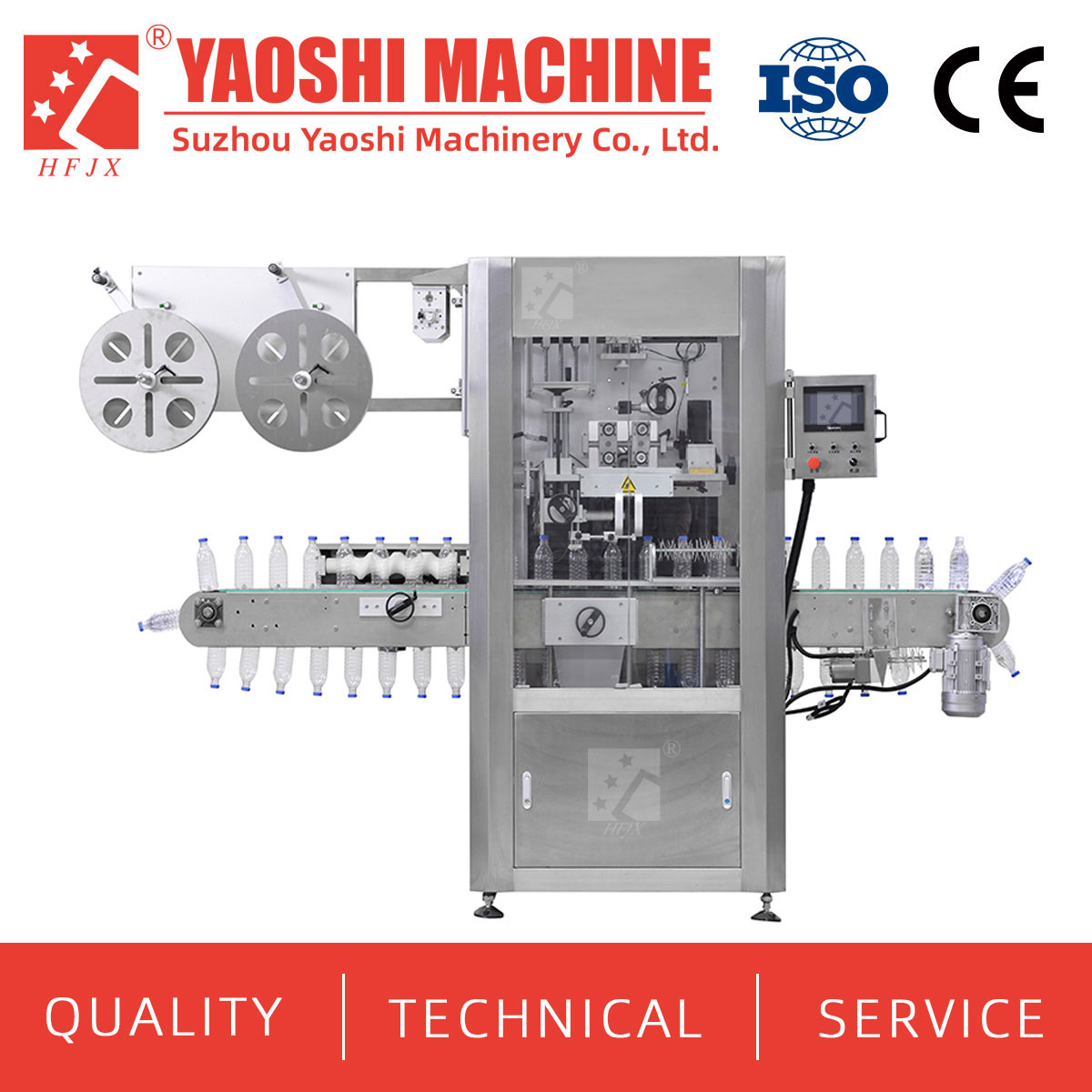
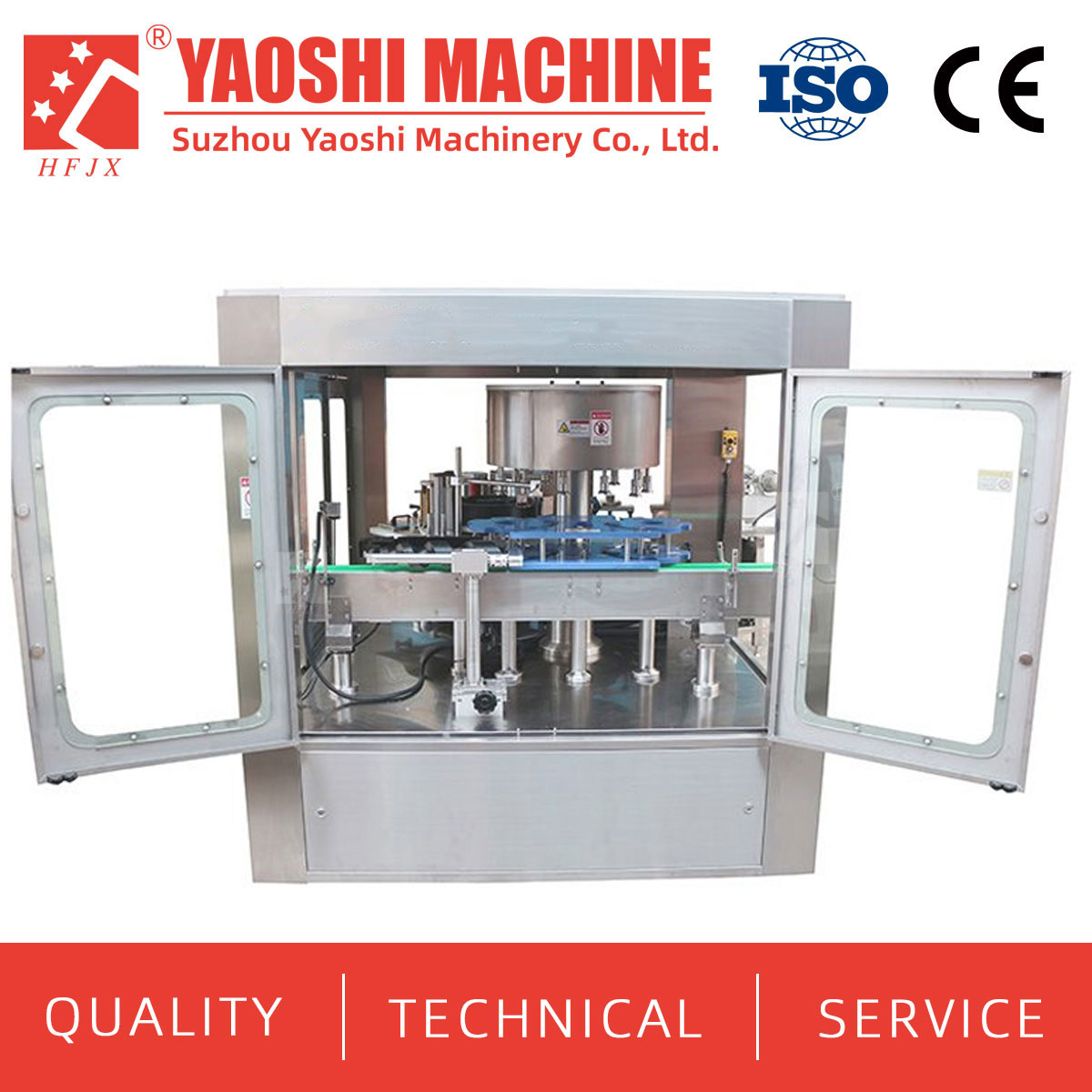
Official sleeve-equipment illustration. Large-container and label dimensions require separate confirmation.
The following references come from Yaoshi's standard sleeve and three-sided self-adhesive product pages. They are not published specifications for a confirmed 3- or 5-gallon labeler. Use them to identify where a different or engineered configuration must be reviewed.
| Published Product Family | Selected Public Parameters | Large-Barrel Decision |
|---|---|---|
| Shrink sleeve labeler | Listed bottle diameter 28–125 mm; label length 30–250 mm; film thickness 0.035–0.13 mm; PVC/PET/OPS | Do not apply the standard container range to a larger barrel; confirm body versus neck duty and passage clearances |
| Three-sided self-adhesive labeler | Listed bottle diameter 30–90 mm; height 30–200 mm; label width 10–110 mm; length 20–360 mm | Obtain a specific large-container handling/application proposal instead of assuming standard fit |
| Three-sided model throughput reference | Listed capacity 4,000–6,000 BPH for compatible containers | Not a gallon-barrel rate; confirm the actual container, labels, feeding and run conditions |
Even when only the neck is labeled, the complete barrel must pass through the required handling route. Obtain a signed configuration and range drawing. Public dimensions cannot establish that arrangement by themselves.

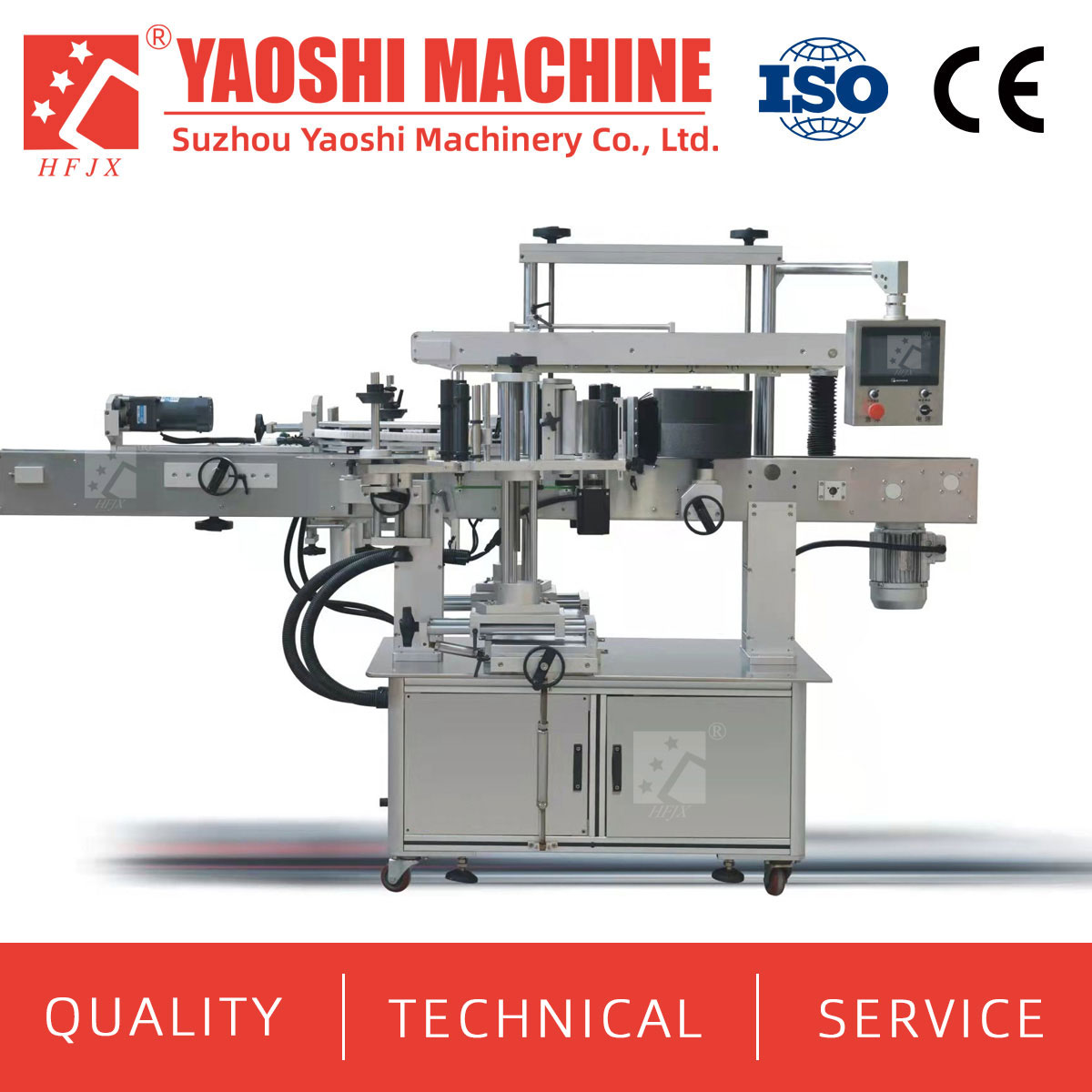
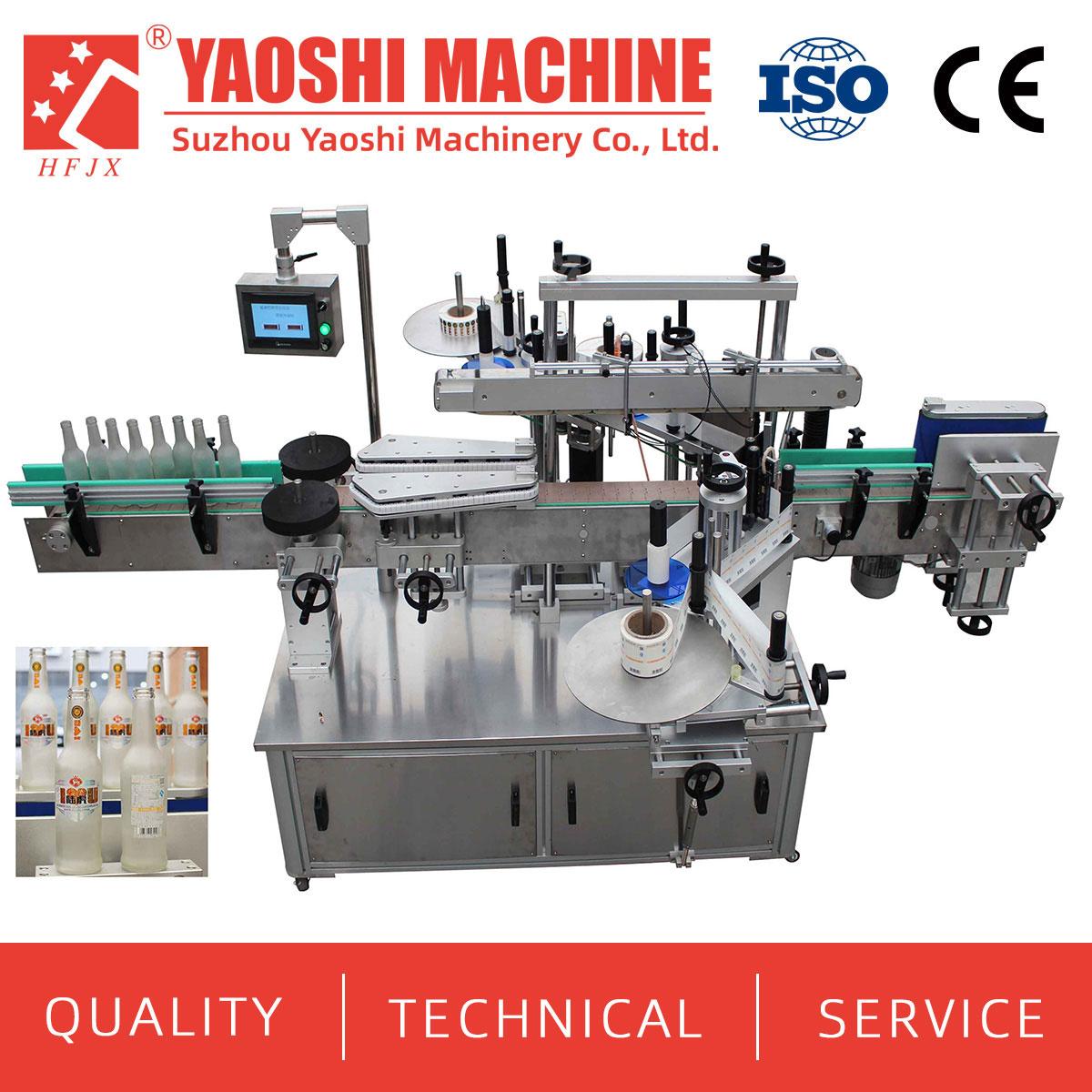
Official standard-model image. It illustrates the equipment family, not verified large-water-barrel compatibility.
State accepted labeled containers per hour for each format. For illustration, 600 barrels per hour equal 10 barrels per minute. If two labels are required on each barrel, the machine must perform both application duties at that container rate; confirm how heads, web feed and handling achieve it.
Label web speed, conveyor speed and containers per minute describe different quantities. A longer label or sleeve can change the application duty even when barrel throughput stays constant. Require the label drawing and the actual package in the supplier's rate basis.
For automatic lines, define infeed spacing, accumulation, labeling position, discharge and stop/restart behavior. For manually loaded equipment, include operator handling in the accepted-output test. Do not use a small-bottle nameplate speed as the large-container commitment.
The labeler may receive filled barrels with substantial weight and different stability from empty containers. State the operating condition, transfer height, direction, support and orientation. Identify which surfaces may be gripped or guided.
Review the labeler within the gallon-water line, including any drying or surface-preparation requirement. Assign sensor signals, stops and restart responsibilities when machines from different suppliers are connected.
Define the accepted outlet label position and container condition for the downstream packaging equipment or handling station. List any coding, label inspection and reject functions separately so they are not silently assumed included.
| Trial Area | Checks to Agree | Evidence Needed |
|---|---|---|
| Application | Position, skew, wrinkles, attachment/overlap or shrink result | Label and container revisions, samples and measurements |
| Handling | Support, orientation, transfer and clearance | Actual empty/filled condition and observed results |
| Output | Accepted barrel rate, rejects and material replenishment | Run duration, count point and interruption record |
| Use conditions | Relevant storage, handling and returnable-label behavior | Approved package/label methods and acceptance results |
Test production-intent labels and representative barrels. Agree methods and pass criteria with the packaging team. Retain the configuration, settings, format parts and open actions with the accepted samples.
The final proposal should state the exact gallon application, container limits, label range, confirmed line speed, utilities and supplied interface work. If large-container compatibility remains unproven, record the required engineering or trial before selecting a model.
No. Some products use the term for smaller containers. Confirm the actual barrel dimensions and labeling duty.
Do not assume it. Label dimensions, passage clearance, positioning and shrinking duties can differ.
It requires confirmation of the actual surface condition, label and adhesive. Test after the agreed preparation.
No. Confirm container dimensions, handling, label size and accepted throughput in a large-container proposal.
Accepted labeled barrels at defined container, label, feeding, run and replenishment conditions.
Provide samples or agreed test conditions representing the operating load and stability at the labeler.
Send container and label samples/drawings, required positions, actual line speed, surface conditions and interface information.
Send Yaoshi Machinery your large-water-container samples or drawings, label samples/artwork and required accepted line speed. Mark the application positions and state whether barrels arrive empty or filled. Add surface conditions, layout and existing interfaces. Request a confirmed handling/application configuration and sample-test plan before selecting the gallon labeler.
Contact tony@yaos.ltd or +86 18915689808.


+86-512-58530618

Wukesong Road, Sanxing Town, Zhangjiagang City, Jiangsu Province, China