A label machine for bottles should be selected around the label construction, the surface it must cover and the way bottles arrive from the production line. Start with those conditions before comparing catalogue speeds. A round water bottle with a wrap label and a shaped juice bottle with separate front and back labels are different handling tasks, even when both contain the same volume.
For beverage projects, first identify the labeling route: pressure-sensitive stickers, OPP hot melt labels or shrink sleeves. Then check the bottle and label combination, required output and installation boundaries. This guide explains how to turn those decisions into an RFQ that a supplier can evaluate.
Suzhou Yaoshi Machinery Co., Ltd. lists OPP hot melt, shrink sleeve and self-adhesive systems in its bottle labeling machine range. These are different application routes, not interchangeable settings on one universal machine.
| Label route | Application to evaluate | Information needed before selection |
|---|---|---|
| Self-adhesive | Separate labels at specified positions, or a compatible wrap application | Label and liner samples, panel geometry, label positions and roll winding |
| OPP hot melt | OPP bottle labels compatible with the proposed hot melt configuration | Film specification, bottle drawing, label dimensions and required overlap or seam position |
| Shrink sleeve | Sleeve decoration on a compatible bottle profile | Sleeve material and dimensions, artwork, container sample and shrinking requirements |
Use the finished package design to narrow the route. If the design requires distinct front and back panels, discuss an appropriate self-adhesive configuration. If it specifies an OPP wrap, evaluate the corresponding hot melt system. If it specifies a sleeve around a shaped bottle, review sleeve application and the shrinking stage together.
Yaoshi's rotary OPP hot melt glue labeling machine is one route to investigate for an OPP-label project. Its suitability still needs confirmation against the actual container, label stock and output requirement.
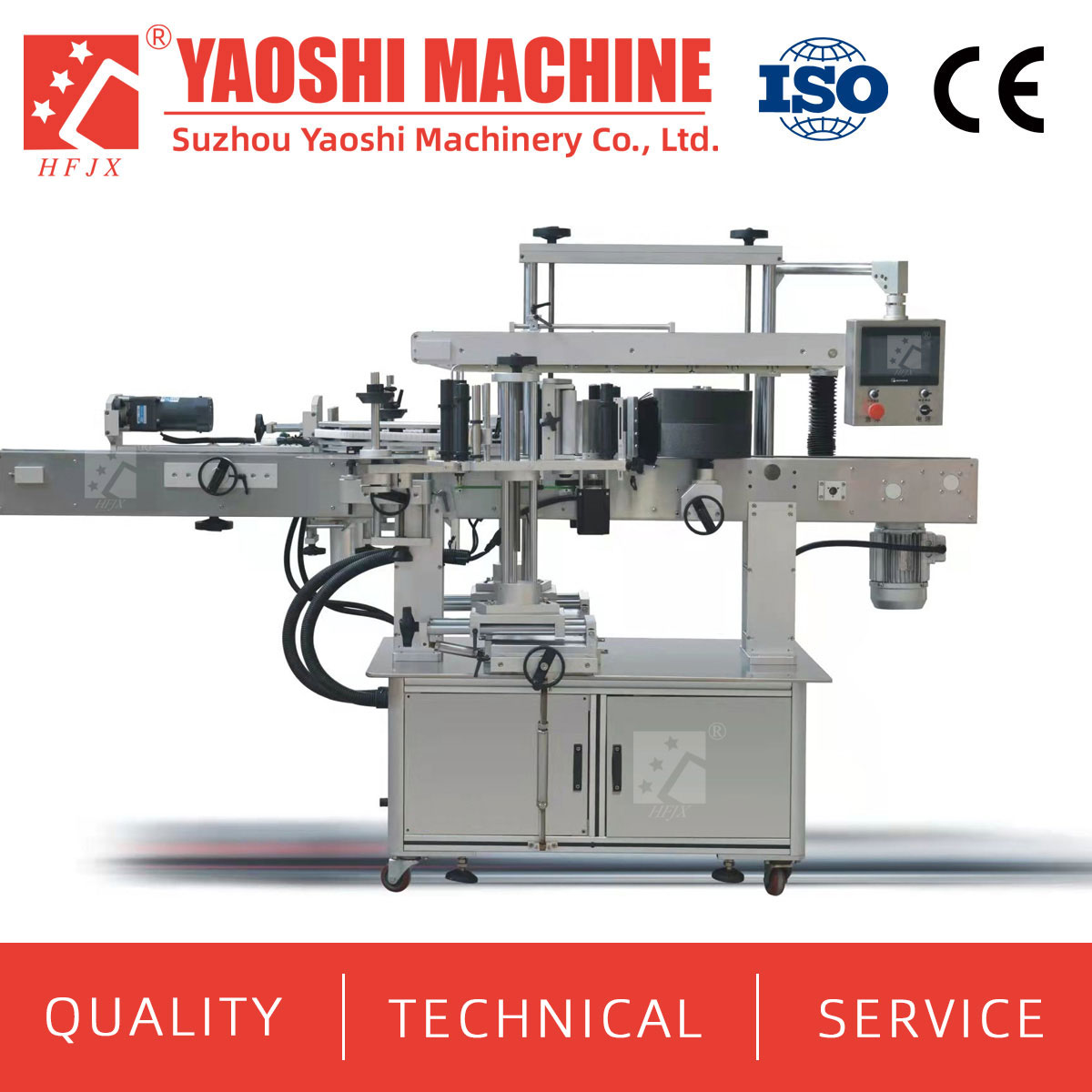
Rotary labeling equipment from Yaoshi's official product imagery. The photograph illustrates a machine arrangement, not guaranteed compatibility with every bottle.
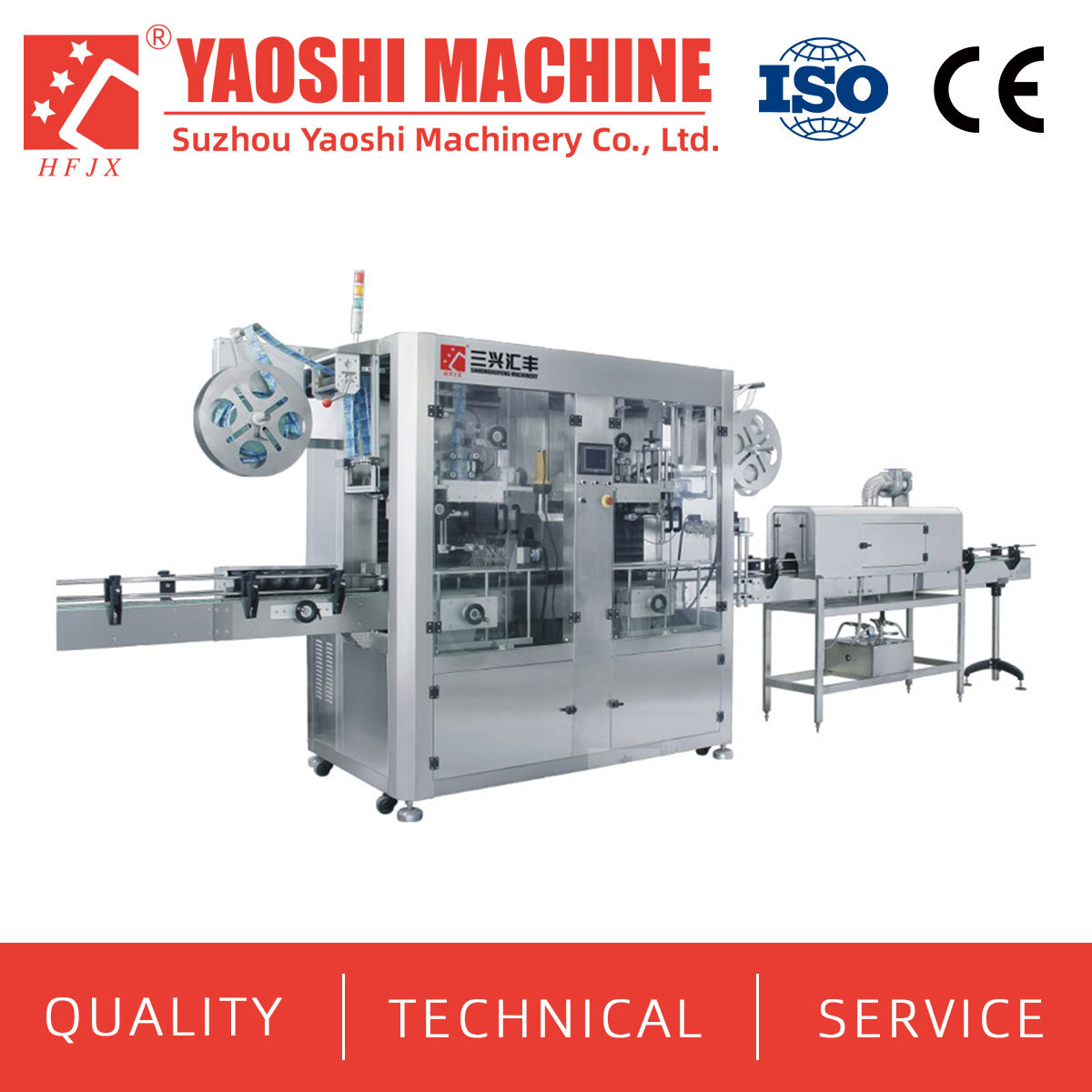
For a sleeve design, review the automatic shrink sleeve labeling machine and ask the supplier to define the complete application and shrinking scope. Do not assume that a quoted applicator includes every tunnel, utility connection or conveyor needed for the finished result.
A capacity such as 500 mL does not describe the labeling area. Supply a dimensioned drawing showing height, diameter or width and depth, the intended label panel, taper, shoulders and recessed features. Mark the required label position from a measurable reference, such as the bottle base or panel edge.
Also state whether the bottle is empty or filled at labeling, its material and its condition when it reaches the machine. A sample presented dry at room temperature may not represent a bottle arriving from a cold beverage line. Ask the supplier and label converter to evaluate the actual surface and operating conditions.
For cylindrical containers, define the wrap length, overlap or gap and any required seam orientation.
For flat, square or rectangular containers, identify each label panel and the required relationship between labels.
For tapered or irregular surfaces, provide production-equivalent samples for application trials.
Where a label must align with an embossed feature, handle or existing mark, identify that reference explicitly.
One drawing should cover each format. Include the smallest and largest containers, but also any intermediate format with a different panel shape or difficult label position. Dimensional extremes alone do not describe the full application range.
Yaoshi's published three-sided self-adhesive labeling machine page provides the following reference specifications. They apply to that listed product, not to the entire labeling range.
| Published item | Listed value |
|---|---|
| Production capacity | 4,000–6,000 BPH |
| Label width | 10–110 mm |
| Label length | 20–360 mm |
| Label roll core | 76 mm |
| Label roll diameter | 350 mm |
| Bottle height | 30–200 mm |
| Published bottle diameter entry | 30–90 mm |
| Voltage / power | 220 V, 50 Hz / 1,200 W |
Source: Yaoshi's Three-sided Label Self-adhesive Sticker Labeling Machine Series product page. The page describes compatible flat, square and rectangular containers, while its table uses a bottle-diameter field. Ask how that field applies to your container's width and depth. A dimension inside the published range does not by itself confirm handling or label-placement suitability.
The page identifies front, back and neck labeling positions and calls for confirmation of the applicator arrangement. Specify your actual layout rather than assuming that “three-sided” means any three faces or any neck shape. Confirm the final operating rate and placement tolerance in a trial using your bottle and labels.
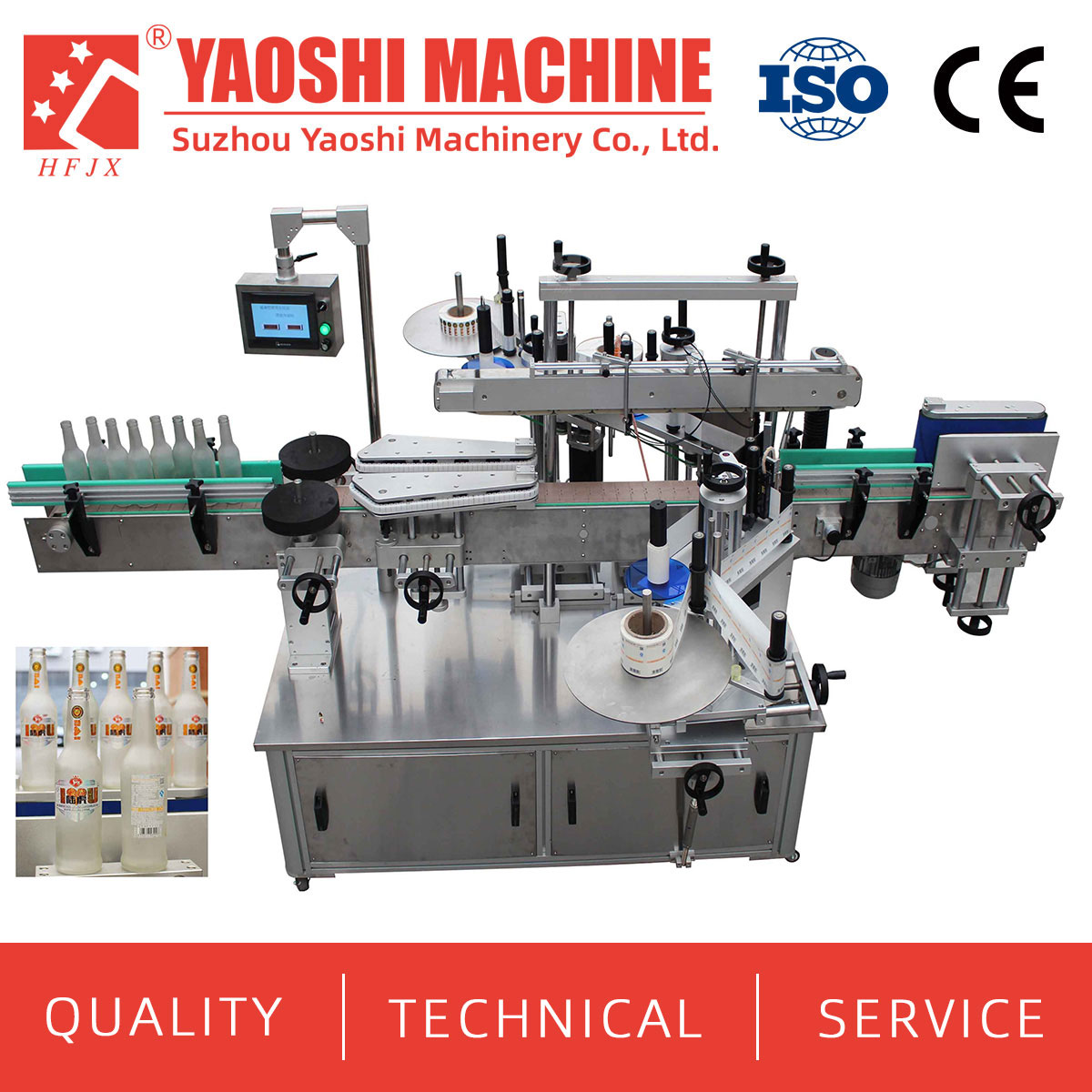
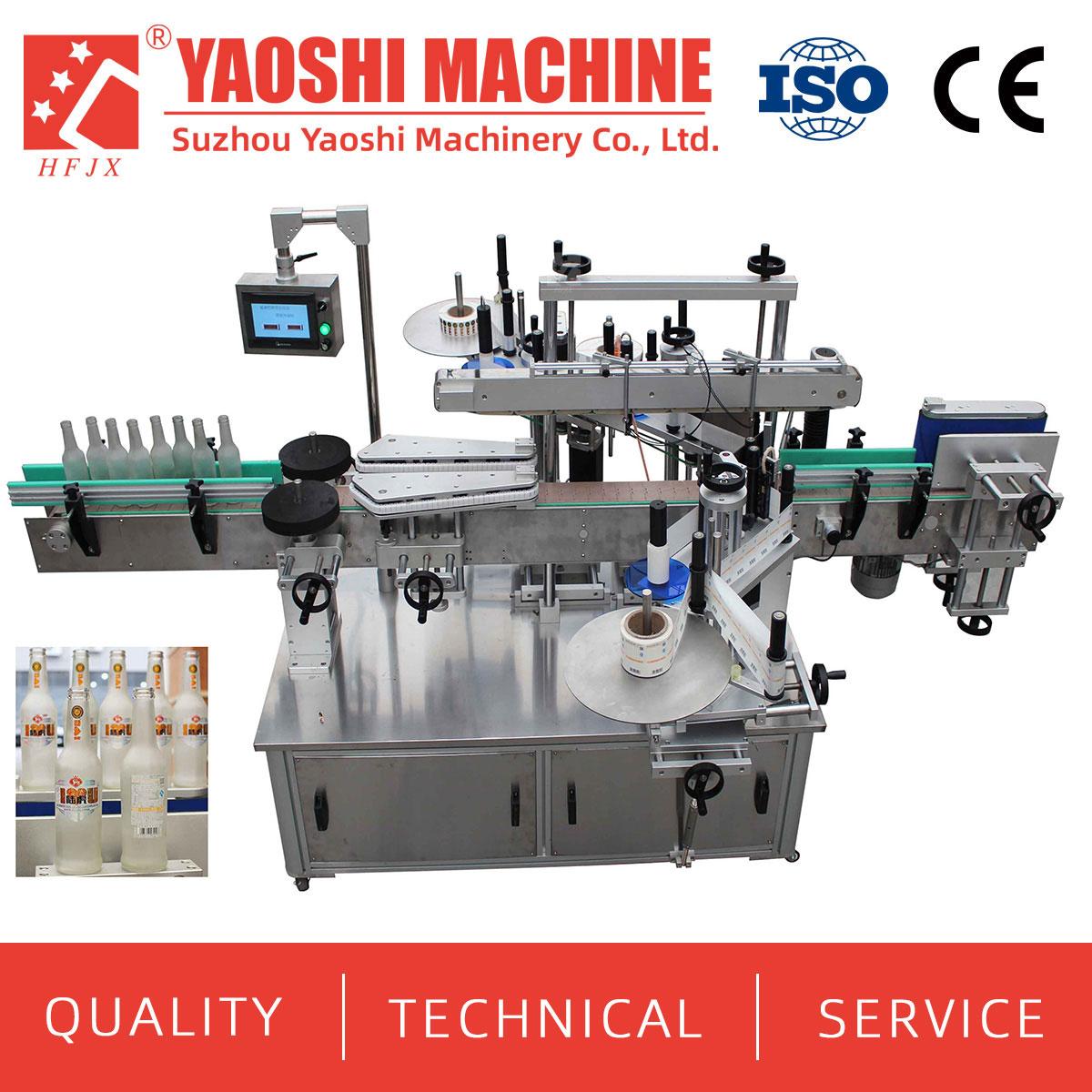
Self-adhesive labeling equipment shown in Yaoshi's official imagery. Confirm the required applicators and handling parts in the technical proposal.
Request labeled bottles per minute or hour for each approved format. State whether that means short-run machine speed or sustained acceptable output over an agreed test period. The label count, label dimensions, bottle presentation and changeovers belong beside the speed requirement.
For a multi-SKU line, give the expected batch sizes and changeover frequency. Ask which adjustments are required, which parts are format-specific, and which parts are included. Do not assume that adjustable speed also means automatic format change.
Provide conveyor height, travel direction, available length and the upstream and downstream control interfaces. If labeling feeds a bottle packaging system, define the handover point and how a downstream stop is communicated. Include operator access and space for replacing label rolls in the layout review.
Coding, inspection and rejection should be separate lines in the quotation. Identify what is included, optional or supplied by the buyer. For sleeves, also record the shrinking-stage utilities and responsibility for installation connections.
Send a format matrix with one row per bottle-and-label combination. Attach the supporting drawings and samples rather than compressing several applications into “different bottle sizes.”
| RFQ field | What to submit | What the supplier should confirm |
|---|---|---|
| Container | Material, drawing, samples and filled or empty condition | Handling method, supported formats and change parts |
| Label construction | Label type, material, dimensions and production samples | Application route and compatibility limitations |
| Supply format | For roll labels: core, roll diameter, winding direction, liner and gap details; for sleeves: the supplier's required sleeve specification | Feeding, sensing and material requirements |
| Placement | Marked drawing showing each label position and required tolerance | Application arrangement and agreed measurement method |
| Output | Target rate by format, batch sizes and changeover frequency | Trial conditions and acceptable output basis |
| Integration | Layout, conveyor details, utilities and adjacent equipment | Connection boundaries, controls and installation scope |
Before approving artwork or ordering printed rolls, obtain confirmation of the material supply specification. A label that fits the bottle drawing can still be unsuitable for the proposed feed arrangement. Where transparent labels or unusual materials are involved, ask for sensing and application checks with the intended production stock.
Agree what the supplier must demonstrate: the approved bottle and label combinations, test speed, sample quantity or duration, placement references and acceptable defects. Include checks for wrinkles, lifting edges, skew and front-to-back alignment where relevant.
Test the operating conditions that matter to the project. These may include stop-and-restart behavior, the most demanding format and a representative changeover. If samples or production materials are unavailable, record what remains unverified and when it must be resolved.
The final proposal should name the labeling route, approved format list, change parts, utilities, integration scope and test obligations. This gives procurement a basis for comparing offers without treating the largest catalogue speed as the deciding factor.
No. This guide concerns equipment that applies labels to bottles. Printing or coding may be a separate function. Specify it separately if the project requires variable information.
Do not assume so. They are different application routes. Ask the supplier to identify the proposed technology and supported label construction before discussing formats.
Only after the supplier confirms the specific containers and labeling requirements. Material alone does not establish compatibility; dimensions, surface, stability and label position also need review.
The exact applicator arrangement must be confirmed. Submit a marked bottle drawing showing all positions, especially where a neck label has a different shape or height from the body labels.
Use the required line output as the basis, then ask how the proposed labeler handles the actual bottle supply and downstream stops. Matching catalogue numbers does not establish a balanced line.
Submit the intended label route, approximate dimensions and bottle drawing for preliminary review. Final compatibility and acceptance should use approved production-equivalent materials.
To evaluate a label machine for bottles with Yaoshi Machinery, send container drawings or samples, label samples or specifications, the required label positions and output by format. Include the conveyor layout and any coding or inspection requirements. Email tony@yaos.ltd or call +86 18915689808 to request a configuration review with the supported formats and quotation boundaries clearly stated.


+86-512-58530618

Wukesong Road, Sanxing Town, Zhangjiagang City, Jiangsu Province, China