A beverage plant can buy a filler that reaches the requested bottles per hour and still create the wrong production system. The problem often appears after installation: changeovers take too much of a short production week, a rotary machine cannot accept the planned bottle range without extra format parts, or an inline machine becomes the bottleneck when downstream packaging is ready to run faster.
The choice between an inline liquid filling machine and a rotary filler is mainly a production-structure decision. Product behavior and filling method must be defined first. Then the buyer can compare how each layout handles the required output, number of SKUs, batch length, changeover work and existing-line interfaces.
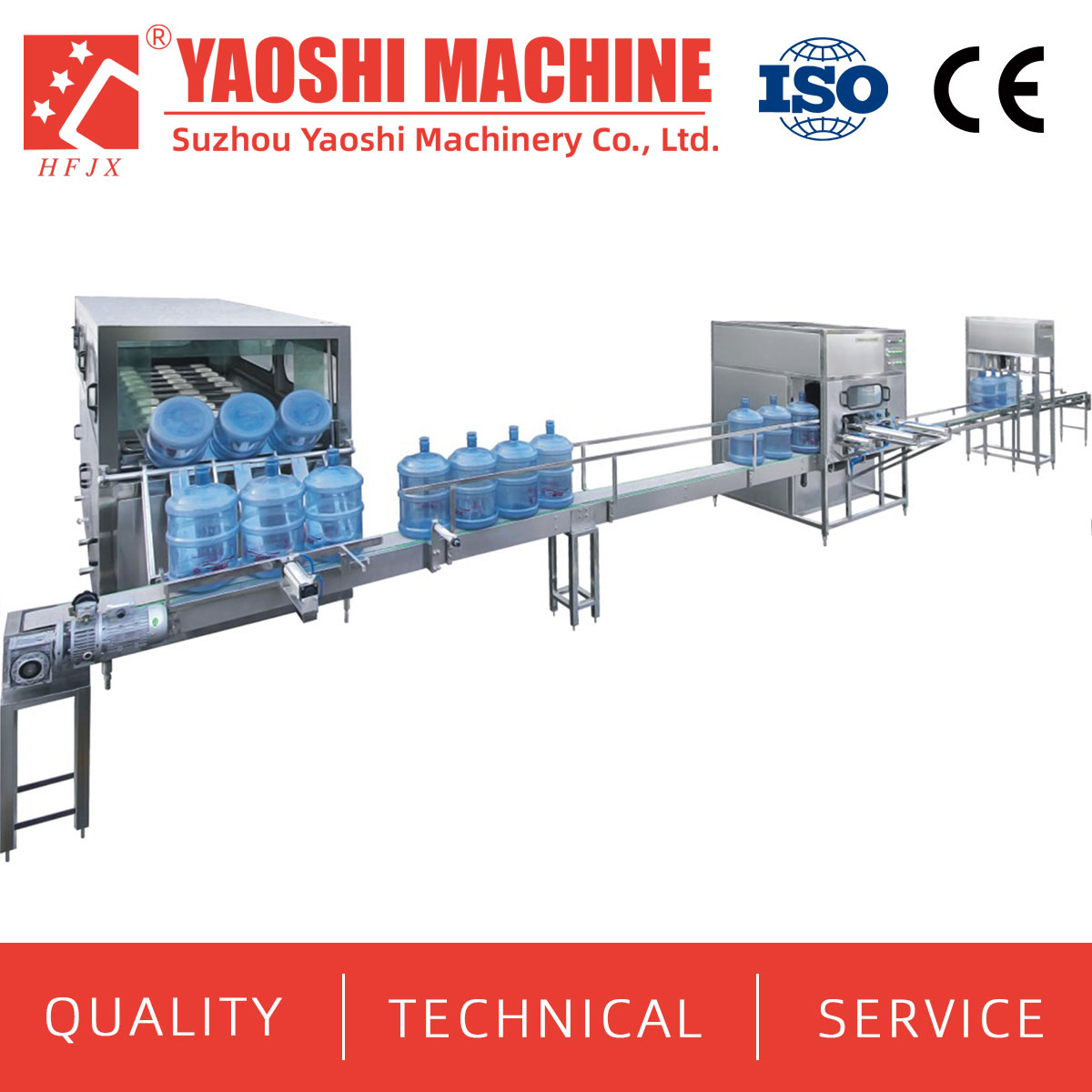
An inline filler moves containers in a straight path. Containers are normally indexed into position under a bank of filling nozzles, filled as a group and released to the next operation. The rinsing, filling and capping functions may be separate machines or arranged as a connected linear system, depending on the project.
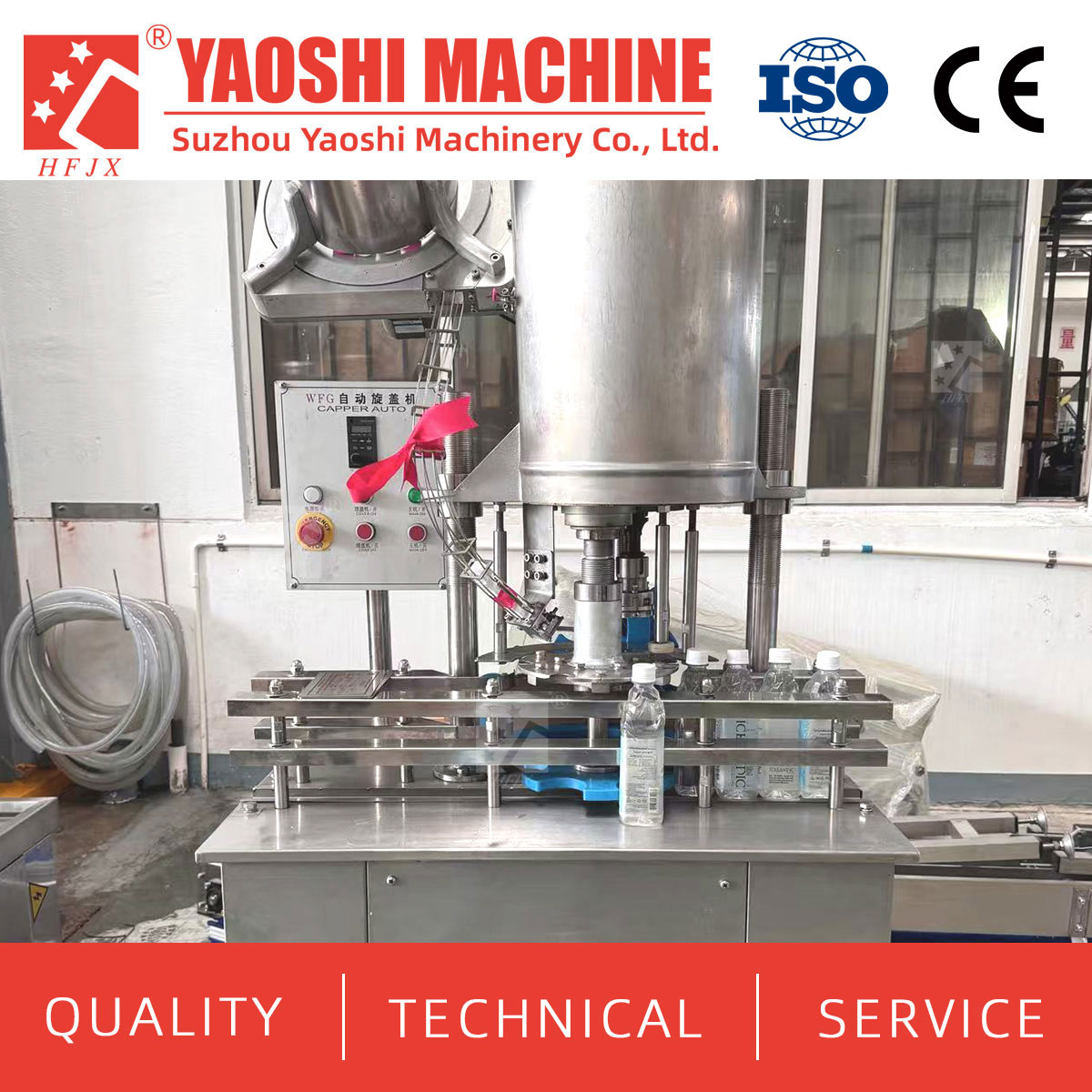
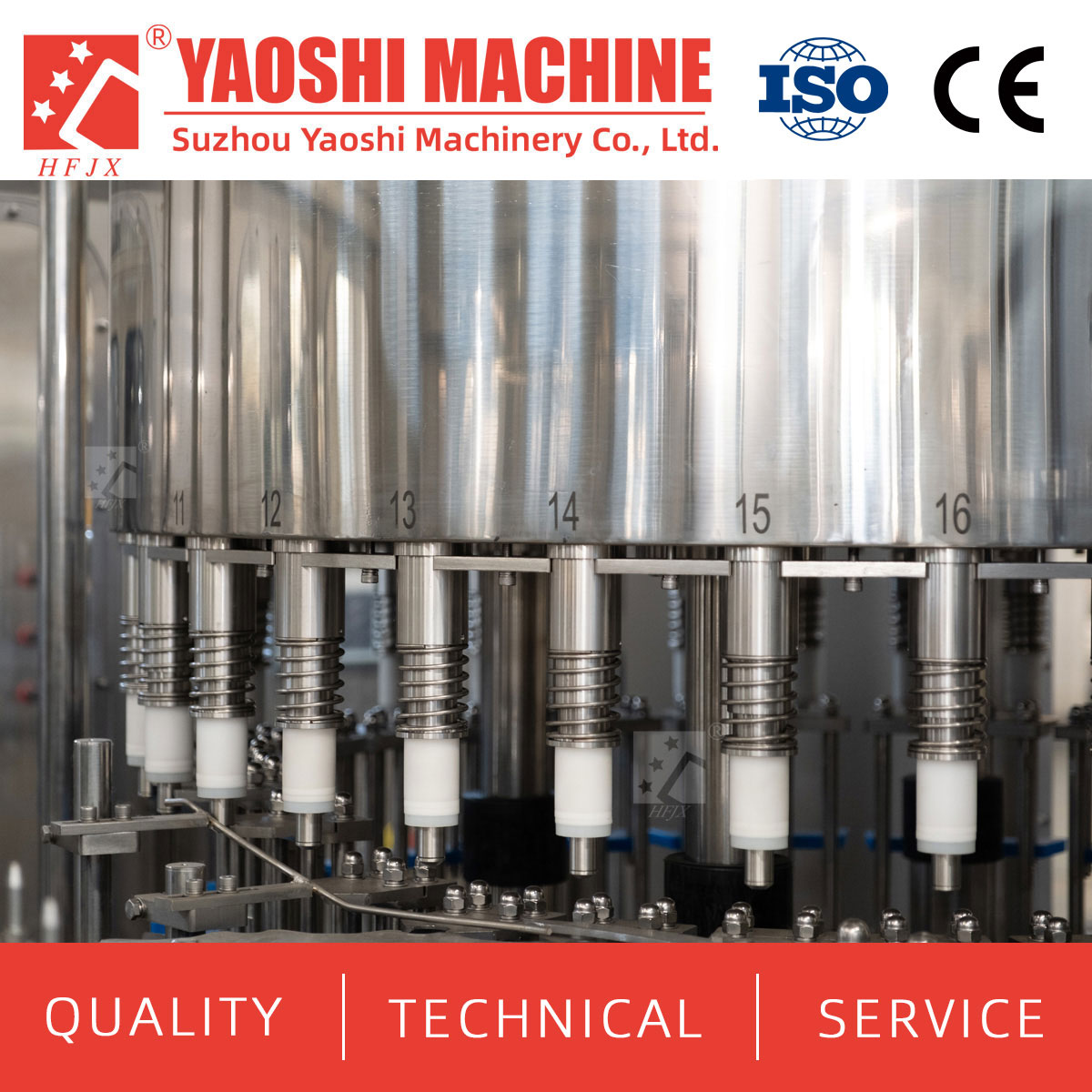
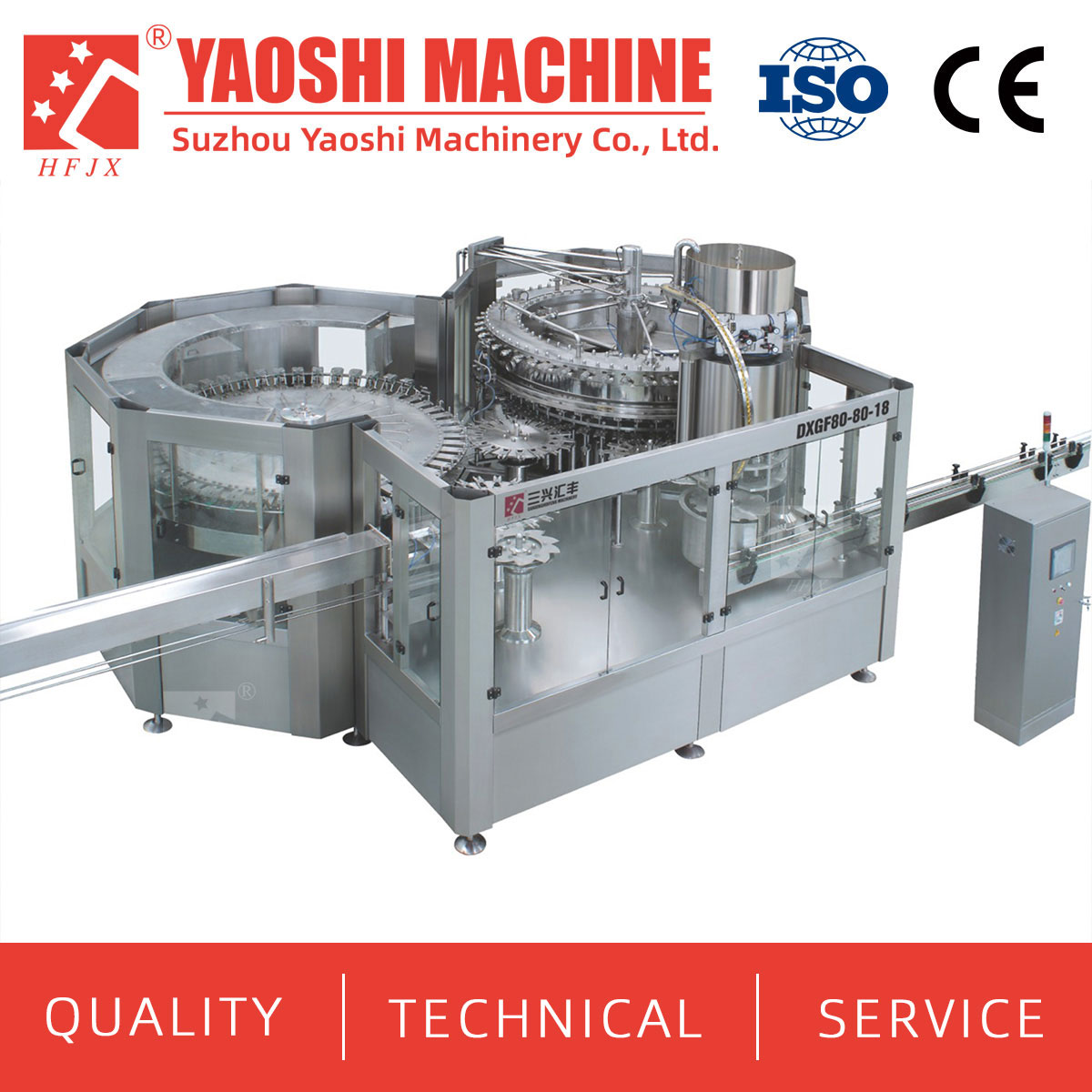
A rotary filler transfers containers onto one or more rotating carousels. Each container moves through the filling cycle while the carousel turns, then transfers to the next station or back to the discharge conveyor. Beverage monoblocks may combine rinsing, filling and capping around synchronized rotary stations.
These layouts do not determine the filling principle. Gravity, controlled-pressure, isobaric or another metering arrangement must still match the beverage. Machine layout also does not decide filling accuracy by itself. Accuracy depends on the filling valve or metering system, stable product conditions, controls, container presentation and the agreed acceptance test.
Inline equipment is usually evaluated when production output is moderate, batches are shorter or the plant expects more frequent changes in containers and products. The straight conveyor path can make individual functions easier to inspect and can simplify connection to a suitable existing conveyor. This does not mean every inline machine changes format quickly. The actual work depends on the bottle guides, nozzle positions, fill-volume setup, product-contact parts, cap handling and cleaning procedure.
For example, Yaos Machinery lists a linear beverage filling machine production line for small-capacity projects. Its published specification applies to that product page only; it should not be treated as a universal capacity or bottle range for all inline fillers.
An inline structure deserves closer consideration when:
the required net output is within the proposed machine's verified range;
production is divided among several shorter SKU runs;
the plant needs access to individual filling or capping sections;
the available layout favors a straight transfer path; or
future changes can be handled through documented adjustments or added modules.
Do not select inline equipment only because the initial project appears smaller. If demand is concentrated in one long-running SKU and the required net output is close to the machine's practical limit, the plant may have little recovery capacity after stops or changeovers.
A rotary machine is normally considered for continuous production at higher output, especially when a plant runs a stable product-and-package combination for long periods. Multiple containers can remain in the filling cycle at the same time, while synchronized transfers support continuous movement through the machine.
The container path is more dependent on format-specific handling. Infeed screws, starwheels, guides, bottle-neck or body handling, filling stations and the capper must agree with the approved package. A new bottle diameter, height, neck finish or cap can require change parts and setup work. The supplier should provide a format matrix instead of saying that the machine “supports different bottles.”
Yaos Machinery's rotary rinsing, filling and capping machine illustrates a rotary monoblock arrangement for bottled-water applications. The correct model and configuration still depend on the confirmed bottle, cap and required output.
A rotary layout is a stronger candidate when:
the plant needs sustained output beyond the verified capability of an inline option;
one or a few major SKUs account for long production runs;
container and closure specifications are stable;
upstream container supply and downstream packaging can accept continuous operation; and
the plant can manage documented format parts, cleaning and maintenance work.
Rotary equipment is not automatically the better choice for every high-value beverage. The filling process comes first. For example, carbonated products require temperature, pressure and foam conditions to be confirmed before the CSD filling machine configuration is selected.
| Decision factor | Inline structure | Rotary structure | Evidence to request |
|---|---|---|---|
| Container movement | Straight conveyor with indexed filling groups | Continuous or synchronized transfer through rotating stations | Machine sequence and container-flow drawing |
| Output | Often evaluated for low-to-moderate output | Often evaluated for sustained higher output | Guaranteed basis for the specified product and container |
| SKU pattern | Can suit shorter campaigns and more frequent adjustments | Often favors longer runs with stable formats | Annual SKU matrix and expected batch lengths |
| Format change | May involve guide, nozzle, fill and cap adjustments | May require dedicated starwheels, guides and other format parts | Change-parts list and step-by-step changeover method |
| Product change | Depends on product path, cleaning circuit and retained volume | Depends on bowl, valves, piping, return path and cleaning circuit | Cleaning sequence and product-contact diagram |
| Existing-line retrofit | Straight layout may simplify some conveyor connections | Transfer geometry and synchronized infeed require detailed review | Interface drawing, elevations and control list |
| Expansion | Possible only where controls, frame and line design support it | Usually requires the original machine and line capacity to allow it | Written expansion boundary, not a general “upgradeable” claim |
The comparison should be made between two defined proposals, not between the words “inline” and “rotary.” Each quotation should use the same product, container, cap, required net output and line scope.
Start with saleable containers required per day or shift. Divide that quantity by the net production hours available after planned cleaning, product change, format change and routine stoppages. This gives a required operating output that can be compared with the proposed line.
Then check the full line. A filler offered at a higher nominal speed does not create the same finished-product output if the labeler, packer, cap supply or empty-container system limits production. Ask the supplier to state:
the product and container used as the capacity basis;
whether the figure refers to the filler or the completed line;
which upstream and downstream speeds are proposed;
where accumulation is provided; and
how the acceptance test will measure stable output.
Do not add an arbitrary percentage to the target and call it expansion capacity. Future output should be checked against the filler, container supply, conveyors, utilities, labeling and packing equipment as one system.
SKU count alone can mislead. Ten labels on one bottle with one beverage create a different changeover load from three products in three bottle sizes with two cap types. Separate every planned change into four categories:
Product change: recipe, filling temperature, carbonation, viscosity, particles and cleaning sequence.
Fill change: target volume or level, valve setting, recipe selection and verification.
Container change: bottle material, diameter, height, neck finish, stability and handling parts.
Closure change: cap or lid dimensions, feeding, sorting, application and inspection.
For each combination, ask the supplier to identify adjustment points, replacement parts, tools, cleaning work and test containers. Changeover time should be confirmed through a defined procedure; it should not be assumed from the machine layout.
A retrofit decision can reverse an otherwise sensible inline-versus-rotary choice. The new machine must accept containers from the existing upstream equipment and discharge them at conditions the downstream line can manage. Submit a layout and interface schedule covering:
conveyor direction, height, width, speed and container pitch;
available floor area, maintenance clearance, drainage and access;
product inlet position, pipe size, pressure, temperature and return path;
cap or lid supply and required elevation;
electrical standard, control signals, sensors and stop logic;
cleaning connections and the boundary of the existing CIP system; and
downstream inspection, coding, labeling, packing and buffer conditions.
A useful proposal should return an equipment list, interface drawing and written scope boundary. It should distinguish included, optional and excluded conveyors, change parts, controls, piping and installation work. Buyers comparing the wider beverage filling equipment range should keep these boundaries identical across quotations.
No. Its straight layout may provide convenient access, but changeover depends on the product path, nozzle positions, guides, container dimensions, cap system and cleaning procedure. Request the actual change-parts list and method.
No. Layout does not determine accuracy. The filling principle, valve or meter, product stability, container presentation, controls and acceptance method determine the fill result.
Do not assume this from a general product label. The supplier must confirm each beverage against its filling pressure, temperature, foam, hygiene, cleaning and package requirements. A shared layout does not make the product processes identical.
An inline design often deserves consideration when runs are short and formats change frequently, but the decision needs an SKU matrix. A rotary option may still be workable when the formats share handling parts and product conditions; this must be shown in the changeover scope.
State the required saleable containers per hour for each named product and package. Also provide daily volume, batch length and planned operating hours so the supplier can review nominal speed, changeover load and downstream capacity.
Provide conveyor elevations and direction, product and cleaning connections, cap supply, electrical conditions, control handshakes, available space and downstream buffer information. Ask the supplier to return a signed or approved interface schedule before manufacture.
For an inline-versus-rotary review, send the product condition, container and closure drawings or samples, required output by SKU, expected batch lengths, changeover frequency and existing-line layout. Include product piping, conveyor, electrical, control and cleaning interfaces.
Yaos Machinery can use these inputs to review the filling process, machine structure and line boundary. Send the project data to tony@yaos.ltd or WhatsApp +86 18915689808, and request an equipment list, layout, change-parts schedule and written interface scope with the proposal.


+86-512-58530618

Wukesong Road, Sanxing Town, Zhangjiagang City, Jiangsu Province, China