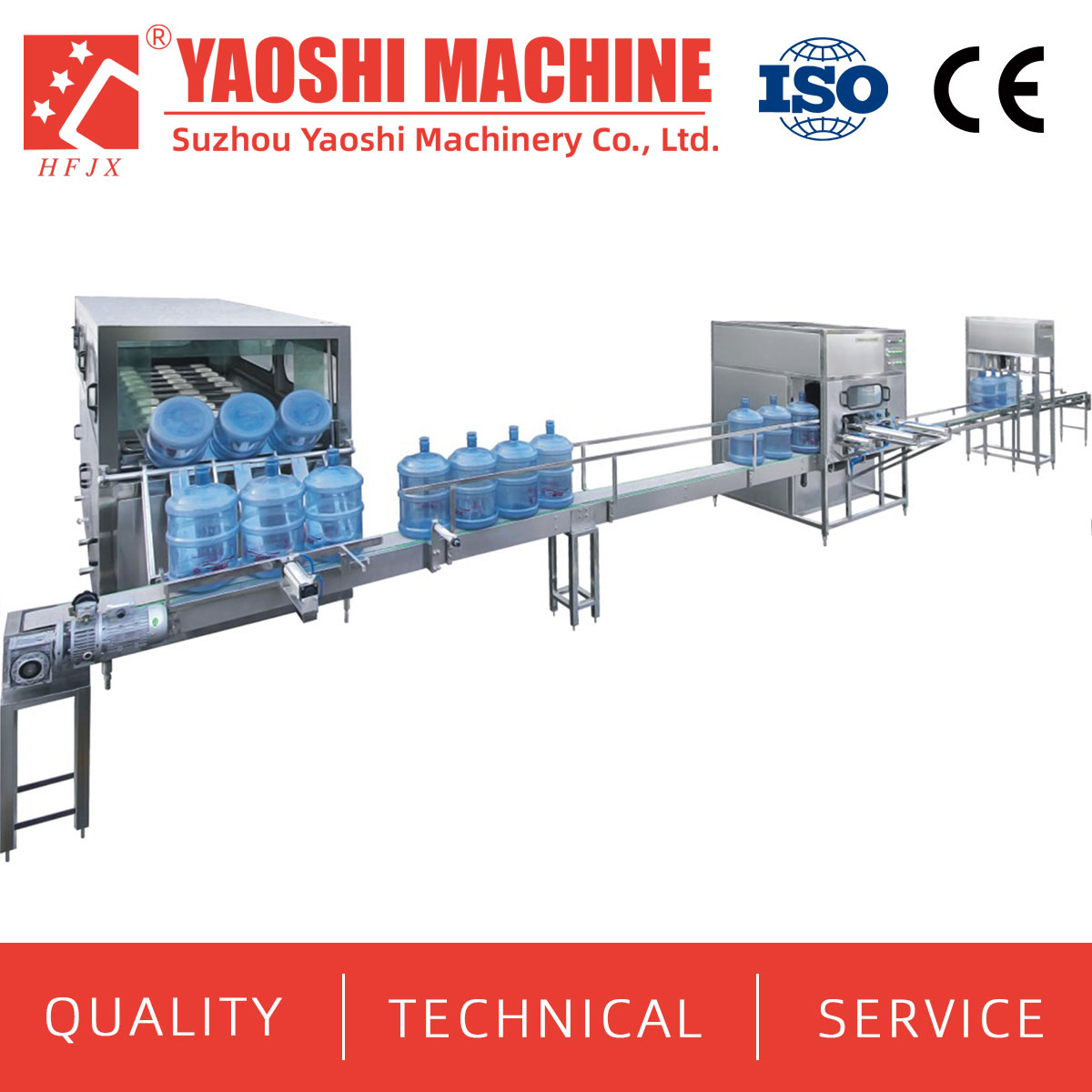
Two mineral water plant quotations can carry the same requested output and still cover very different projects. One may include raw-water treatment, bottle blowing and final packing. Another may start at the filler and leave compressors, conveyors, pipework and installation interfaces to the buyer. Comparing only the total amount hides these differences.
A useful mineral water plant cost review starts with the scope and the operating basis behind each quotation. This article explains the variables that change equipment scope and site requirements. It does not provide equipment prices, investment returns or local regulatory conclusions.
The main cost drivers are connected. Raw-water quality determines the treatment process. Bottle design affects blowing, filling, labeling and packing. Required output changes machine size, utilities and floor space. The selected commercial boundary decides whether a quotation covers individual machines or a coordinated production line.
| Cost driver | Buyer input needed | What may change in the quotation | Supplier response to request |
|---|---|---|---|
| Raw water and finished product | Laboratory report, source availability and finished-water target | Filters, membranes, disinfection, tanks, pumps and instruments | Process flow, design basis and treatment equipment list |
| Bottle supply | Purchased bottles or in-house blowing; bottle and preform data | Blower, molds, compressors, cooling, bottle storage and transfer | Bottle-production scope and utility schedule |
| Output and SKU mix | BPH by bottle size, shifts, changeovers and daily target | Filler model, conveyor speed, buffers and downstream capacity | Line balance with stated operating assumptions |
| Label and final pack | Label type, code, pack pattern, film or carton and pallet method | Labeler, coder, wrapper or cartoner, conveyors and pallet handling | Package-specific equipment and change-part list |
| Factory and utilities | Layout, voltage, air, water, drainage, access and floor information | Utility generation, distribution, civil work and installation method | Connection list, loads, dimensions and layout |
| Supply boundary | Required services, tests, documents and buyer-supplied items | Engineering, pipework, cables, installation, commissioning and spares | Included, optional and excluded scope table |
The treatment section cannot be priced accurately from the words “mineral water plant.” The supplier needs a recent raw-water analysis, the source flow, seasonal variation and the target finished-water specification. The buyer should also state which treatment methods are required, permitted or restricted for the intended product and market.
Yaoshi Machinery’s water treatment system page lists quartz-sand or multimedia filtration, activated carbon, softening, precision filtration, reverse osmosis, ultraviolet treatment, ozone treatment and tanks among the available modules. Its published processing range is 0.5–150 tons per hour. The actual process and equipment combination should follow the project water data; the page does not establish one standard treatment train for every mineral water source.

Treatment scope changes more than the main equipment list. It can affect product and cleaning-water storage, pump duties, chemical preparation, instrument quantity, membrane cleaning, drainage and the space reserved around the system. Ask for a process flow, tank schedule, connected load, water balance, consumables list and equipment footprint for the proposed configuration.
Bottle volume is only one packaging input. The supplier also needs the bottle material, dimensions, neck finish, weight, cap specification and controlled drawings. A short, rigid bottle and a tall, light bottle may require different handling even when they contain the same volume. Multiple bottle families can add guides, star wheels, molds, recipes and changeover work.
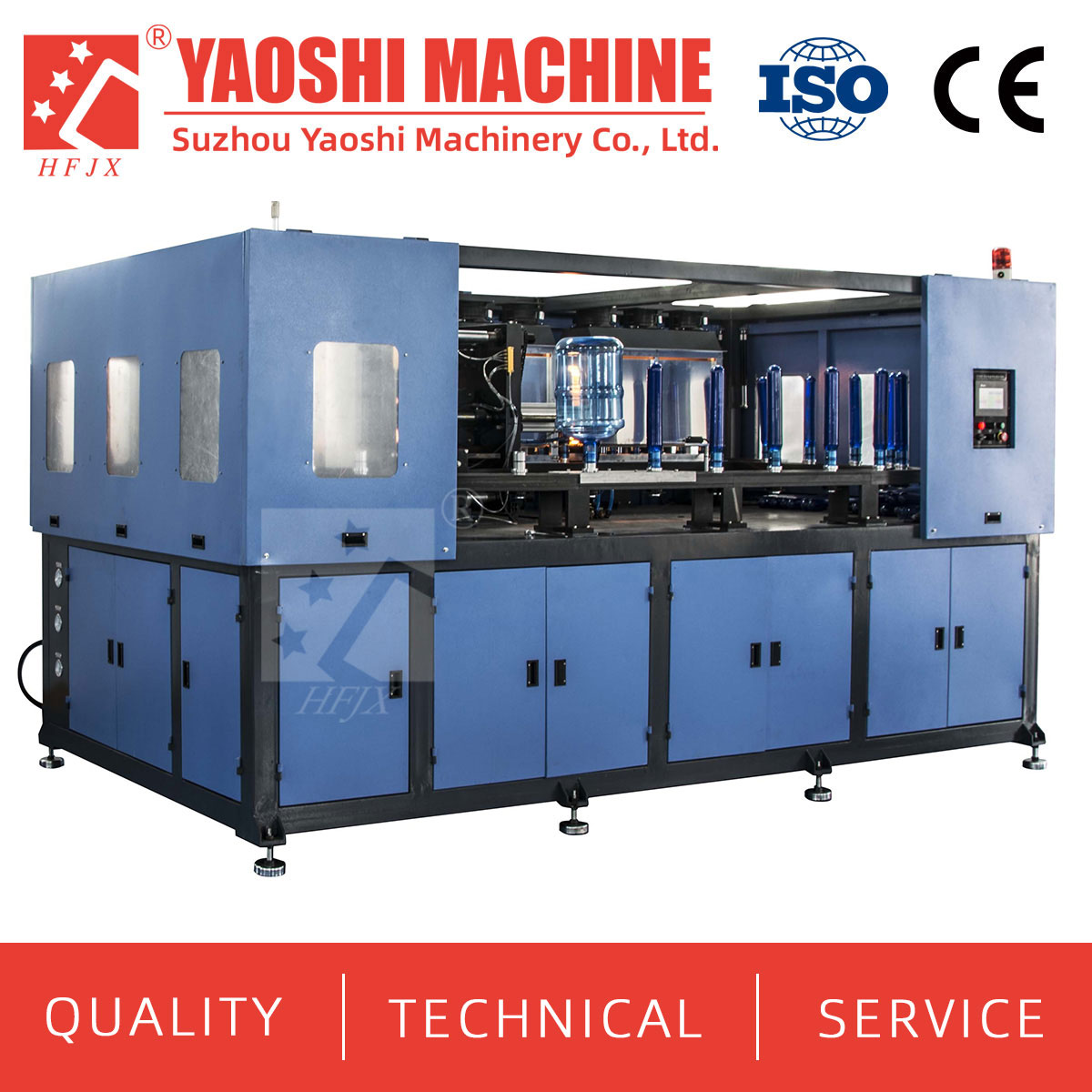
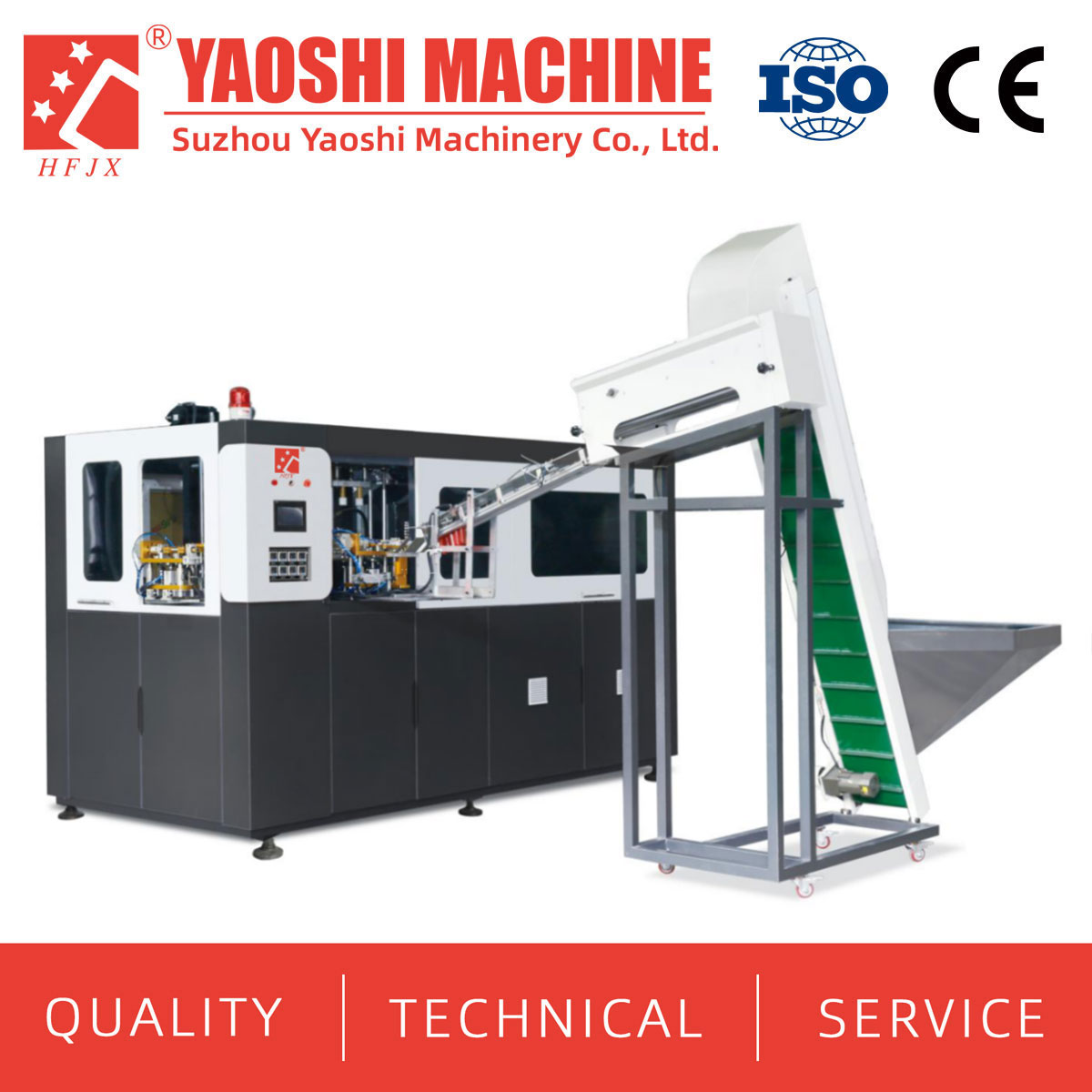
The largest scope difference is often the bottle-supply method. Purchased empty bottles require storage, protection and bottle infeed. Producing PET bottles from preforms adds a blow molding machine, molds, preform handling, high-pressure compressed air, cooling and bottle transfer. The quotation should state whether compressors, air treatment, chillers and molds are included or supplied by the buyer.
Package decisions made late can create revisions beyond the blower. Changes to the neck finish may affect filling and capping parts. Label dimensions affect the labeler. Bottle stability and the required retail pack affect conveyors and secondary packaging. Submit bottle, cap, label and pack information as one controlled package.
A request for a high-speed line is incomplete without the bottle size. State the required bottles per hour for every main SKU, expected production hours, cleaning periods, changeover frequency and daily quantity of accepted packs. The supplier should distinguish the filler’s nominal capacity from expected stable line output under the agreed bottle and pack conditions.
Higher output can increase the number of rinsing, filling and capping stations, equipment dimensions, connected load, conveyor length and buffer requirements. It can also change how empty bottles, caps, labels, film and finished packs are supplied to the line. The water filling machine range should therefore be evaluated as part of a balanced system rather than as an isolated BPH figure.
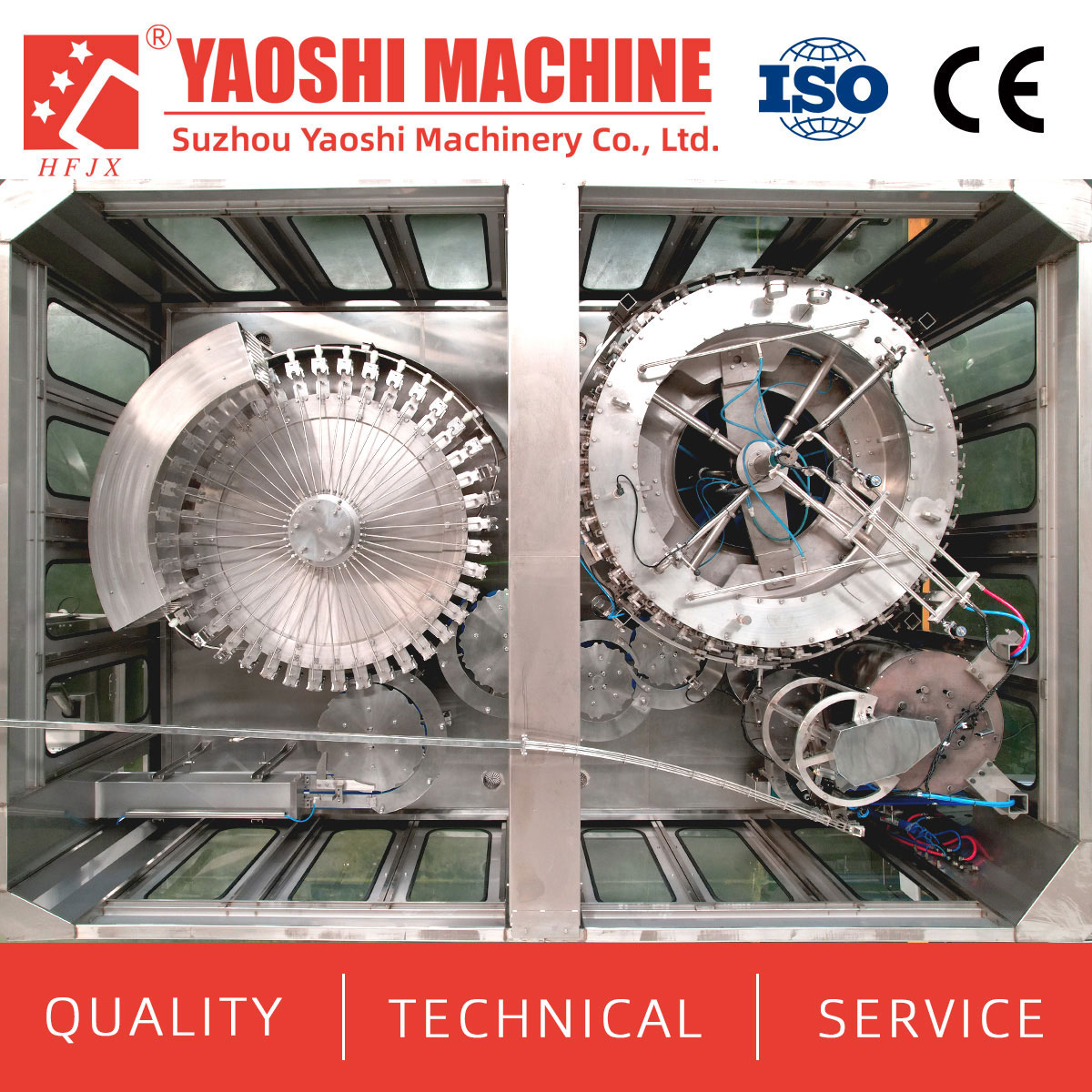
The table below uses published CXGF product-page data to show how different output classes bring different space, power and equipment-weight inputs. These figures apply to the named models and should be reconfirmed for the selected bottle, electrical standard and current quotation.
| Model | Published capacity | Rinsing / filling / capping heads | Published power | Published size | Published weight |
|---|---|---|---|---|---|
| CXGF8-8-3 | 2,000 BPH | 8 / 8 / 3 | 3.8 kW | 2300 × 1500 × 2100 mm | 2,800 kg |
| CXGF24-24-8 | 8,000–12,000 BPH | 24 / 24 / 8 | 5.2 kW | 3100 × 2450 × 2300 mm | 6,500 kg |
| CXGF40-40-10 | 18,000–24,000 BPH | 40 / 40 / 10 | 9.6 kW | 4550 × 2650 × 2300 mm | 8,500 kg |
| CXGF60-60-15 | 28,000–36,000 BPH | 60 / 60 / 15 | 12 kW | 5450 × 3210 × 2300 mm | 12,000 kg |
The same page publishes a bottle-diameter range of 50–115 mm, bottle-height range of 160–320 mm and compressed-air pressure of 0.3–0.7 MPa for the listed matrix. Compatibility still requires the buyer’s drawings or samples. A published range does not identify the required change parts or confirm performance for every bottle shape within it.
Automation affects more than the number of operators near the filler. A plant may need automatic preform or bottle handling, cap feeding, inspection, coding, labeling, pack formation, pallet handling and production-data functions. Each added interface brings controls, sensors, guarding, conveyors and engineering work that should appear in the scope.
Define the tasks operators will perform, the number of shifts, available maintenance skills and the frequency of SKU changes. A highly automated line still needs planned material supply, quality checks, sanitation and maintenance. Ask the supplier to describe manual interventions, changeover steps and responsibility at every transfer point. This provides a clearer basis for comparing automation proposals than a general request for a “fully automatic” plant.
Label and secondary-pack choices should be confirmed before the final equipment list. Submit the label type and dimensions, coding position, bottles per pack, film or carton specification, tray requirement and pallet method. Different packaging formats can change machine type, change parts, conveyor arrangement and accumulation length.
Yaoshi Machinery’s packaging machine range includes equipment for downstream packing. One published WP-350A film shrink-wrapper specification lists 16–20 bags per minute, 30 kW equipment power, overall dimensions of 12000 × 1100 × 2100 mm, a weight of 2,500 kg and required air pressure of 0.6–0.8 MPa. Those figures illustrate why the packing section must be included in floor-space and utility planning.
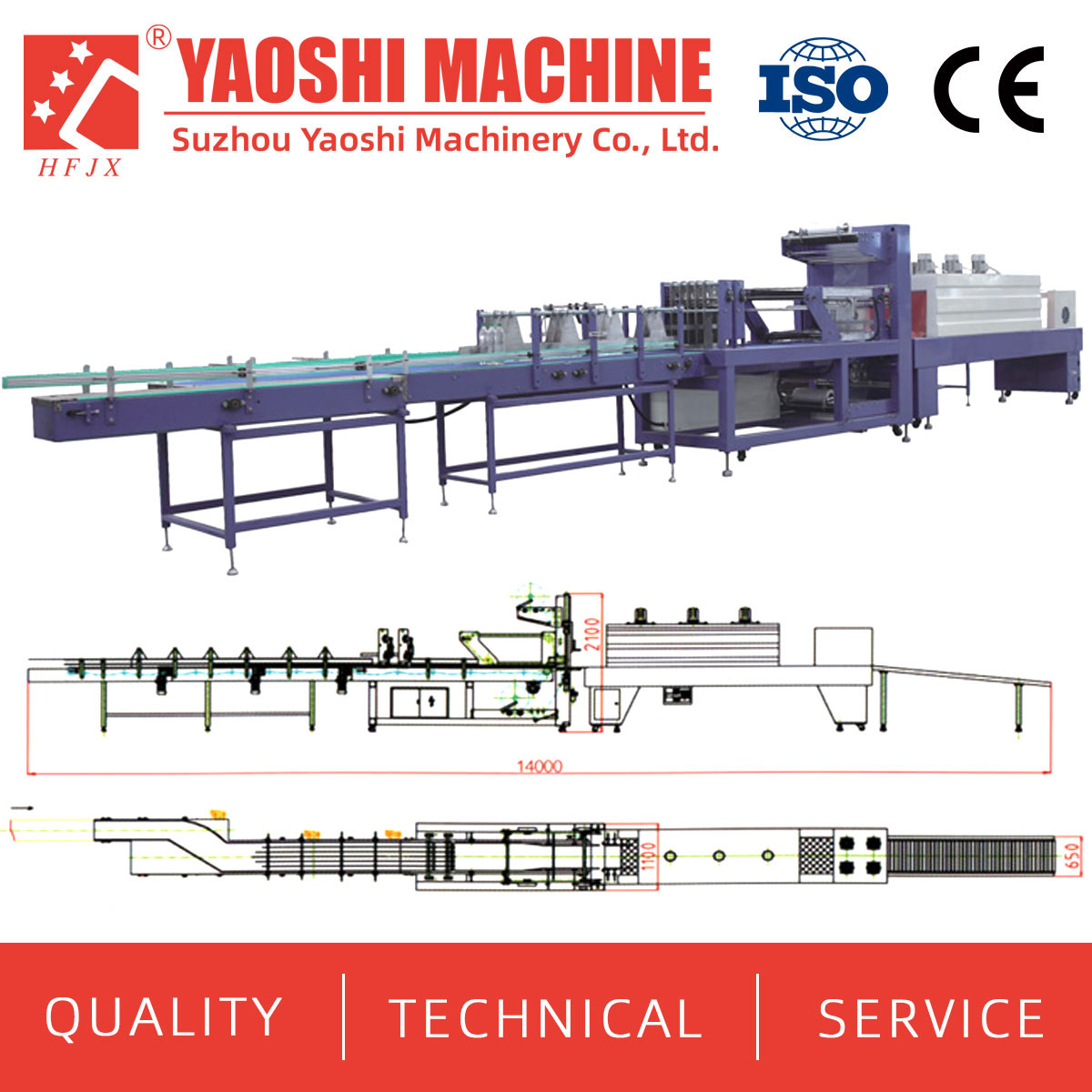
A bag-per-minute rating cannot be compared directly with filler BPH until the pack pattern is known. Ask the supplier to convert both rates to the same bottle and pack basis and identify the planned buffer between filling, labeling and packing.
Power, compressed air, source water, treated water, cooling, drainage and ventilation have both equipment and building implications. The quotation should show average and peak demand, required pressure or quality, connection size and connection location. If bottle blowing is included, separate service air from the blower’s high-pressure air requirement.
The buyer should provide a dimensioned factory plan with columns, ceiling height, doors, floor levels, drains and utility points. Equipment weight and access dimensions affect foundations, transport into the building and maintenance clearance. Local engineers should confirm structural, drainage, hygiene, fire and other site requirements using the final equipment information.
When comparing offers, check whether utility-generation equipment, distribution pipework, cabling, supports, drains and civil work are included. A lower machine total can shift substantial work to the site contractor without making that responsibility obvious.
A machine list does not define engineering and execution services. Request a separate statement for layout work, process and piping documents, electrical drawings, software backup, manuals, spare-parts lists, factory testing, site support, commissioning and training. State the required language and document format.
For factory or site acceptance, agree on the test product, bottle, cap, label and packing materials; test duration; measured output; quality checks; and responsibility for consumables. Transport, travel, accommodation, lifting equipment, local labor and site utilities should also be assigned. These details allow bidders to price the same responsibilities.
Place each quotation into one comparison sheet. Mark every item as included, optional, excluded or buyer supplied. Record the technical basis beside the commercial status so an included item with the wrong capacity is not treated as equivalent.
| Scope group | Items to compare | Key basis to record |
|---|---|---|
| Water treatment | Filters, treatment modules, tanks, pumps, sanitation and instruments | Raw-water report, finished-water target, flow and recovery basis |
| Bottle production | Blower, molds, compressors, cooling and bottle transfer | Preform, bottle drawing, BPH and changeover scope |
| Filling block | Rinsing, filling, capping, cap handling and controls | Model, bottle size, rated output and stated assumptions |
| Downstream | Inspection, coding, labeling, packing, conveying and pallet handling | Label, pack pattern, rate and buffer concept |
| Utilities and site | Air, cooling, electrical distribution, pipework, drainage and civil interfaces | Demand, pressure, quality, connection point and supplier responsibility |
| Project services | Engineering, tests, documents, installation support, commissioning and training | Deliverable, location, duration basis and buyer inputs |
Also request an assumptions list and a change procedure. If the bottle, raw-water data or pack format changes after quotation, the buyer can then see which equipment and interfaces require review. This makes the mineral water plant cost discussion traceable without relying on a single headline amount.
No. BPH must be tied to bottle size, SKU mix, operating hours and the required saleable output. Water treatment, bottle production, labeling, packing, utilities and project services also change the quotation.
No fixed relationship should be assumed. A capacity change may affect several connected machines, buffers, utilities and building requirements. Compare the complete revised scope and its operating basis.
It adds bottle-making equipment and related molds, air, cooling, preform handling and bottle transfer. The buyer should confirm whether compressors, air treatment and cooling equipment are included.
The report gives the supplier a basis for proposing treatment stages, capacity, tanks and instruments. Without it, the treatment section depends on assumptions that may change after testing.
Bottle and neck dimensions, cap specification, label type, code position, pack quantity, film or carton and pallet method can all affect equipment selection and change parts.
It may be included, optional or supplied locally. The important requirement is to define the boundary and obtain a consolidated utility schedule for the selected equipment.
Use the same raw-water, bottle, capacity, site and packaging inputs. Compare included, optional, excluded and buyer-supplied items, then check the technical basis and interfaces behind each line item.
Submit the raw-water report, finished-water target, bottle and cap drawings, output by SKU, label and pack specifications, factory layout, utility conditions and the requested supply and service boundary.
Send Yaoshi Machinery your raw-water report, bottle and cap drawings, required BPH for each bottle size, daily production target, label and final-pack details, factory plan and available utilities. Ask for a process flow, equipment list, preliminary layout, model-specific parameter sheets, line-balance basis, utility schedule and included/optional/excluded scope table.
Email tony@yaos.ltd or call +86 18915689808. Mark any unconfirmed input clearly so the quotation can show its assumptions and the items that require later confirmation.
<!--!doctype-->


+86-512-58530618

Wukesong Road, Sanxing Town, Zhangjiagang City, Jiangsu Province, China