An orange juice filling line should be specified from the juice arriving at the plant, the product intended for sale and the approved preservation route. A packer receiving liquid NFC juice has different preparation duties from one receiving frozen concentrate. A drink with added orange cells introduces another handling and filling requirement.
For bottle-based projects, the important inputs are incoming material, formula characteristics, pulp, oxygen and foam expectations, filling conditions, bottle-cap compatibility and accepted output. Use those details to select the filling configuration and its supporting equipment. This guide focuses on orange-juice application decisions rather than a general list of juice-line machines.
State whether the incoming material is prepared NFC juice, concentrate, a blended juice or another approved orange beverage base. Describe its delivery form, temperature, packaging, storage conditions and specification. A commercial product name alone does not define the handling duty.
NFC does not automatically mean the bottler extracts juice on site. If the factory receives bulk NFC juice, receiving, storage and transfer should be specified around that supply. If the project starts with whole fruit, citrus extraction and finishing need a separately defined upstream scope. Do not assume that equipment is included in a filling-machine offer.
| Incoming Material | Preparation Questions | Input Needed Before Filling Selection |
|---|---|---|
| Bulk NFC juice | How is it received, stored and transferred? What treatment has already occurred? | Supplier specification, product condition, delivery method and approved next process |
| Orange concentrate | What handling or thawing is needed? How is the approved blend prepared? | Concentrate properties, formula basis, water requirements and batch plan |
| Prepared orange beverage | Which ingredients and quality limits define the finished recipe? | Measured product properties, process basis and representative samples |
| Product with added orange cells or pulp | How are solids supplied, added and distributed? | Particle data, concentration, texture limits and transfer/filling trials |
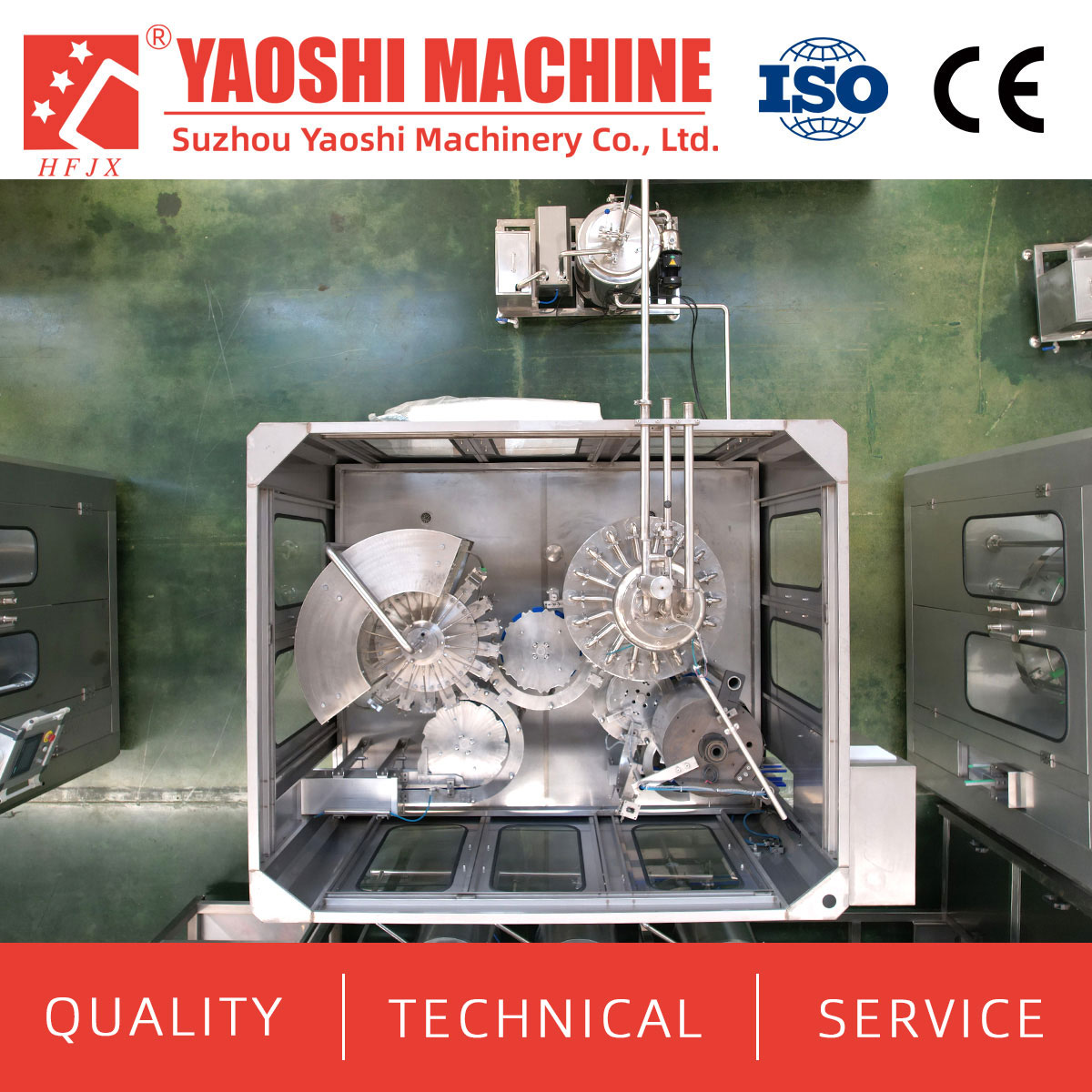
Yaoshi's beverage preparation equipment can be reviewed against the required preparation duties. Ask the proposal to name the supplied modules and their inlet and outlet conditions.

Official website preparation-equipment image. It illustrates equipment scope and is not presented as an orange-juice customer installation.
Provide available pH, Brix, density and viscosity data with measurement conditions. Include the required temperature range at the filler inlet, foam behavior, expected holding time and batch variation. For concentrate-based preparation, identify how the approved blend is checked before release to filling.
Describe cloud and pulp as separate product expectations. A cloudy appearance does not establish the dimensions or concentration of orange cells. Supply the required product specification and ask which preparation and handling steps preserve it. Do not add fine filtration or homogenization automatically when the finished product is intended to retain visible cells.
The machine supplier should return a supported product range, proposed filling configuration and trial requirements. Unmeasured properties should remain open in the RFQ until samples or tests provide the information.
For products containing pulp or cells, state the size range, maximum dimensions, concentration, texture and settling or floating behavior. Ask how the holding, transfer and filling route will maintain the required distribution without unacceptable damage.
Review tanks, pumps, valves and any filtration together. A particle-compatible filling outlet cannot compensate for an upstream stage that removes or alters the desired solids. Ask the supplier to justify mixed-product filling or separate pulp dosing using the actual recipe.
In trials, measure both total fill and the agreed pulp or cell content. Sample during normal running and after a representative stop. A filled bottle can meet its quantity target while containing an unacceptable proportion of liquid and solids.
Air introduced during blending and transfer can affect orange-juice quality, foam and floating-pulp distribution. Identify the intended product-quality checks and the sampling points where air pickup or oxygen will be assessed. These should come from the product team's requirements.
Ask the supplier to review receiving connections, mixing, transfer, holding and filling as one route. Where deaeration is proposed, confirm its duty, product conditions and quality considerations. A deaerator in an equipment list does not establish oxygen performance at the bottle.
Do not use a universal dissolved-oxygen target or a vitamin-retention promise for the line. Agree the measurement method, sampling conditions and acceptance basis with qualified product specialists. Include foam behavior in filling trials because it can affect the product flow and accepted output.
Specify the required storage and distribution conditions and whether the preservation route is approved or under development. NFC and concentrate-based descriptions identify product history; they do not, by themselves, select a filling or preservation method.
For a proposed hot-fill route, obtain confirmation of the product treatment, filling conditions, closure, any required post-fill steps and cooling. For a chilled route, define the treatment and hygiene basis together with the cold-storage and distribution responsibilities. For an aseptic proposal, request the complete product, package, closure and controlled-filling boundary, with verification responsibilities.
Yaoshi's juice process solutions provide a starting point for discussion. The final technical offer must identify which documented configuration applies to the approved orange-juice project. No route or shelf-life result should be inferred from the product name alone.
| Process Question | Package Input | Confirmation Needed |
|---|---|---|
| Is hot filling approved? | Bottle and cap drawings, thermal suitability and target fill | Compatibility through filling, closure and the approved cooling cycle |
| Is chilled distribution planned? | Package specification and intended storage conditions | Treatment, hygienic filling, closure and cold-chain responsibilities |
| Is aseptic filling required? | Package material, bottle/preform and cap specifications | Treatment methods, protected transfer, controls and applicable validation evidence |
Provide bottle material, volume, dimensions, neck finish and tolerance drawings. Send cap and seal specifications and production samples. Confirm the package for the entire process, including filling, cooling where applicable, storage and handling.
For oxygen-sensitive orange juice, discuss package barrier and closure integrity with the packaging supplier. Clarify the headspace and fill requirements for the approved package rather than imposing a universal full-mouth setting. The quality plan should account for both processing and storage conditions.
Review the proposed juice filling machine against the exact bottle-cap pair. Request an application matrix covering every launch format, required change parts, accepted product conditions and any unresolved tests.

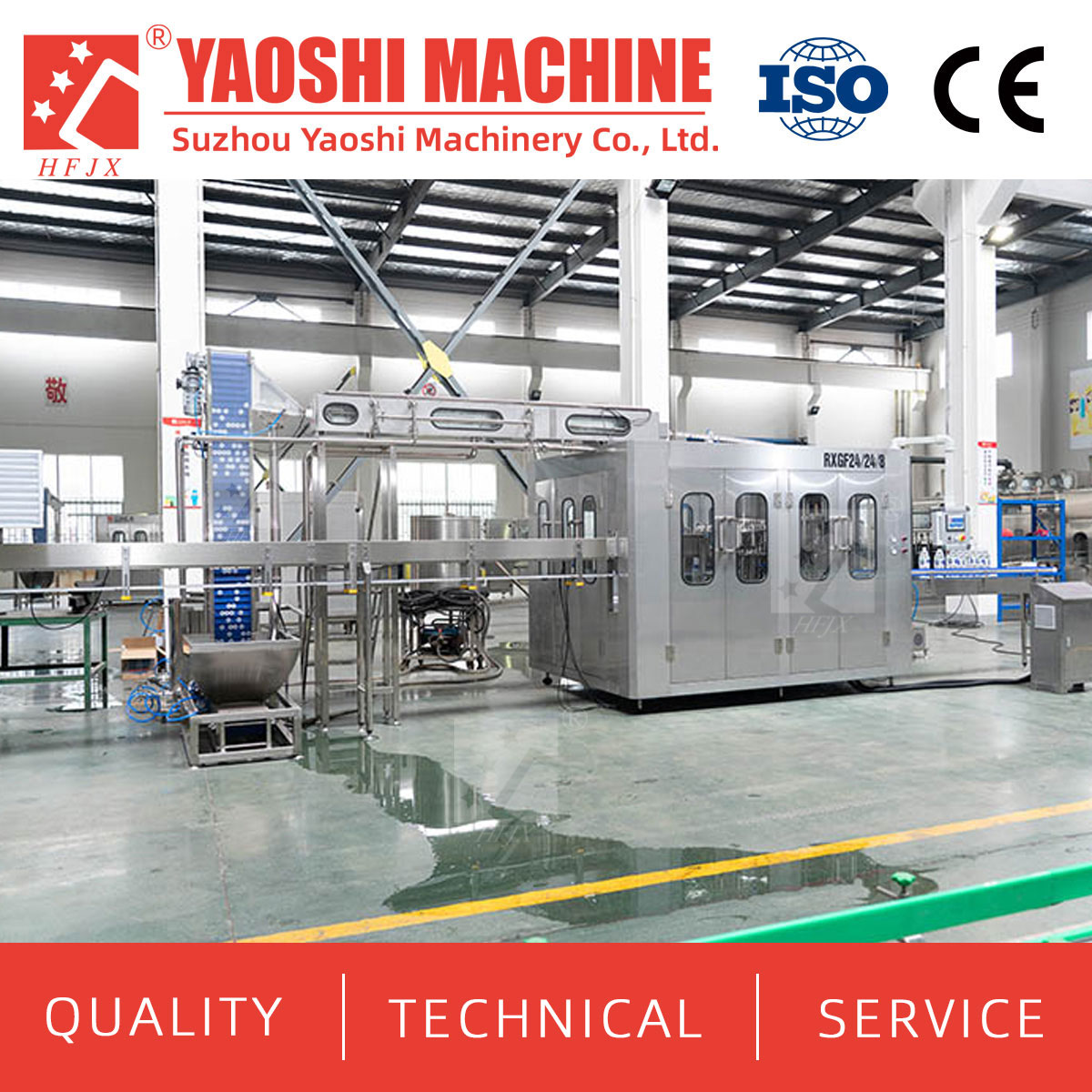
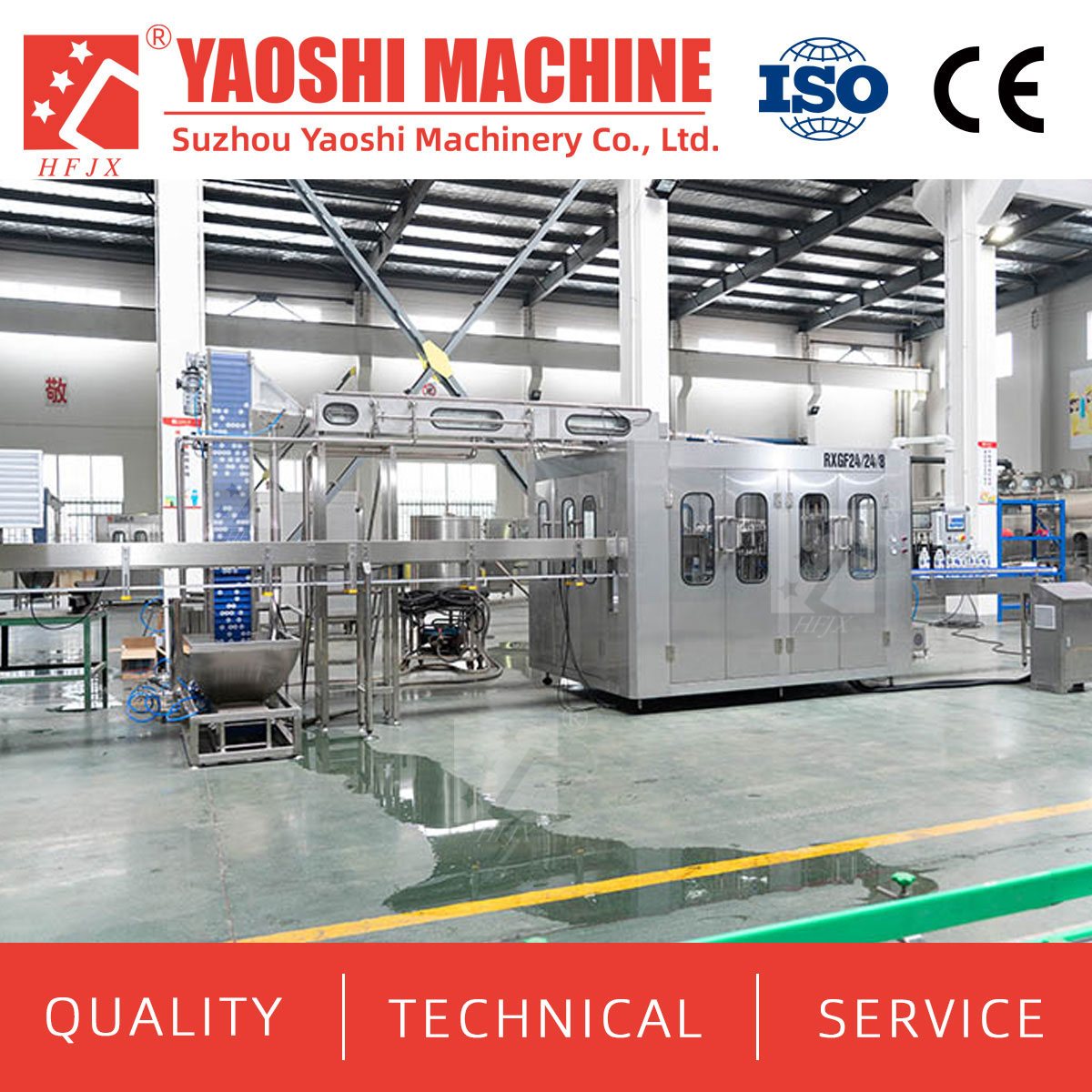
Official hot-fill equipment illustration. It does not establish suitability for every orange-juice recipe or for a chilled or aseptic process.
The following selected values come from Yaoshi's “Juice beverage hot filling machine” product table. They describe the named hot-fill catalogue models. They do not specify orange-cell limits, oxygen control, cleaning performance or output with the buyer's recipe.
| Published Model | Listed Capacity | Listed Power | Dimensions (mm) | Listed Weight |
|---|---|---|---|---|
| RCGF18-18-6 | 8,000 BPH | 4.4 kW | 2800 × 2150 × 2500 | 4,000 kg |
| RCGF40-40-12 | 24,000 BPH | 7.8 kW | 4500 × 3300 × 2600 | 8,000 kg |
Ask for the reference bottle and product conditions behind the stated output. Public pages contain differences for some model ratings and bottle-volume limits, so obtain one reconciled datasheet for the offered build. These values must not be transferred into chilled or aseptic specifications.
State accepted bottles per hour for each bottle size, batch volume, shifts and expected product changes. At 8,000 accepted 500 ml bottles per hour, the filled volume is 4,000 litres per hour before losses and other process flows. At the same BPH in 1 litre bottles, the filled volume doubles.
Use this duty to review preparation, treatment, holding and filling together. If the project includes whole-fruit processing, calculate fruit intake separately from yield data agreed for that scope. Fruit input cannot be assumed equal to filled-juice output.
Include cleaning and changeover in daily-output planning, especially when alternating pulp levels or different recipes. Ask the supplier to show what upstream supply and downstream conditions its output commitment assumes.
Use representative juice and intended bottles and caps for tests influenced by product behavior. Agree how to assess fill quantity, foam, pulp distribution, product handling and closure. Include normal operation, startup and recovery after relevant stops.
The product team should specify any oxygen or quality measurements, while qualified specialists define process verification. Cleaning trials should address retained pulp and the required transition to the next product. A water run may demonstrate selected mechanical functions but cannot establish these orange-juice outcomes.
For comparable quotations, submit incoming-material details, formula properties, pulp data, process status, bottle and cap drawings, required output and site utilities. Request a proposed configuration, operating basis, trial plan and included/optional/excluded schedule. Assign responsibility for process validation and product release separately from machine testing.
Not if the plant receives prepared bulk NFC juice. State the actual incoming material and separately define any whole-fruit processing scope.
It requires confirmation against both finished recipes, processes and packages. Their preparation and receiving duties may differ even when filling equipment can be shared.
No. Evaluate the proposed mixed or separate-dosing route with particle data, product samples and distribution tests.
No universal configuration should be assumed. Confirm the intended cloud, cell texture and product specification before adding a preparation duty.
No. The approved product, package, preservation objective and distribution plan determine the route.
No. Review the full route and verify the agreed result at defined sampling points under production conditions.
Use it for preliminary discussion only. Confirm the product, bottle, test conditions and accepted-output basis for the actual configuration.
Provide incoming juice or concentrate details, formula characteristics, pulp information, process route, bottle and cap drawings, and target output.
For a new orange-juice bottling project or a product extension, send Yaoshi Machinery your formula characteristics, incoming-material specification, intended process, bottle and cap drawings, and target capacity. Include pulp data and available site information. Request an application matrix, preparation-to-filling boundary and product-test plan. Contact tony@yaos.ltd or +86 18915689808.


+86-512-58530618

Wukesong Road, Sanxing Town, Zhangjiagang City, Jiangsu Province, China