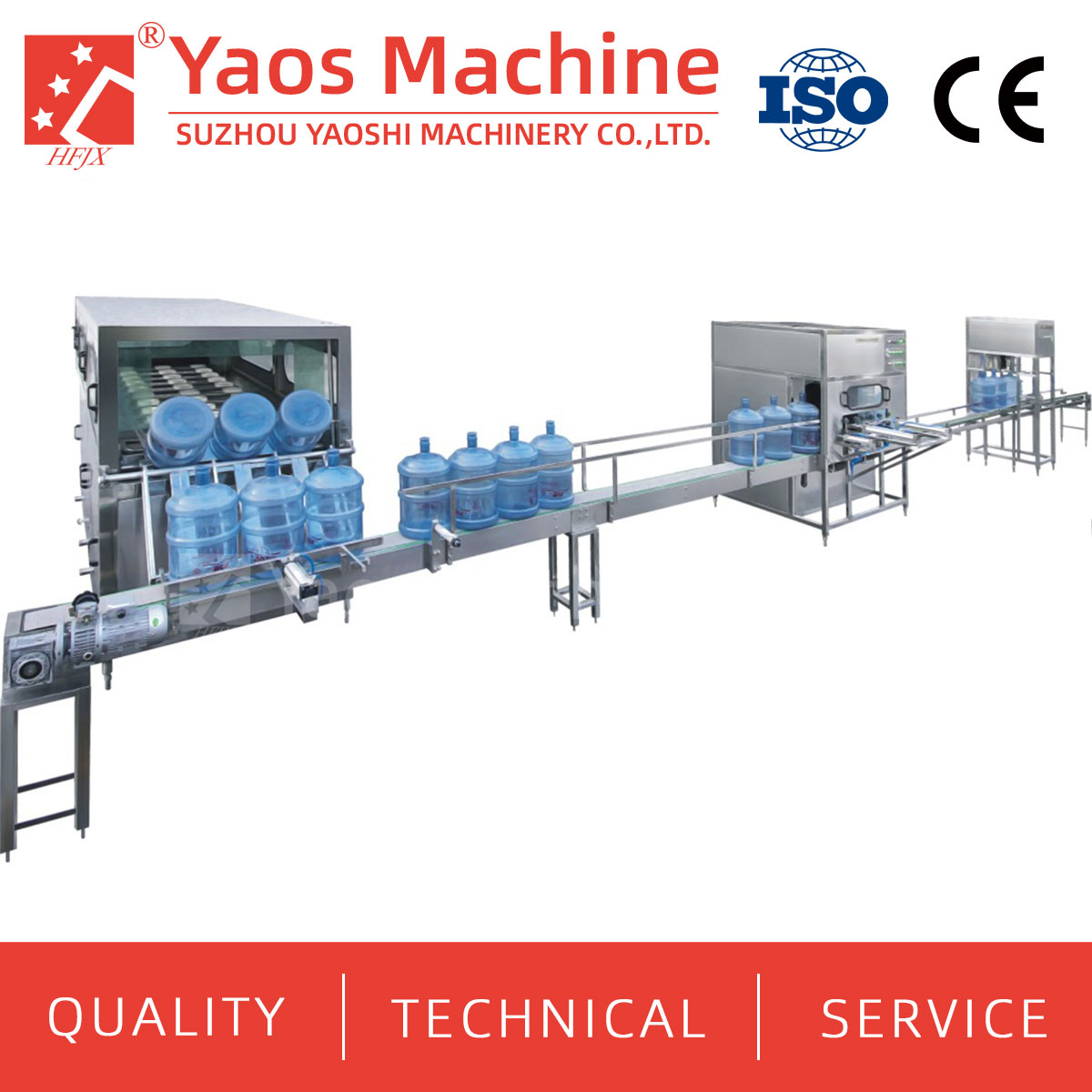
A water filling machine is automated equipment designed to fill clean water into containers at high speed. It integrates rinsing, filling, and capping into a single production line. These machines handle plastic bottles, glass bottles, and aluminum cans. Understanding their operation helps buyers select reliable packaging solutions for bottled water production.

A water filling machine is a complete bottling system that automates container handling and liquid dosing.These machines operate on a rotary turret design for continuous high-speed output. Linear configurations are available for smaller production volumes. The equipment handles a wide range of container sizes and shapes. Modern systems achieve speeds from 2,000 to 36,000 bottles per hour.
Fill accuracy is maintained within plus or minus 2 milliliters for consistent product quality.The primary application is packaging purified, mineral, or spring water for retail distribution. Bottled water manufacturers depend on these machines to maintain hygiene and throughput. Production lines often integrate multiple machines for a complete end-to-end solution. This includes rinsers, fillers, cappers, labelers, and packers working in sequence.
Every water filling machine consists of several mechanical and electronic sub-systems.The rinsing station cleans containers using treated water or ionized air. Filling valves precisely control the volume of water dispensed into each bottle.
The capping unit picks, places, and tightens caps to create an airtight seal. A PLC-based control system manages all machine operations and production parameters. Conveyors and starwheels transport containers smoothly through each station.
Founded in 1992, Suzhou Yaoshi Machinery Co., Ltd. manufactures these systems in an 18,000-square-meter ISO9001 certified factory. Their combination systems integrate rinsing, filling, and capping modules for efficient turnkey operation. The company employs over 80 professionals and operates multiple CNC machining centers for precision manufacturing.
The water filling process follows a precise sequence of automated steps. Each stage is controlled by sensors and a central PLC for synchronization.
Empty bottles enter the machine through a conveyor system. Starwheels align and space bottles for entry into the rotary turret. Sensors detect bottle presence and position before processing begins. An infeed screw ensures consistent spacing between containers.
Containers are inverted and sprayed with treated water or ionized air. This step removes dust, particles, and static charge from inside each bottle. Rinsing ensures the container is clean before filling. Some machines use a hot water rinse for additional sanitation.
Clean bottles move to the filling zone under the filling valves. Nozzles descend into each bottle and dispense a preset volume of water. Gravity filling is used for still water applications where no carbonation exists. Pressure filling is required for carbonated beverages to maintain dissolved gas levels. The fill height is monitored for consistency.
Filled bottles travel to the capping station. Caps are fed from a sorting bowl, picked, and placed onto each bottle neck. The capping head tightens the cap to the specified torque for an airtight seal. Cap presence and torque are verified by sensors before release.
Finished bottles exit the machine onto an outfeed conveyor. They move to labeling, date coding, and secondary packaging equipment. The entire process runs continuously with minimal operator intervention. Modern systems include reject stations for defective containers.
Gravity filling machines use liquid flow by gravity for still water products. Pressure filling machines use pressurized tanks for carbonated water and beverages. Overflow filling systems are designed for precise fill level in transparent bottles. Rotary machines offer high-speed production for large volumes. Linear machines suit lower capacity requirements with easier maintenance.
Each type serves specific production needs. The choice depends on product type, output volume, and container specifications. Manufacturers like yaosmachine offer multiple configurations to match diverse customer requirements. Their product range covers both rotary and linear designs across various speed ranges.
The selection also considers floor space, budget, and future expansion plans. A complete bottling line may combine equipment from different categories. Integration with existing production systems is an important factor. Professional consultation helps buyers identify the optimal configuration for their unique operation.
Water filling equipment must comply with international safety and hygiene regulations.CE certification confirms the machine meets European safety requirements. ISO9001 certification ensures consistent quality management in manufacturing.
SGS inspection verifies product conformity to specified standards. Stainless steel construction made of 304 or 316 grade prevents corrosion and contamination. Food-grade seals and gaskets are used throughout the filling path.
CIP systems enable automated cleaning without disassembly of machine parts. This reduces downtime and maintains hygiene standards between production runs. Regular CIP cycles flush the filling path with cleaning solutions and sanitizers. This process removes residue and prevents bacterial growth inside the machine.
yaosmachine holds all three international certifications for their filling systems. Their factory quality management system is certified to ISO9001, CE, and SGS standards. These certifications provide assurance to buyers about product reliability and safety. The company also offers customized solutions to meet regional regulatory requirements.
Parameter | Typical Specification | Industry Standard |
|---|---|---|
Filling Speed | 2,000 to 36,000 BPH | ISO 22000 |
Fill Volume Accuracy | plus or minus 2 ml to 5 ml | OIML R117 |
Container Size Range | 200 ml to 2,000 ml | Customizable |
Machine Material | 304 or 316 Stainless Steel | FDA or EU 1935/2004 |
Power Supply | 380V 50Hz Three Phase | IEC 60204 |
Compressed Air | 0.6 to 0.8 MPa | ISO 8573-1 |
Control System | PLC and HMI Touchscreen | IEC 61131 |
Water filling machines are essential for automated bottled water production. They combine rinsing, filling, and capping in one efficient system. The right machine ensures consistent fill accuracy and high output speed. Understanding the working process and available options helps buyers make informed investment decisions.
Request a Rapid Sourcing Quote from yaosmachine to receive a tailored solution for your production line. Their engineering team can recommend the optimal configuration based on your product type, container format, and target output volume. Contact yaosmachine Engineering Team for technical specifications and layout recommendations.


+86-512-58530618

Wukesong Road, Sanxing Town, Zhangjiagang City, Jiangsu Province, China