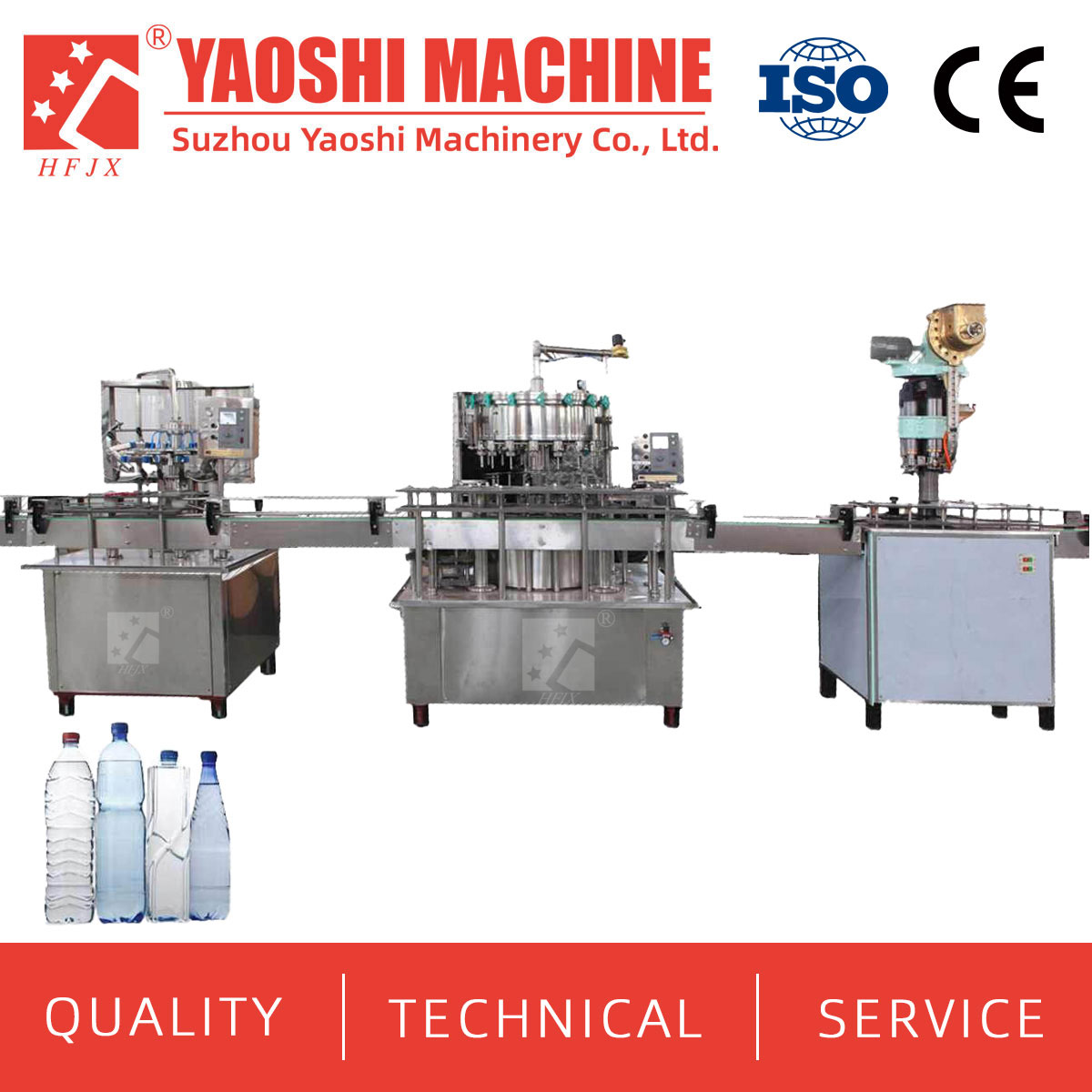
A supplier can send an attractive quotation and a long machine list without proving that the proposed water line fits the source water, bottle, output or factory. Buyers need documents that connect each claim to a model, drawing, calculation, interface or acceptance test.
This checklist is specific to bottled-water projects. It focuses on the evidence required for water treatment, rinsing, filling, capping and the connected production line. Use the same document request and revision for every candidate so technical and commercial comparisons remain traceable.
| No. | Document to request | Main purchasing question answered |
|---|---|---|
| 1 | Manufacturer identity and responsibility statement | Who manufactures, integrates and guarantees each part of the proposed line? |
| 2 | Water-treatment design basis and process flow | How was the treatment scope derived from the raw water and finished-water target? |
| 3 | Equipment list and model-specific datasheets | Which exact machines, options and ratings are included? |
| 4 | Bottle, cap and change-part compatibility matrix | Which SKUs run with the proposed configuration? |
| 5 | Line-capacity and balance sheet | How does nominal machine speed become accepted finished-pack output? |
| 6 | General arrangement and equipment-elevation drawings | Will the line fit the building and allow operation and maintenance? |
| 7 | Utility consumption and connection schedule | What power, water, air, cooling and drainage must the site provide? |
| 8 | Mechanical, electrical and control interface register | Who owns every connection between machines and local services? |
| 9 | Product-contact material and component declaration | What is supplied in the wetted path and how is it identified? |
| 10 | FAT and site-acceptance protocol | How will functions, output and quality criteria be checked? |
| 11 | Controlled documentation and software register | Which drawings, manuals, backups and revisions will be delivered? |
| 12 | Spare-parts, installation, training and support scope | What is included after manufacturing, and what remains buyer supplied? |
Ask the bidder to identify the contracting company, manufacturing location and the manufacturer of every major module. A water-line supplier may manufacture the filling monoblock while integrating water treatment, blow molding, labeling, inspection or packing equipment from other sources. Integration can work, but the responsibility must be visible.
The statement should identify who owns process design, layout, software coordination, line testing, installation interfaces and performance commitments. Buyers can review Yaoshi Machinery’s published company background, then request project-specific evidence for the offered scope.

A water filling machine manufacturer should not select the treatment train from the product name alone. Provide a recent raw-water laboratory report, source-flow information, seasonal variation and the required finished-water target. The supplier should return a process flow that states the design flow, treatment stages, tank arrangement, pump duties, instruments, expected recovery basis and sanitation boundary.
Yaoshi Machinery’s water treatment system page lists filtration, softening, precision filtration, reverse osmosis, ultraviolet treatment, ozone treatment and tanks among the available modules, with a published processing range of 0.5–150 tons per hour. The selected modules still need to follow the project water data and the buyer’s confirmed finished-water requirements.

The equipment list should assign one reference number to every machine, tank, pump, conveyor, inspection unit and utility package. Record the manufacturer, model, quantity, main function, included options and commercial status. Mark each item as included, optional, buyer supplied or excluded.
Request a datasheet for the exact offered model. A category brochure does not replace model-specific capacity, dimensions, weight, power, air demand, package limits and connection information. The water filling machine range provides the commercial product context, while the named CXGF 3-in-1 water filling machine page publishes the model matrix used below.

| Published item | CXGF8-8-3 | CXGF24-24-8 | CXGF60-60-15 | Buyer verification point |
|---|---|---|---|---|
| Capacity | 2,000 BPH | 8,000–12,000 BPH | 28,000–36,000 BPH | Confirm the reference bottle and operating assumptions |
| Rinsing / filling / capping heads | 8 / 8 / 3 | 24 / 24 / 8 | 60 / 60 / 15 | Match the offered model and machine identification |
| Total power | 3.8 kW | 5.2 kW | 12 kW | Confirm voltage, frequency and the full connected load |
| Size | 2300 × 1500 × 2100 mm | 3100 × 2450 × 2300 mm | 5450 × 3210 × 2300 mm | Check layout, access and maintenance clearance |
| Weight | 2,800 kg | 6,500 kg | 12,000 kg | Provide data to the buyer’s structural engineer |
| Common published package and air data | Bottle diameter 50–115 mm; bottle height 160–320 mm; compressed-air pressure 0.3–0.7 MPa | Confirm every bottle drawing, change part and peak air demand | ||
These figures apply to the named page and models. The supplier’s signed quotation should confirm current data for the selected bottle, cap, electrical standard and options.
Submit controlled drawings and samples for every bottle and cap. The matrix should record bottle material, volume, diameter, height, neck finish, weight, cap type and required output. The supplier should state which formats run on the base configuration, which need change parts and which fall outside the proposed machine limits.
For each change part, request an identifier, quantity and affected machine. Include blow molds, guides, star wheels, grippers, cap-handling parts, labeler parts and packer format parts where applicable. This prevents a general “supports different bottles” statement from hiding incomplete SKU coverage.
The sheet should show the same reference SKU across bottle supply, rinsing, filling, capping, inspection, labeling and packing. Record nominal rating, proposed operating rate, package basis and any accumulation between modules. Convert packer rates from packs per minute to bottles per hour using the approved pack pattern.
Ask the manufacturer to explain the assumptions behind stable line output, including material supply, normal short stops and changeovers. Do not accept the filler’s maximum rating as a complete-line guarantee unless the quotation defines the test conditions and included equipment.
The general arrangement should show machine footprints, conveyors, tanks, pipe routes, control cabinets, operator positions, maintenance zones, doors, columns and material flow. Add elevations for bottle transfers, filler infeed and discharge, platforms and utility connection points.
Use a current factory drawing with dimensions, ceiling height, floor levels, drains and access openings. Ask for equipment weights and the largest shipping or installation dimensions so local engineers can review structure and access.
Request one consolidated schedule for the selected configuration. It should state the service, required quality, pressure, average demand, peak demand, connection size and connection location. Relevant services may include source water, treated water, electrical power, service air, high-pressure blowing air, cooling, drainage and other process utilities included in the project.
The document should distinguish machine demand from utility-generation equipment. For example, an air-pressure value on a filler datasheet does not show compressor capacity for the complete line.
List every boundary between water treatment, bottle supply, filling, labeling, packing and local utilities. For each boundary, identify the design owner, supply owner, installation party, connection point and acceptance evidence.
The control section should define ready, running, fault, blocked and starved signals; speed-reference ownership; emergency-stop zones; alarm ownership; and restart behavior. Also confirm who supplies interconnecting cables, pipework, supports and software coordination.
Request a project-specific declaration that identifies product-contact components and materials for the proposed water path. It should reference the offered equipment and drawing revision rather than making a general company statement. Where certificates or supporting records are required, list the exact document, component and destination requirement.
The buyer should determine local compliance needs with qualified advisers. A general certificate does not confirm that every component or the complete installed line meets a project-specific requirement.
The factory-acceptance protocol should define the machines included, test materials, bottle and cap revisions, duration, functions, measured output, inspection points, records and treatment of open items. If a complete line cannot be assembled for the test, the supplier should identify which interfaces and functions remain for site verification.
The site-acceptance plan should state required utilities, product and packaging materials, site readiness, test sequence and acceptance criteria. Agree on who supplies consumables and measuring instruments before the order.
Request a master register with document title, equipment reference, language, file format, required stage and revision status. It may include approved layouts, process and piping information, utility schedules, electrical drawings, signal lists, operating manuals, maintenance instructions, parts lists, test records and certificates specifically required for the project.
For controlled equipment, include program and recipe backups, version identification and agreed access arrangements. Define preliminary, approved, as-built and final-handover stages so superseded files are not used during installation.
Ask for separate lists of commissioning spares, recommended operating spares, consumables, wear parts and optional critical parts. Each item should have a description, equipment reference, part number where available and quantity basis.
The service scope should define installation supervision, commissioning, production support and training as separate activities. Record travel, visas, accommodation, lifting equipment, local labor, translation, working hours, utilities and site-preparation responsibilities. Warranty and response terms should be written in the quotation or contract rather than inferred from a general website statement.
Create one evidence register for every bidder and keep the original requirement numbers. Record the supplier’s document reference, revision, response, exception, assumption and clarification status. A blank cell should remain open instead of being treated as compliant.
| Review status | Meaning | Buyer action |
|---|---|---|
| Confirmed | The response is supported by a project-specific document | Check revision and carry the requirement into the contract |
| Conditional | The response depends on a stated input or later test | Assign the missing input, owner and due date |
| Exception | The supplier does not meet or include the requirement as written | Assess the technical and commercial effect |
| Unclear | The response is generic, incomplete or inconsistent | Request a specific clarification and evidence reference |
| Not applicable | The item does not apply to the agreed project scope | Record the reason so it is not silently omitted |
Complete the technical review before comparing headline prices. A lower offer may exclude treatment stages, change parts, utilities, documentation or site work that another supplier includes.
Not every document will be final at the first quotation stage. Ask for the available version, the planned delivery stage and a list of data still needed from the buyer.
Start with the buyer’s product, raw-water, bottle, capacity and site brief. The supplier can then prepare a treatment basis, equipment list and model-specific datasheets against the same inputs.
No. Request the exact offered model, options, bottle basis, capacity assumptions, utility requirements and connections. The signed quotation should identify the applicable datasheet revision.
Use the bottle and cap compatibility matrix with controlled drawings and samples. Require the supplier to identify change parts and any limitations for every SKU.
Review the line-balance sheet and the agreed acceptance protocol. Both should use the same bottle, cap, label, pack pattern and operating conditions.
A single contract can still contain several equipment manufacturers and buyer-side utilities. The register identifies ownership of each mechanical, electrical, control and process connection.
Request only the documents relevant to the equipment and destination. Identify the issuing body, scope, model or component covered, validity and the project requirement the document is intended to satisfy.
Define staged delivery in the document register. Installation teams need approved information before site work, while final as-built files and verified backups should reflect the accepted configuration.
Send Yaoshi Machinery your raw-water report, bottle and cap drawings, required BPH for each bottle size, packaging specification, factory layout and available utilities. Ask for the applicable document register, treatment basis, equipment list, model datasheets, line balance, preliminary layout, utility schedule and scope matrix.
Email tony@yaos.ltd or call +86 18915689808. Mark every unconfirmed input so the proposed water line and its documentation can state the assumptions that still require review.
</body> </html>


+86-512-58530618

Wukesong Road, Sanxing Town, Zhangjiagang City, Jiangsu Province, China