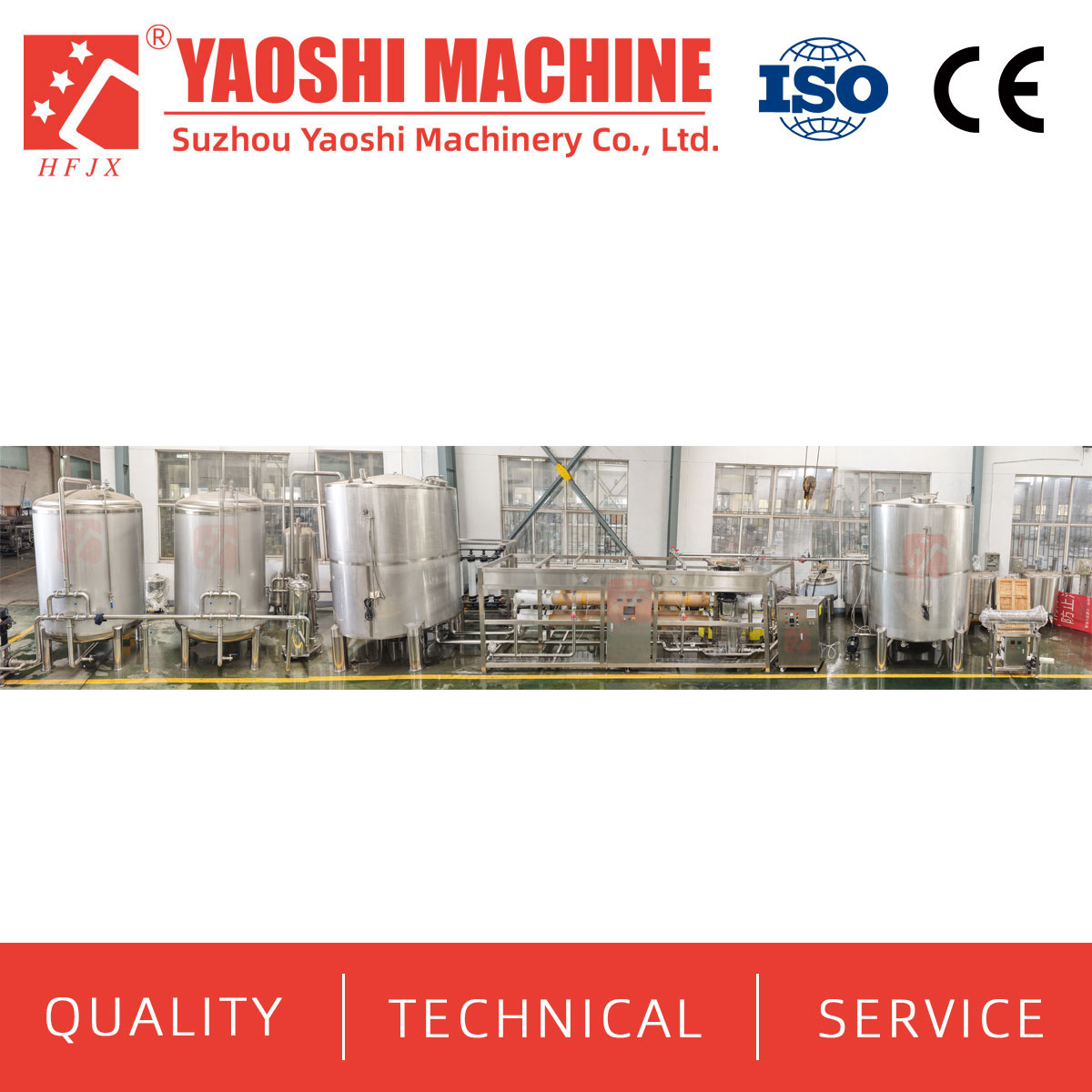
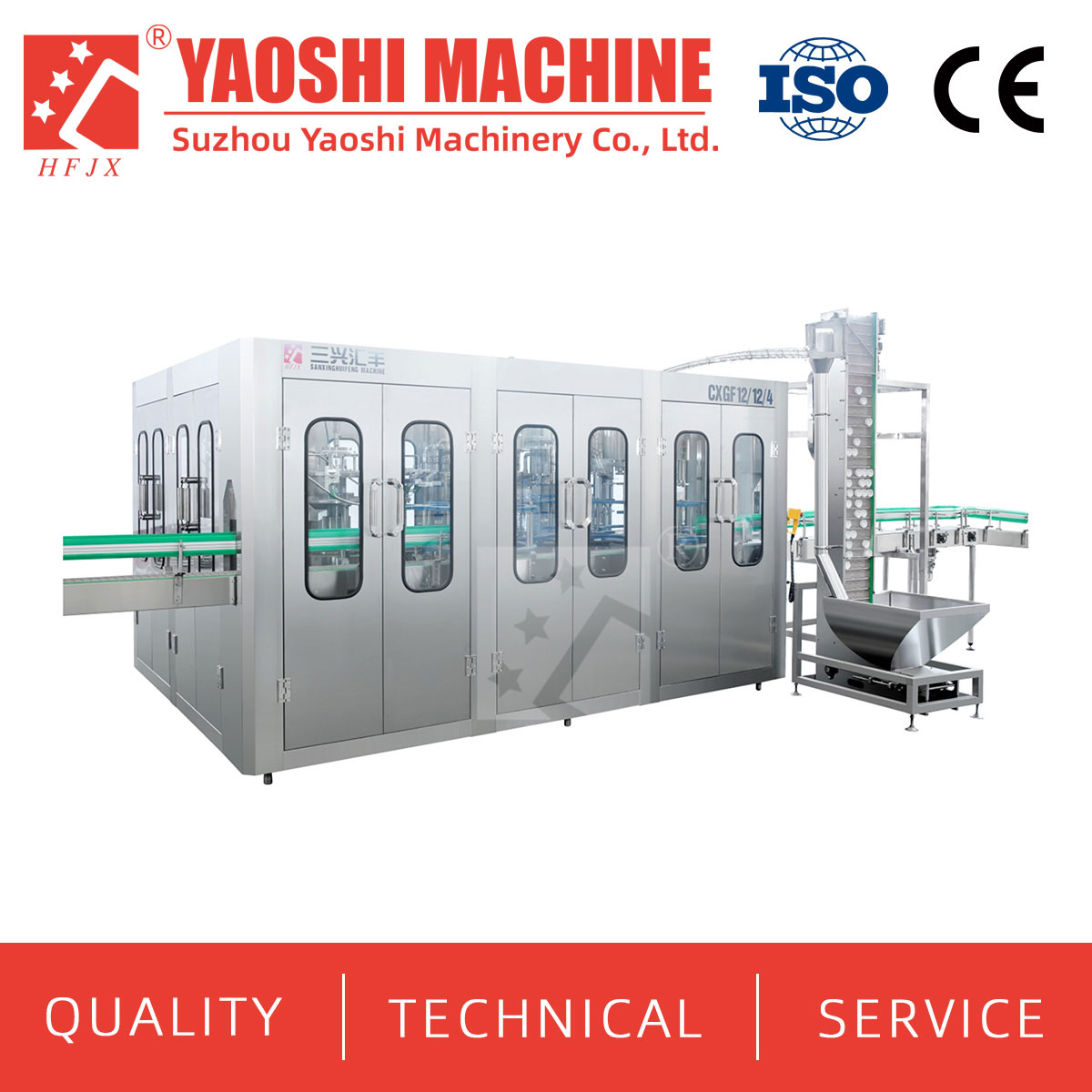
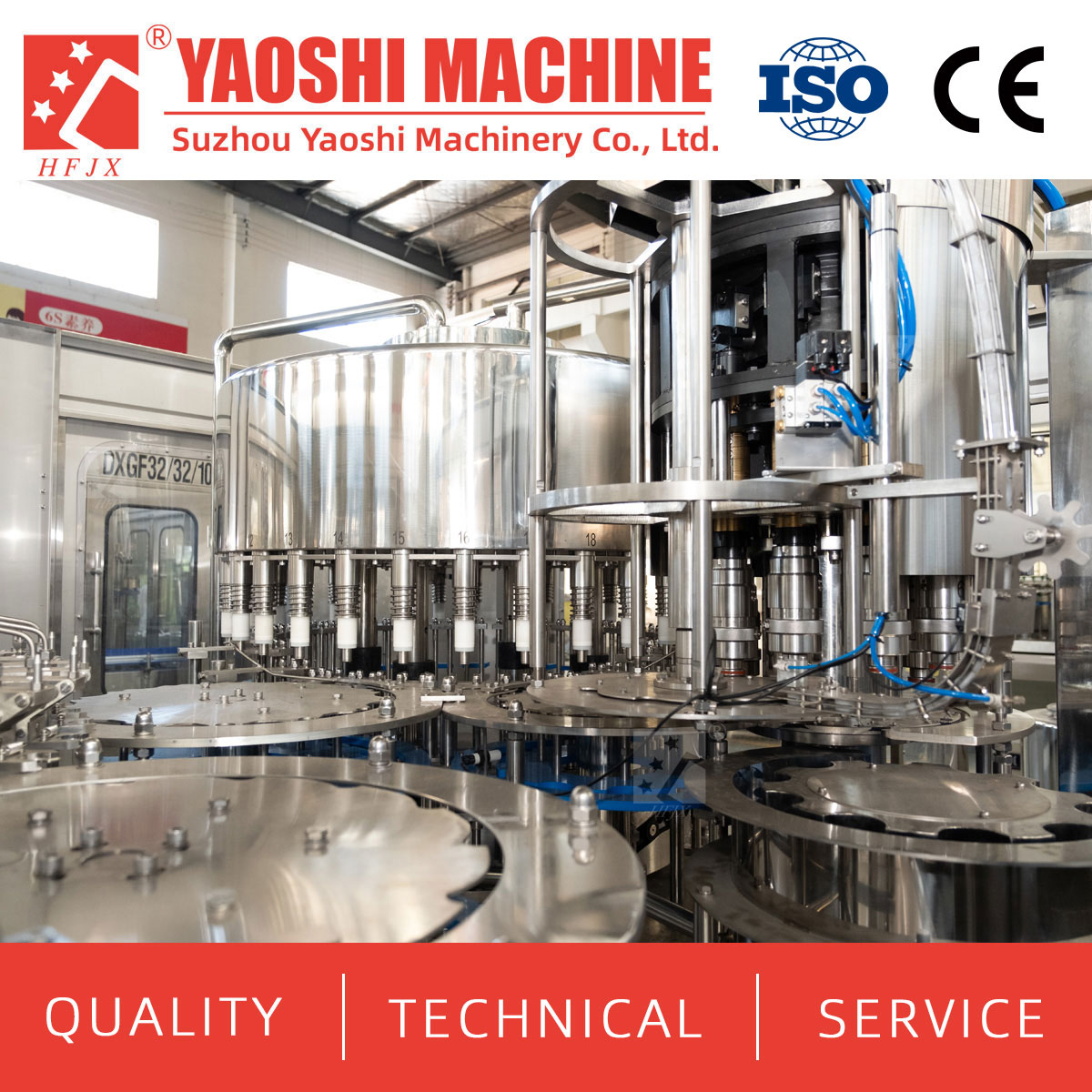
A quotation for a 3-in-1 water filling machine may describe one compact unit for rinsing, filling and capping. That description does not define the complete project boundary. It does not say where bottles arrive, how finished water reaches the machine, who supplies caps, where accepted bottles are counted or which downstream equipment is included.
Buyers should treat “3-in-1” as a description of three connected process stations, then define the inputs, outputs and responsibilities around each station. This prevents a monoblock quotation from being mistaken for a complete bottled-water line and gives the supplier enough information to select a suitable configuration without relying on hidden assumptions.
In this context, 3-in-1 means that bottle rinsing, water filling and cap application are integrated into one machine body with internal bottle transfer between the stations. The official Yaos Machinery water category describes this rinsing-filling-capping arrangement for bottled-water applications.
The phrase identifies the main process sequence. It does not, by itself, confirm bottle material, bottle-size range, filling method, cap format, output, utility demand, change parts or inspection scope. These items must appear in the project-specific technical proposal.
| Station or boundary | Core purpose | Buyer information required | Scope question for the supplier |
|---|---|---|---|
| Bottle infeed | Present empty bottles to the monoblock | Bottle drawing, supply method and required rate | Where does supplier responsibility begin? |
| Rinsing | Treat the inside of the empty bottle using the agreed rinsing duty | Bottle condition and approved rinsing medium | Which supply, return and drainage connections are included? |
| Filling | Transfer finished water into the approved bottle | Finished-water condition, fill volume and bottle formats | What operating and test conditions support the quoted output? |
| Capping | Feed and apply the approved closure | Cap drawing, samples and replenishment method | Does the offer include sorting, feeding and all change parts? |
| Bottle discharge | Transfer closed bottles to the next line section | Downstream machine and conveyor information | Where does the performance and mechanical boundary end? |
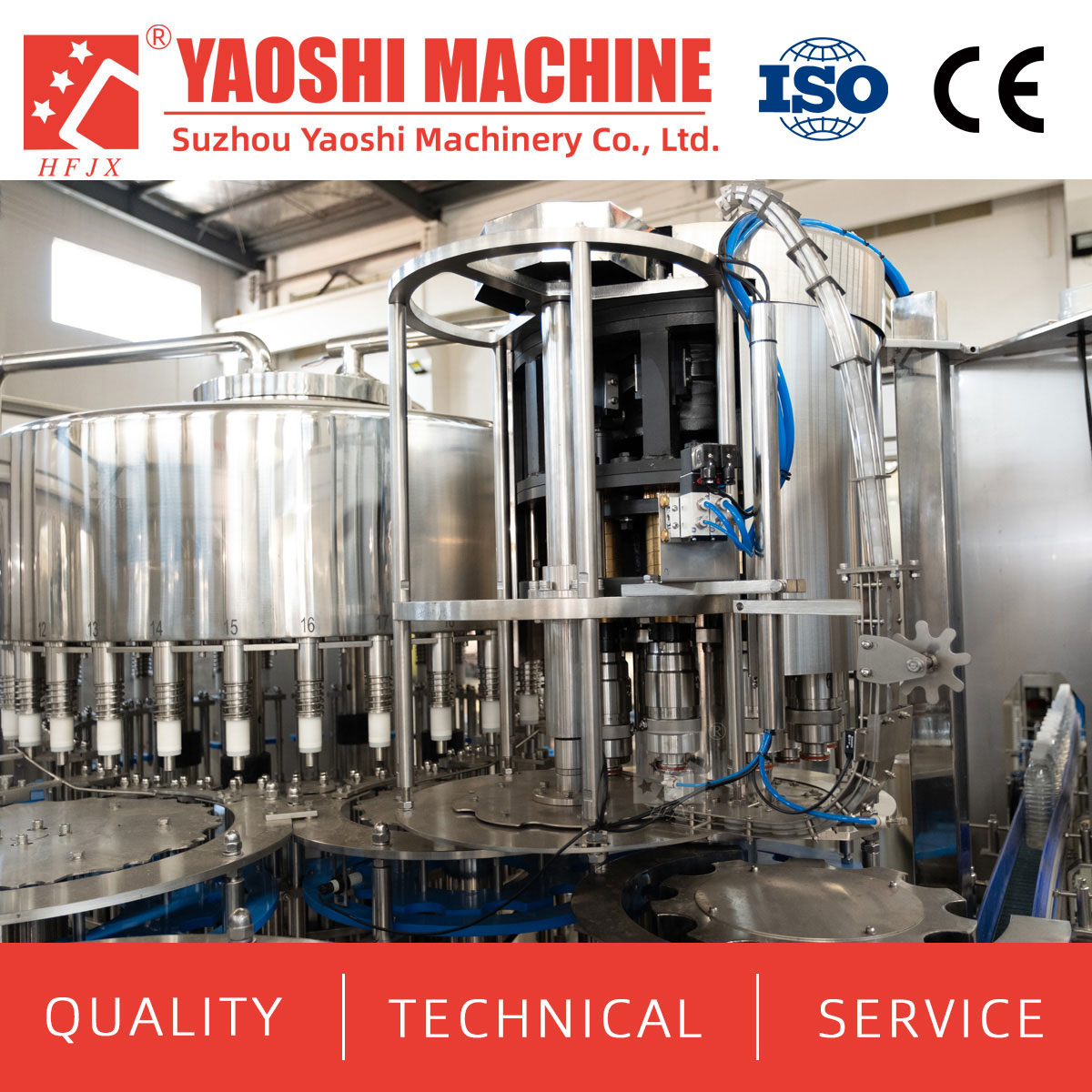
The monoblock needs a stable supply of empty bottles, but bottle creation, storage and delivery may sit outside its scope. State whether the plant will purchase empty bottles, use an existing unscrambler or produce PET bottles beside the line. Identify the equipment that hands bottles to the filler and the required conveyor direction and height.
Send a dimensioned drawing for every PET bottle. Nominal volume alone does not show the neck finish, support ring, overall height, maximum diameter, base shape or stability. Ask the supplier to return an approved bottle-format table and identify any required samples, trials, guides or change parts.
If bottles will be produced in-house, review the PET blow molding equipment and transfer section as a separate package. Matching catalogue speeds do not prove that the bottle supply and monoblock will operate as a balanced line.
“Rinsing included” is too broad for a technical agreement. The buyer and supplier should define the incoming bottle condition, intended rinsing duty and approved rinsing medium. The proposal should show how the medium reaches the machine, how it is controlled and where return or drainage responsibility ends.
Confirm these points before approving the rinsing station:
the approved bottle material and formats;
the expected condition of bottles entering the rinser;
the specified rinsing medium and its supply condition;
included tanks, pumps, filtration or treatment items, if any;
supply, overflow, return and drain connection points;
treatment of bottles during a stop or restart;
access for inspection, cleaning and maintenance;
the test used to confirm the agreed rinsing sequence.
Do not assume that the rinsing station produces or treats its own water. If upstream purification is required, define it separately against the raw-water analysis and finished-water target. Yaos Machinery lists a related water treatment system category, but the correct treatment sequence cannot be selected from the 3-in-1 label.
The filling station receives finished water and transfers the specified volume into the approved bottle. A useful quotation ties the filling duty to one or more reference formats. Each reference duty should identify the water product, bottle drawing, intended fill volume, target output and conditions used for selection.
Ask the supplier to state:
the proposed filling arrangement for the defined water product;
the machine inlet condition required for finished water;
the supplier and buyer boundary at the product connection;
the quoted output for each important bottle and fill volume;
the point where output is counted;
the method and acceptance basis for checking fill results;
the response to no-bottle, stop and restart conditions;
cleaning connections, procedures and excluded upstream equipment.
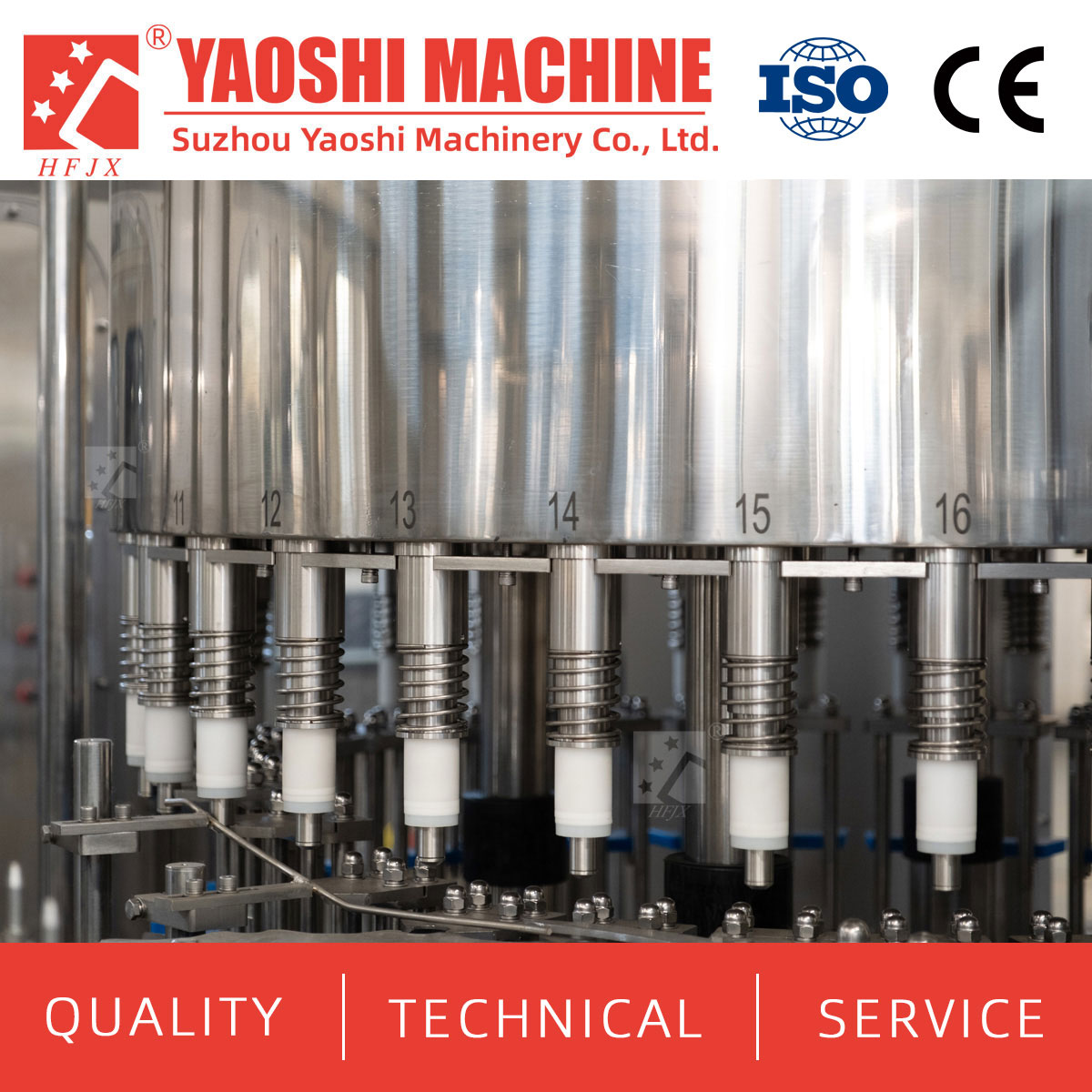
Do not copy a capacity from one published model into a different project. Bottle geometry, fill volume and connected-line conditions affect the required configuration. The quotation should contain a format-specific capacity table instead of one speed applied to every PET bottle.
The capping station is responsible for an approved closure, not an undefined “standard plastic cap.” Provide a cap drawing and representative samples. Identify whether more than one cap will be used and how caps are supplied to the machine area.
The supplier should confirm cap sorting, delivery, application and discharge behavior for each approved format. The quotation should identify the cap-handling equipment included with the monoblock, its replenishment point, required change parts and the inspection or sampling method used during acceptance.
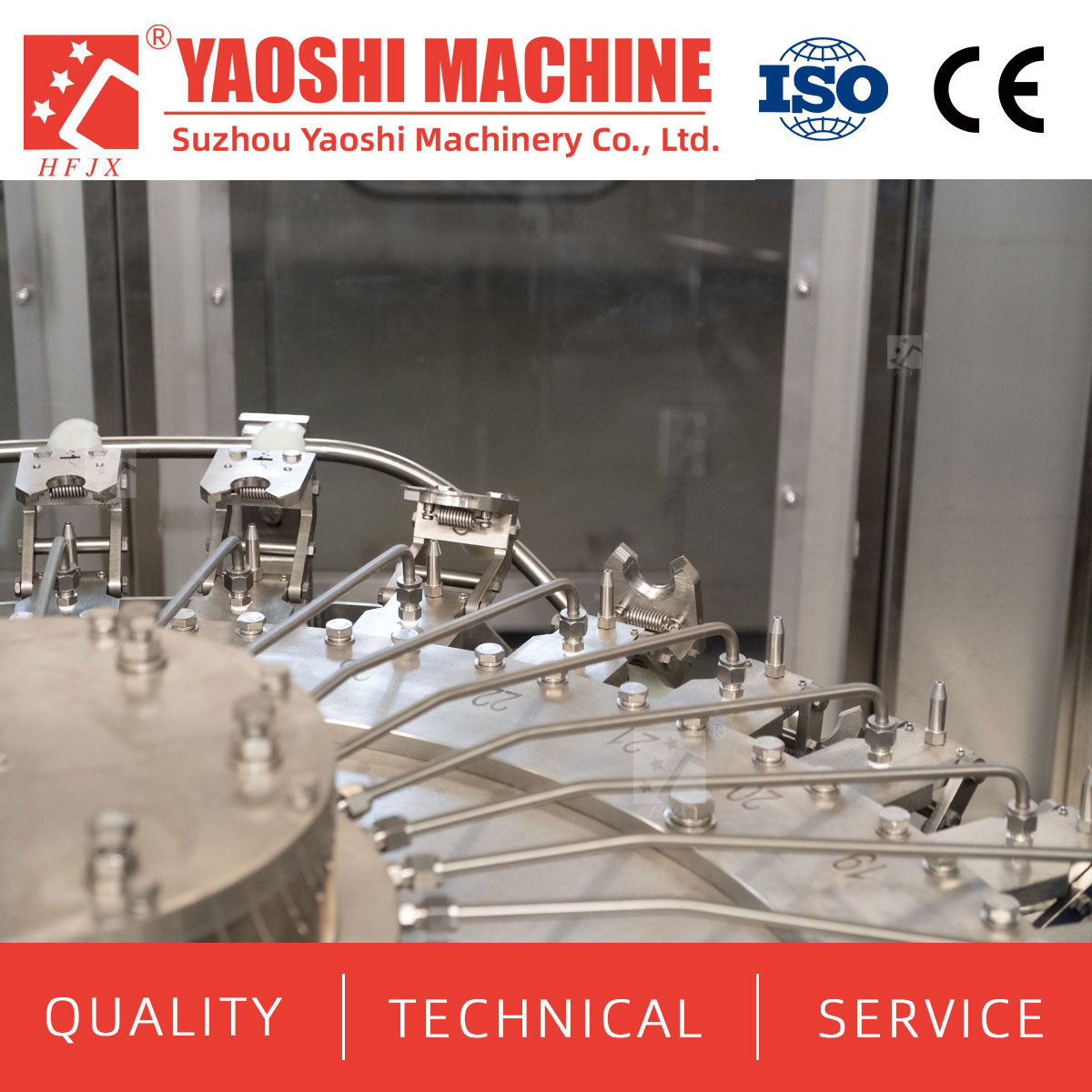
Closure quality also depends on the supplied bottle neck and cap. If production samples are unavailable during early design, keep compatibility as an open item with an approval deadline. State which drawings, machine parts and tests depend on final samples.
Integrating three stations reduces the number of external transfers within the main process block. The line still has external mechanical, product, utility and control connections. These boundaries need drawings and named responsibility.
| Interface | Information to exchange | Responsibility to define |
|---|---|---|
| Upstream bottle supply | Direction, elevation, bottle rate, stop logic and accumulation | Conveyor, transfer parts, guards and controls at the handover |
| Finished-water supply | Required condition, flow, pressure and connection location | Pipework, isolation, buffer or supply equipment and final connection |
| Cap supply | Cap format, delivery method and replenishment arrangement | Hopper, sorter, elevator or other included handling equipment |
| Utilities and drainage | Available services and site connection points | Utility drops, local connection, drain routing and exclusions |
| Downstream conveyor | Discharge elevation, bottle condition, speed and stop signals | Transfer, accumulation, control handshakes and guarding |
For a replacement machine, share the current layout, conveyor heights, equipment speeds and control information. Photographs can support the review but should not replace measurements or drawings. Ask the supplier to issue an interface list showing every assumption that requires a site survey.
A 3-in-1 label does not automatically include the complete process from raw water to warehouse-ready packs. Depending on the project, separate packages may be required for raw-water treatment, finished-water storage, PET bottle production or unscrambling, bottle conveying, inspection, drying, coding, labeling, secondary packing and pallet handling.
Do not ask whether these items are “part of the line” without defining the line. Use an equipment matrix with the following statuses:
included in the base quotation;
priced as an option;
supplied by the buyer;
supplied by another contractor;
excluded from the current project.
If saleable packs are the required project output, define labeling and bottled-water packaging equipment outside the monoblock boundary. The supplier should show how the discharge conveyor, downstream capacity and stop signals relate to the required output.
The stated speed of the main machine and the net production of a shift are different measures. Monoblock output should identify the reference bottle, fill volume, cap, test duration and counting point. Complete-line output also depends on bottle supply, cap replenishment, downstream equipment, changeovers, cleaning and normal interruptions.
For each important SKU, ask for:
the proposed machine configuration;
the stated monoblock rate and its test conditions;
the expected limiting section of the connected scope;
the output endpoint used for acceptance;
planned operator interventions during the test;
the treatment of stops, rejects and restarts.
A higher nameplate speed does not resolve a slow bottle supply or packer. Compare models only after all bidders use the same reference duty and project boundary.
A machine described as suitable for several bottles may still require guides, transfer parts, cap-handling parts and mechanical adjustments. Send all bottle and cap drawings before final selection. Ask the supplier to identify common parts, dedicated parts and procedures for each change.
Measure changeover from the last acceptable bottle of the previous format to the first acceptable bottle of the next format. Include part replacement, guide adjustment, cap change, parameter selection, inspection and controlled restart. Do not treat recipe selection alone as the full changeover.
The factory acceptance protocol should separate functional checks from sustained production. For rinsing, confirm the agreed sequence and utility conditions. For filling, define the product or test medium, bottle, fill basis, sampling method and output count. For capping, identify the closure, application checks and treatment of rejected bottles.
The protocol should also test internal transfers, alarms, stop and restart behavior, safety functions and the agreed interfaces that can be assembled at the supplier’s factory. Site-dependent checks should move to a separate site acceptance plan with named prerequisites.
| Acceptance area | Record required | Open condition to avoid |
|---|---|---|
| Rinsing | Reference bottle, medium, sequence and observed result | “Rinser tested” without agreed bottle or supply condition |
| Filling | Test medium, fill basis, samples, accepted count, duration and stop log | BPH shown without the counting point or accepted-quality check |
| Capping | Cap sample, application check, rejected units and replenishment activity | Testing with a closure different from the approved production cap |
| Integrated operation | Transfer, alarm, stop, restart and sustained-run records | Three stations tested separately with no connected production run |
| Documents | Approved drawings, format list, manual, parts list and open-item register | Documents promised without a delivery stage or revision status |
When evaluating Yaos Machinery or another supplier, request more than a model and total price. The technical offer should include the selected rinsing-filling-capping configuration, approved bottle and cap schedule, capacity by format, equipment list, inclusion and exclusion matrix, interface list, utility schedule, preliminary layout and proposed acceptance basis.
Yaos Machinery’s 3-in-1 water filling machine range provides the relevant commercial starting point for purified, mineral and drinking-water projects. Final scope and performance must follow the project-specific proposal and approved inputs rather than the general category description.
No. It refers to the integrated rinsing, filling and capping sequence. Water treatment, bottle production, conveying, labeling, packing and other modules require separate scope confirmation.
Do not decide compatibility from the term alone. Submit the container material, drawing, neck finish and samples, then ask the supplier to confirm the proposed configuration for that format.
Not automatically. Define the rinsing medium and its supply boundary. Raw-water treatment and finished-water production should appear as separate equipment or buyer-supplied scope where applicable.
The quotation must state which cap-handling equipment is included. Provide the cap drawing, samples and replenishment requirement so the supplier can define the boundary.
Tie the required BPH to a reference bottle, fill volume, cap and counting point. Request a separate rate for each important format and define the test conditions.
Possible coverage depends on the actual drawings and samples. Ask for an approved format table listing adjustments, common parts, dedicated change parts and any required trials.
Yes, when the mechanical, product, utility and control interfaces are compatible or modified as part of the project. Provide accurate elevations, layout and control information before purchase.
Agree on functional tests, reference materials, sustained-run conditions, quality checks, output counting, stops, interface checks and document review. Move site-dependent checks into a separate site plan.
For a new 3-in-1 water filling machine or replacement project, send Yaos Machinery the raw-water and finished-water requirements, PET bottle and cap drawings or samples, required output for each format, factory layout, available utilities and existing-line interfaces.
Ask for a format-specific capacity table, equipment list, scope matrix, interface schedule, preliminary layout and acceptance basis. Email tony@yaos.ltd or call/WhatsApp +86 18915689808.


+86-512-58530618

Wukesong Road, Sanxing Town, Zhangjiagang City, Jiangsu Province, China