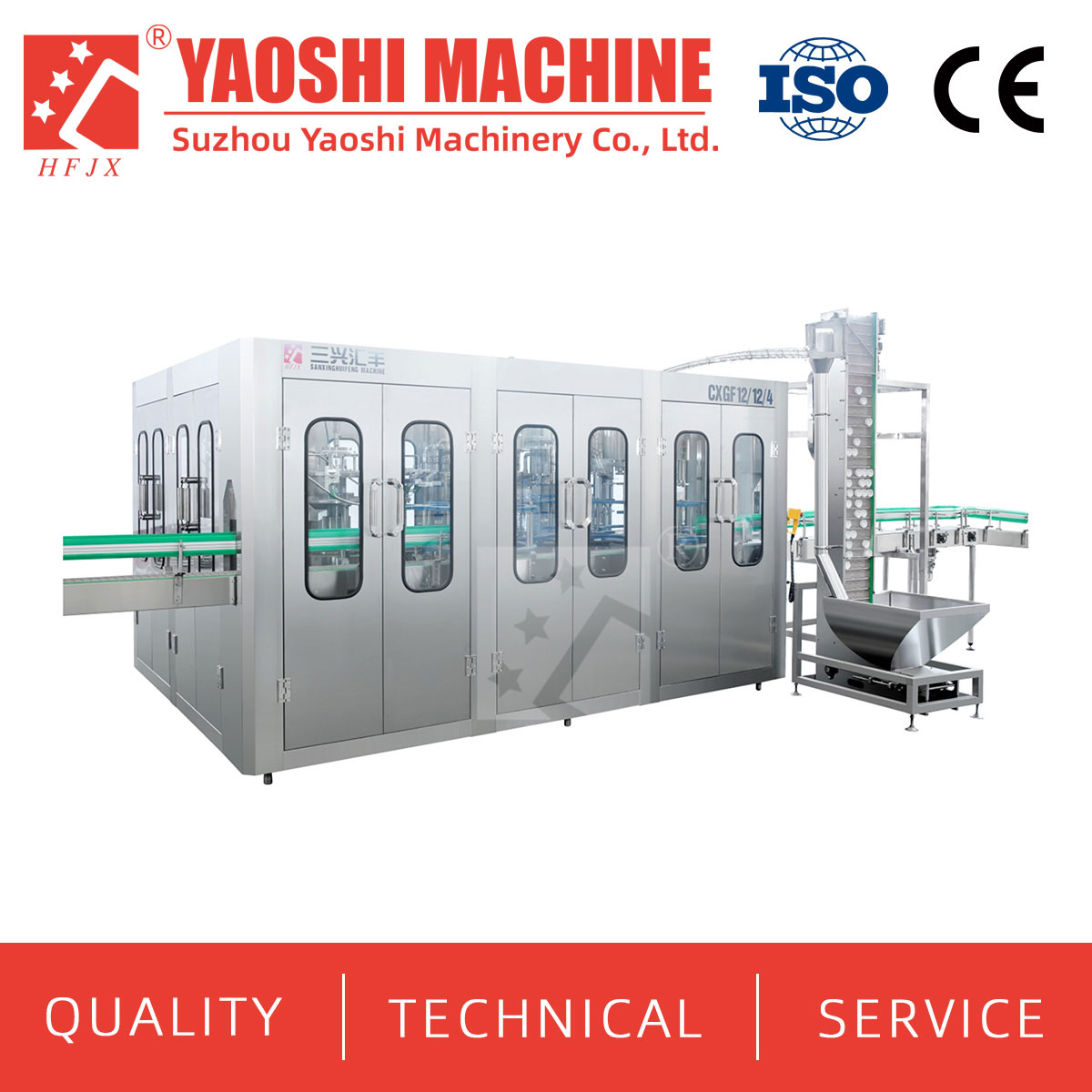
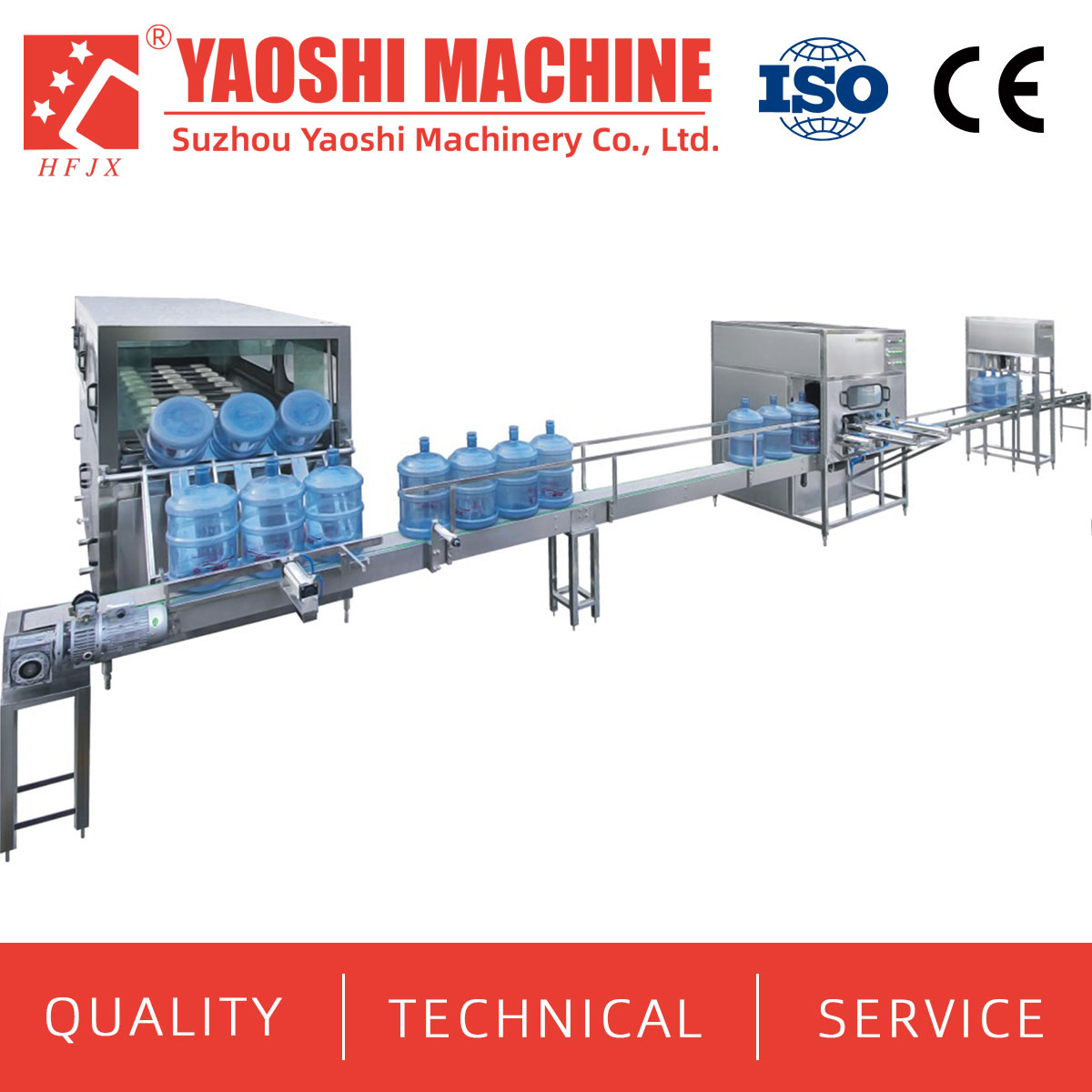
Quotations for complete bottled water production lines can appear comprehensive while leaving important boundaries undefined. One supplier may start at raw-water treatment and finish at shrink-wrapped packs. Another may quote from empty-bottle infeed to capped-bottle discharge. Both may use the word “complete,” but they are not offering the same project.
The practical solution is to define the line by its start point, end point, equipment modules, interfaces, documents and site responsibilities. Each item should be marked as included, optional, excluded or buyer-supplied before prices and delivery schedules are compared.
| Scope status | Meaning in the quotation | What must be recorded |
|---|---|---|
| Included | Part of the quoted supply and price | Model, quantity, technical boundary, documents and acceptance criteria |
| Optional | Available but not included in the base price | Separate price, effect on layout, utilities and delivery |
| Excluded | Outside the supplier's responsibility | Who supplies it and which interface information is required |
| Buyer-supplied | Provided locally or by another contractor | Specification, readiness date and connection responsibility |
These labels should apply to equipment, piping, cables, controls, drawings, installation and testing—not only to the major machines.
First state what enters the supplier's scope. It may be raw water, treated product water, PET preforms or purchased empty bottles. Then define the accepted output: capped bottles, labeled bottles, shrink-wrapped packs, cartons or pallet-ready product.
This boundary determines whether treatment, bottle blowing, air conveying, inspection, labeling and packing belong to the base quotation. It also prevents later disagreement over transfer pumps, buffer tanks, conveyors and connection hardware between modules.
The treatment process should be selected from a raw-water analysis and the required finished-water specification. Yaoshi's water treatment system page lists possible units such as multimedia filtration, activated-carbon filtration, softening, precision filtration, reverse osmosis, ultraviolet sterilization, ozone treatment and storage tanks. This does not mean that every project requires every unit.
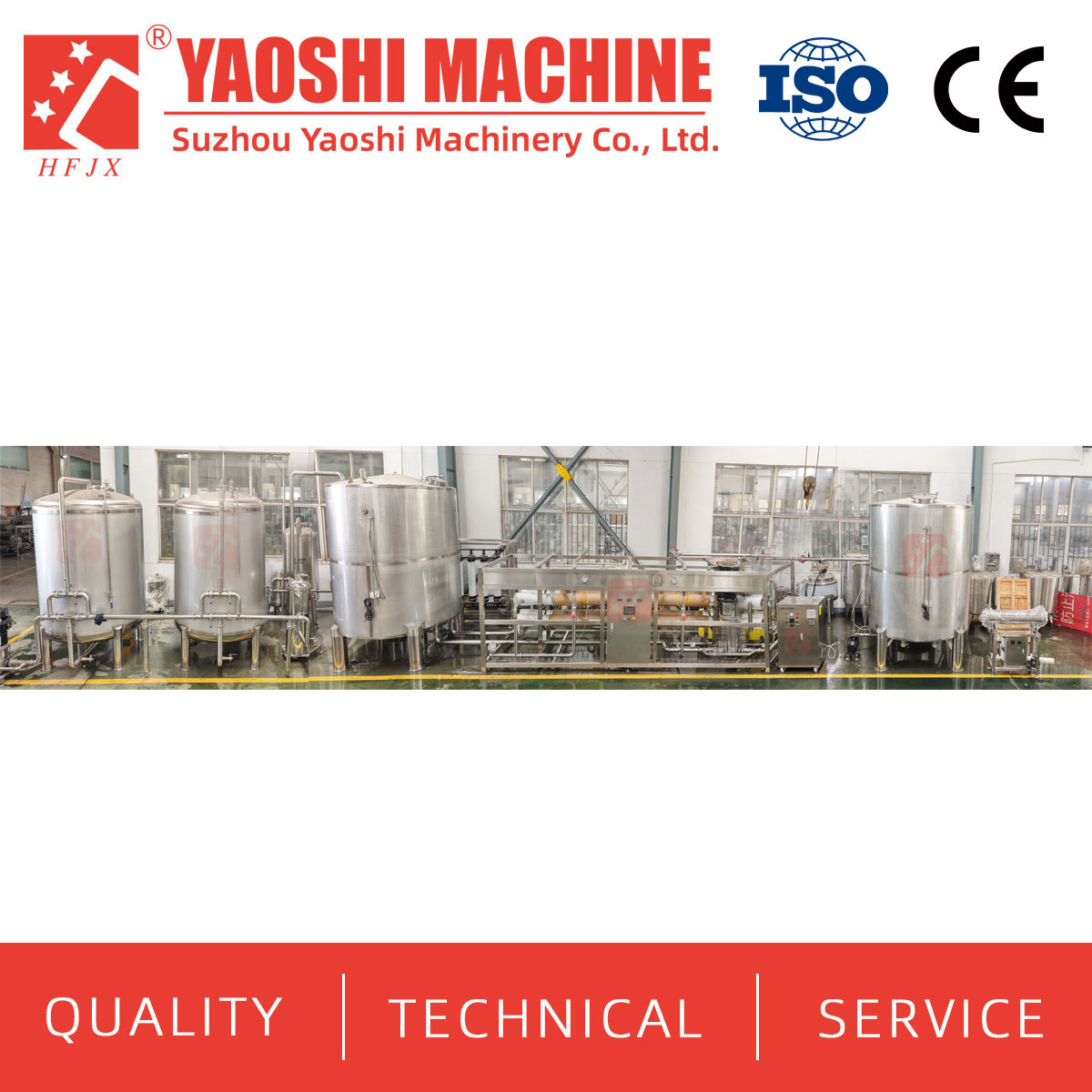
The quotation should identify treatment capacity, recovery assumptions, tank volumes, pump duties, instruments, chemical-dosing scope and the terminal connection to the filler. Raw-water wells, laboratory equipment, building drainage and local product approvals should be separately assigned.
Bottle supply is a conditional module. A project using purchased empty bottles may need bottle storage, unscrambling and bottle conveying. A project making PET bottles from preforms may add a machine from the blow molding machine range, molds, high-pressure air, low-pressure air, cooling water and a transfer route to the filler.
Confirm the preform and bottle drawings, neck finish, resin, bottle volume, weight and required hourly output. State whether molds, compressors, dryers, chillers, air receivers, filters and connecting pipework are included. A blow molder without its utility package and transfer interface is not yet a defined bottle-making scope.
The central module is normally selected around the product, bottle and closure. Yaoshi's water filling machine range includes rinsing, filling and capping solutions for bottled-water projects. The RFQ should state bottle dimensions, neck finish, cap type, requested net output and all planned formats.
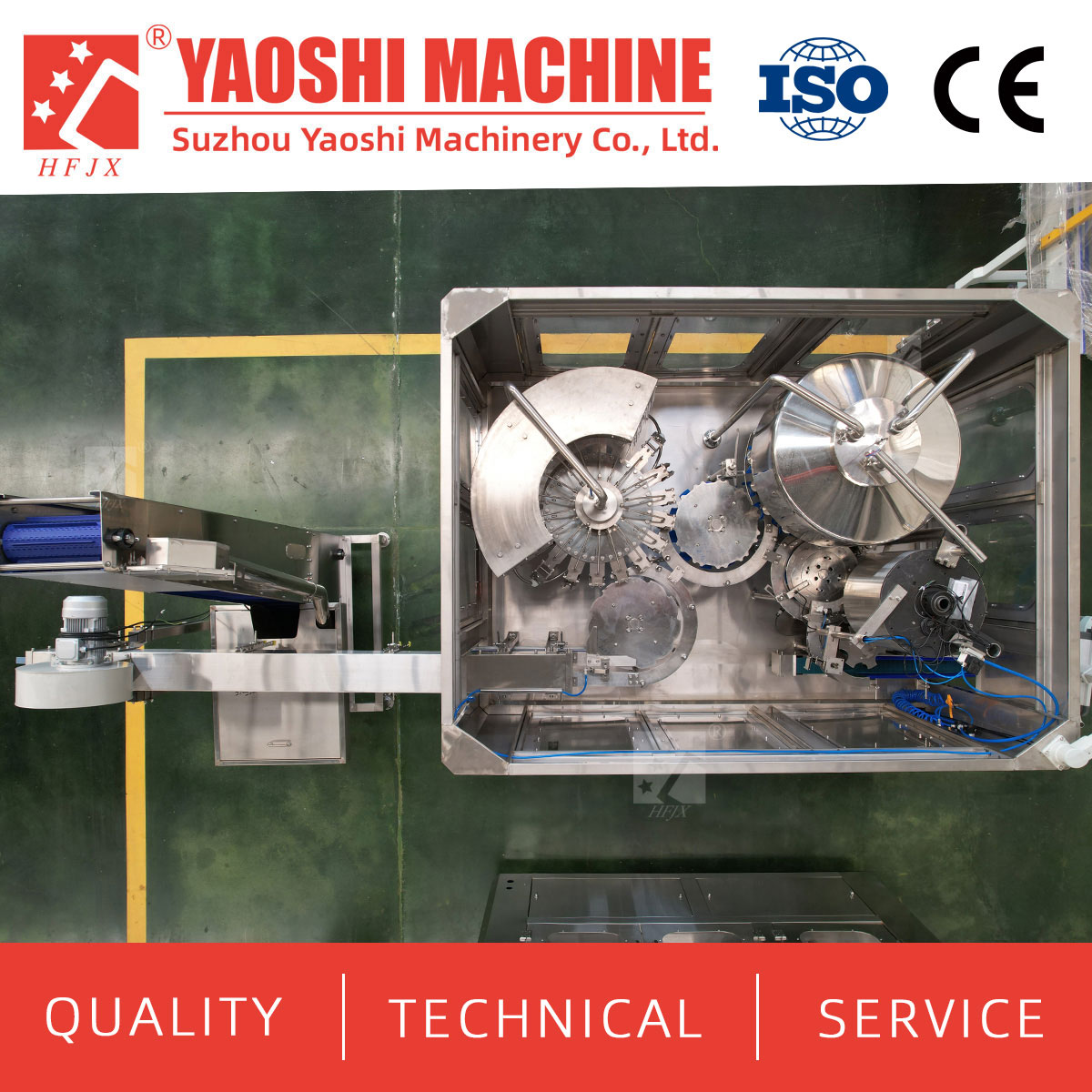
The scope must also address cap feeding, bottle change parts, product-water connection, reject handling, rinse-water collection and the discharge interface. Nominal filler speed should not be treated as guaranteed packed output unless the complete line conditions and acceptance method are defined.
The following published figures can help shortlist modules. Final specifications must be confirmed against the bottle, water process, pack format, utilities and required line acceptance rate.
| Equipment or model | Published capacity | Power | Dimensions | Other published data |
|---|---|---|---|---|
| Water treatment system | 0.5–150 tons/hour | Project-specific | Project-specific | Process configuration depends on water quality and target water |
| CXGF8-8-3 | 2,000 BPH | 3.8 kW | 2300 × 1500 × 2100 mm | 2,800 kg; compressed air 0.3–0.7 MPa |
| CXGF24-24-8 | 8,000–12,000 BPH | 5.2 kW | 3100 × 2450 × 2300 mm | 6,500 kg; compressed air 0.3–0.7 MPa |
| CXGF60-60-15 | 28,000–36,000 BPH | 12 kW | 5450 × 3210 × 2300 mm | 12,000 kg; compressed air 0.3–0.7 MPa |
| WP-350A film shrink wrapper | 16–20 bags/minute | 30 kW | 12000 × 1100 × 2100 mm | 2,500 kg; compressed air 0.6–0.8 MPa |
For the listed CXGF models, the published bottle range is 50–115 mm in diameter and 160–320 mm in height. These figures describe individual equipment and do not replace an approved line layout, utility schedule or integrated output calculation.
Small interface items often create large scope gaps. The quotation should identify empty-bottle inspection, fill-level or cap inspection, bottle drying, date or batch coding and reject collection. Each conveyor section should have a defined start and end point.
Confirm who supplies conveyor supports, guide-rail change parts, lubrication arrangements, accumulation sections and cross-machine safety interlocks. If third-party equipment is retained, provide its conveyor height, speed, control signals and container-transfer drawings.
Label and pack formats affect both machine selection and line balance. The packaging machine range provides possible downstream options, but the contract should name the selected process rather than list “packing” as a single item.
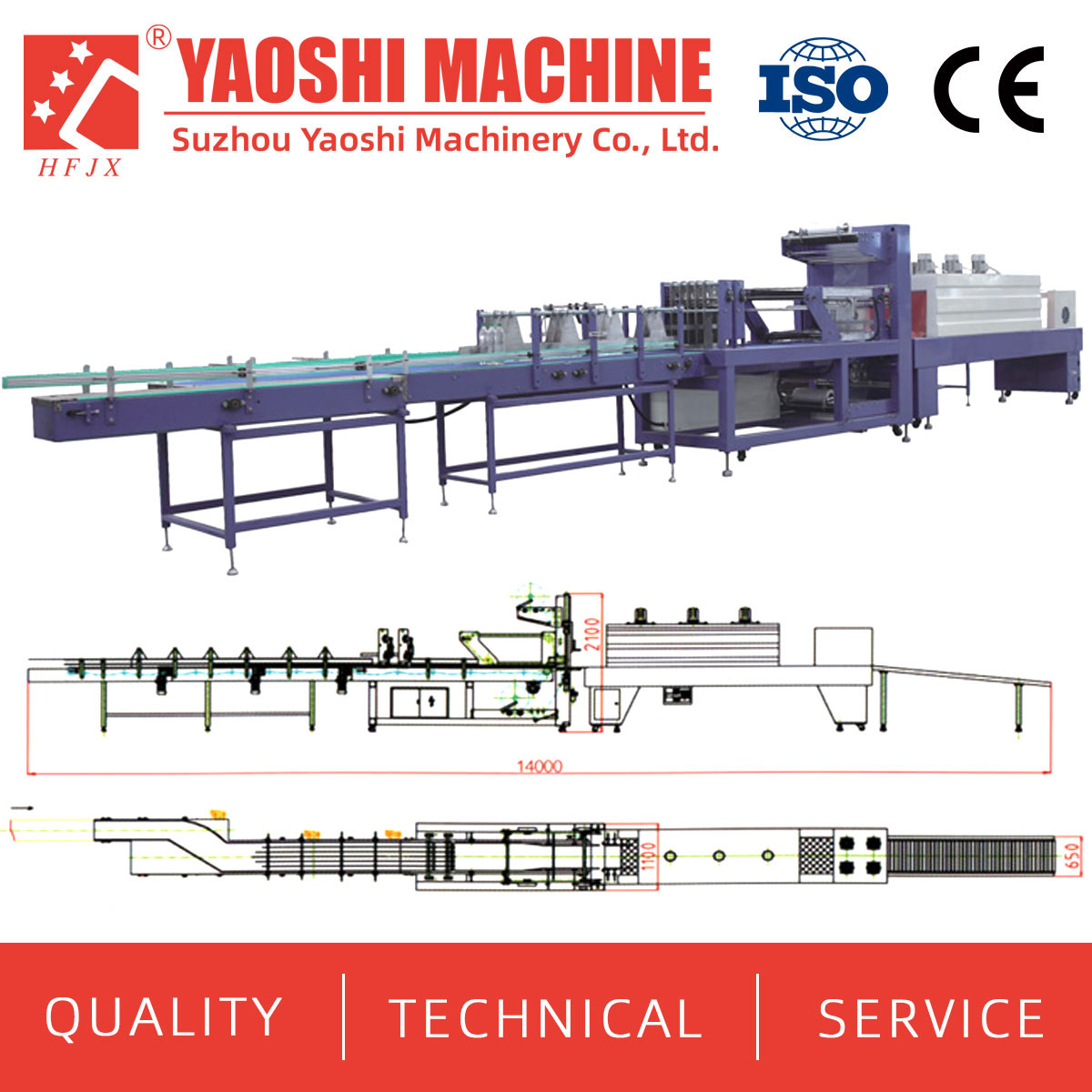
Define the label material, label dimensions, bottle condition at labeling, coding position, pack pattern, film specification and required packs per minute. Palletizing, stretch wrapping and finished-pack conveyors should be separate lines in the scope matrix when applicable.
A supplier can provide equipment utility loads without automatically supplying the utility plant. Record whether air compressors, dryers, chillers, electrical distribution, water supply, steam, drains and ventilation are included or buyer-supplied. Connection size, pressure, temperature, quality and consumption should be issued for every machine.
Civil foundations, floor trenches, platforms, building modifications, local cables, interconnecting pipes and lifting equipment are frequently site responsibilities. If installation materials are included, define quantity limits and battery limits.
A complete mechanical sequence does not automatically create one integrated control system. Define which supplier owns the line controller, machine-to-machine permissives, speed signals, fault signals, emergency-stop zones and production-data exchange.
For equipment from different suppliers, attach an interface list. It should identify signal type, cable responsibility, software changes, commissioning support and the party that proves each transfer point during testing.
Commercial comparison should include deliverables beyond hardware: approved layout, process flow, equipment drawings, utility schedule, electrical documentation, spare-parts list, operation manuals and maintenance information. Specify required language and file format.
Define factory acceptance testing, site acceptance testing, sample materials, test duration and pass criteria. Installation supervision, commissioning, operator training, travel, local labor and accommodation must each have an assigned scope. The final arrangement should be agreed in the contract rather than assumed from the phrase “turnkey” or “complete line.”
| Scope item | Status to confirm | Supplier definition | Buyer input or responsibility | Acceptance evidence |
|---|---|---|---|---|
| Water treatment | Included / optional / excluded | Process, capacity, tanks, pumps and terminal point | Raw-water report and finished-water target | Water-quality and flow test method |
| Bottle supply | Included / buyer-supplied | Blower or unscrambler, transfer and change parts | Preform and bottle drawings with samples | Approved bottles at agreed rate |
| Rinser-filler-capper | Included | Model, heads, supported formats and discharge point | Bottle, cap, water and output requirements | Defined test product, duration and counting point |
| Labeling and coding | Included / optional | Method, materials, location and interfaces | Labels, artwork and code format | Application and code-quality criteria |
| Secondary packing | Included / optional | Pack pattern, speed and finished-pack discharge | Film or carton specification | Accepted packs per minute and pack quality |
| Utilities and site work | Excluded / buyer-supplied unless listed | Consumption and connection requirements | Utility generation, distribution and civil readiness | Pre-commissioning readiness checklist |
| Controls and documents | Included with stated limits | Signal list, drawings, manuals and software boundary | Plant standards and third-party interfaces | Approved document register and interface test |
| Site services | Included / optional | Days, personnel, tasks and exclusions | Labor, lifting, consumables and site access | Signed completion and training records |
Every quotation should carry an assumptions register. If the raw-water analysis, bottle drawing, cap, label, pack pattern, factory layout or requested output changes, the supplier should review equipment selection, change parts, utilities, price and schedule. This creates a traceable quotation instead of relying on verbal expectations.
No. The quotation must state whether its start point is raw water or treated product water and list the treatment modules included.
No. It is required only when bottles are produced in-house. Projects using purchased empty bottles need a different infeed and storage arrangement.
Not automatically. Actual packed output also depends on bottle supply, conveyors, labeling, packing, changeovers, stops and the agreed test method.
Exclusions vary. Civil work, local utility distribution, drains, building changes, lifting, local labor and consumables should be checked explicitly rather than assumed.
Request a separate technical description and price, then confirm the effect on layout, power, air, water, controls and delivery.
Typical project documents include the approved layout, equipment drawings, utility schedule, electrical information, manuals and spare-parts list. The contract should state the exact document register.
Agree on the product, bottle, cap, label, pack format, test duration, counting point, acceptable losses and quality checks before testing.
Provide the raw-water analysis, finished-water target, bottle and cap drawings, requested net output, label and pack formats, factory layout and available utilities.
Send Yaoshi Machinery your raw-water report, bottle and cap information, required net capacity and factory layout. Also identify the intended project start and end points. The team can then organize the proposed modules and responsibilities into a quotation scope that separates included, optional, excluded and buyer-supplied items.
Contact: tony@yaos.ltd | +86 18915689808
</body> </html>


+86-512-58530618

Wukesong Road, Sanxing Town, Zhangjiagang City, Jiangsu Province, China