A water plant can fill 12,000 bottles per hour and still ship fewer saleable packs if the secondary packaging machine cannot form, seal and discharge the chosen bundle at that rate. The pack count changes the arithmetic: a six-bottle pack requires twice as many packing cycles as a 12-bottle pack at the same bottle output.
Choose a mineral water packing machine around the bottle and the finished shipping unit. Film-only bundles, tray-and-film packs and closed cartons place different demands on bottle stability, packaging materials, conveyors and pallet handling. Yaoshi Machinery lists film shrink, tray-supported shrink and carton equipment in its packaging machine range. This guide compares the formats for bottled mineral water after filling, capping and labeling. It does not repeat the broader choice between shrink wrapping and cartons for all beverages.
Start with the trip the pack will make. A local distribution pack handled as a single unit may need different support from a case that travels through several warehouses. Pallet stacking height, manual lifting, retail display, product visibility and the chance of wet or abrasive handling all matter. State these requirements before asking for a machine model.
Then freeze the actual bottle and pack pattern. The procurement drawing should show bottle volume, outside diameter, height, base and shoulder shape, filled weight, label position, cap, bottle count and row arrangement. A lightweight PET bottle that stands well alone may deform or shift when film contracts around a group. Test the intended pack with production bottles and production-grade film or board.
| Format | What Holds the Bottles | Good Starting Situation | What Must Be Tested |
|---|---|---|---|
| Film-only shrink pack | Bottle-to-bottle contact and shrunk film | Stable PET bottles, visible retail multipacks and a distribution route that accepts film bundles | Grouping stability, film seal, label condition, carrying and pallet compression |
| Tray or pad plus film | Corrugated base plus shrunk film | Groups needing a defined base or improved handling during conveying and stacking | Tray fit, board performance, film-to-tray behavior, pallet pattern and water exposure |
| Closed carton | Corrugated walls and closure | Projects needing an enclosed shipping unit, print area or controlled case handling | Carton dimensions, board grade, closure, bottle loading, case compression and code visibility |
This table is a screening tool. A tray does not automatically solve weak bottle geometry, and a carton is only as useful as its board and closure specification. Select the final format after pack and transport trials.
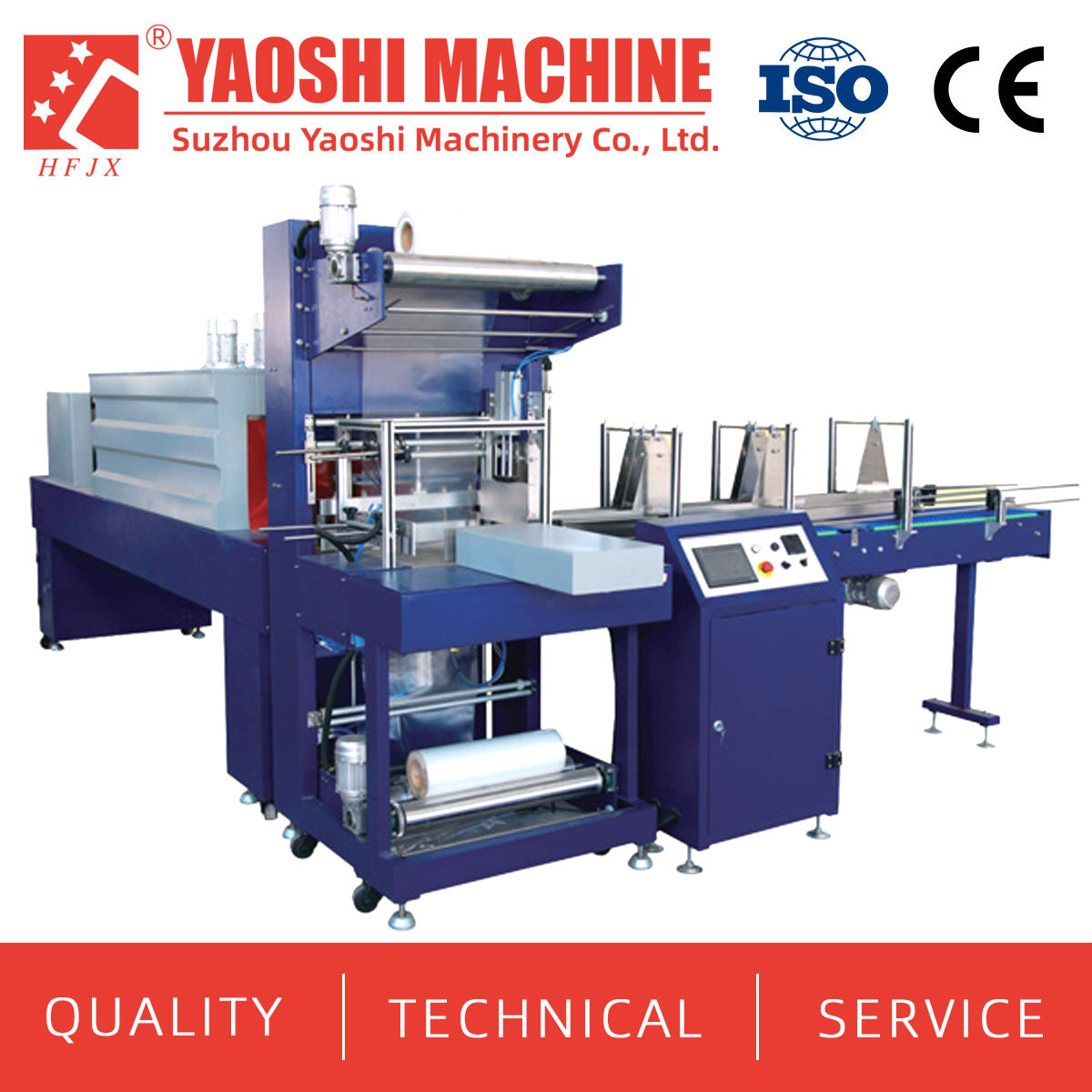
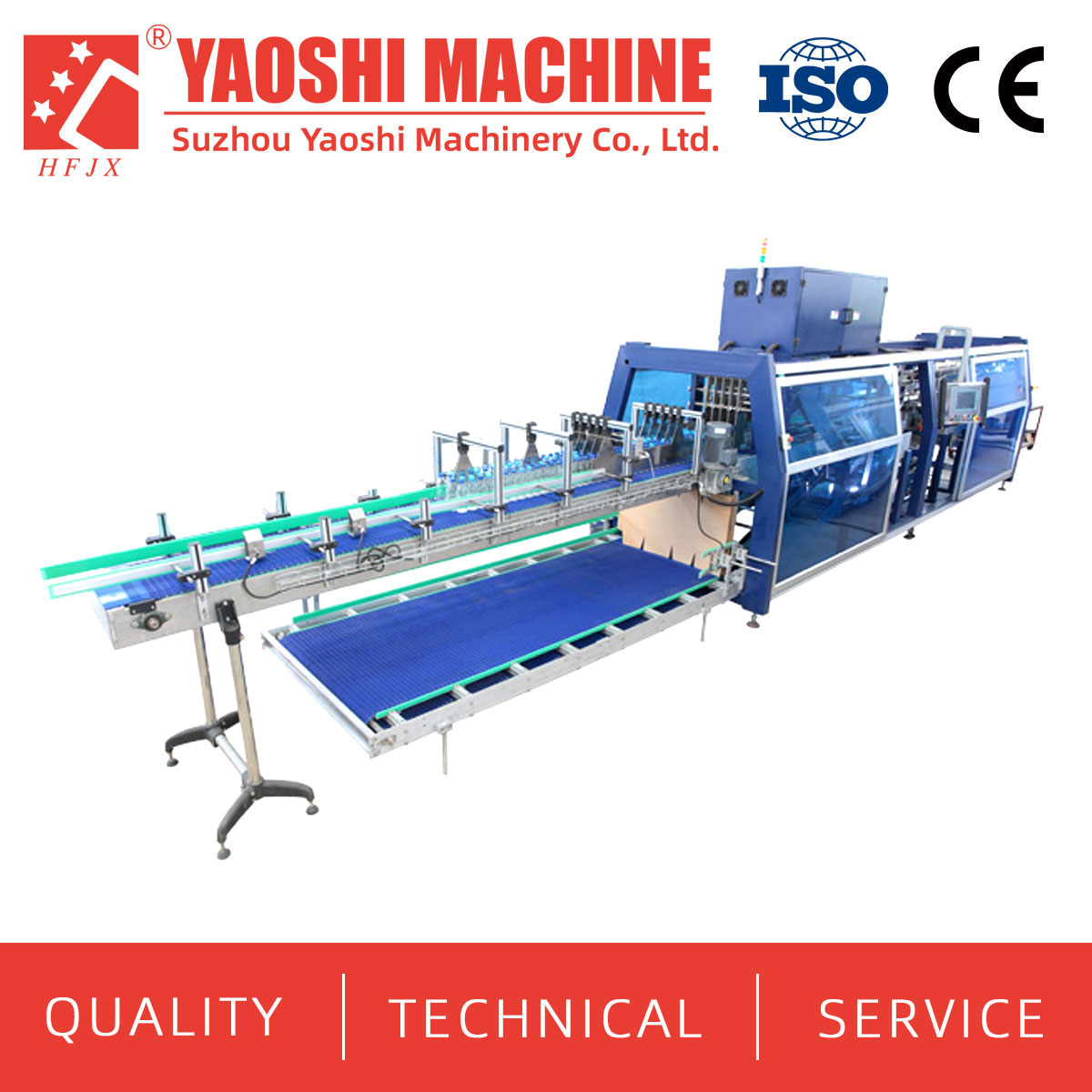
Yaoshi's automatic linear film shrink wrapper is presented for mineral-water bottle grouping. Its published WP-350A data include PE film, a shrink tunnel and a stated output of 16–20 packs per minute. That rate describes the listed equipment; it is not a guarantee for every bottle size, film and pack pattern.
Film-only is a sensible first format to test when the bottles form a stable group and the sales channel accepts a visible multipack. Send the film specification rather than only the word “PE.” Width, thickness and shrink behavior affect sealing and tunnel settings. Check whether the chosen label or bottle shape changes after heat exposure. Ask the supplier to test the heaviest and least stable packs, then inspect the film seam, handle area if used, bottle alignment and pack behavior on the pallet.
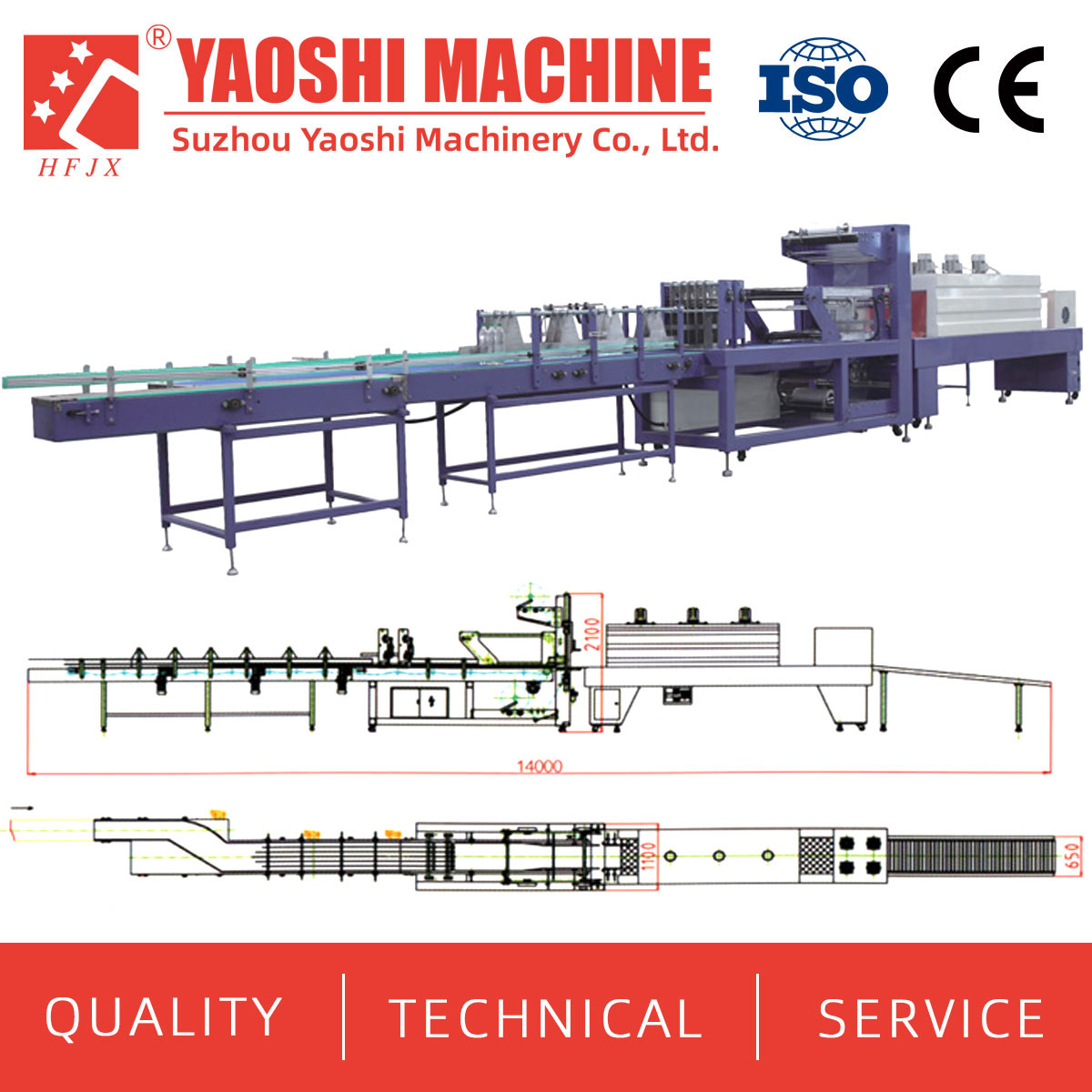
Official product image: automatic linear film shrink wrapping machine. The photograph illustrates the equipment type; the approved pack format must be confirmed with samples.
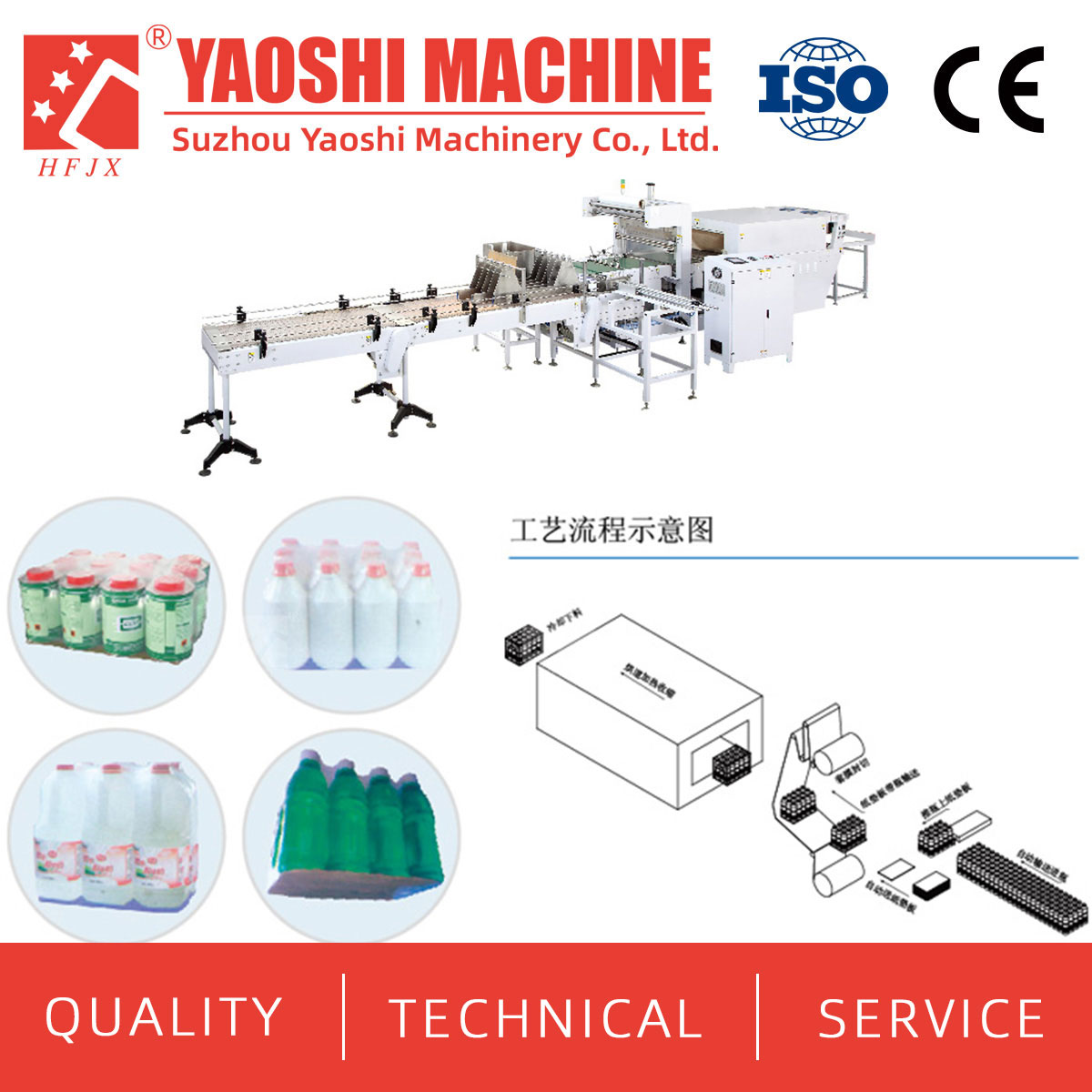
A tray or pad gives the group a defined base before the film is wrapped and shrunk. This can help when bottles move through conveyors, stacking or manual distribution steps that challenge a film-only pack. The added board also creates another material supply, feeding and changeover task. Confirm whether the buyer wants a shallow tray, a pad or another board design; these are not interchangeable in a machine quotation.
Yaoshi's PE film packing machine with tray describes buffering, grouping, placing cardboard beneath the bottles, film wrapping, shrinking and cooling. Its page lists a maximum package size of 450 × 400 × 320 mm, PE film and a minimum cardboard thickness of 2 mm. The published efficiency field is malformed and should be confirmed by Yaoshi before any rate is used in planning.
Supply a tray drawing or sample and specify board grade, moisture exposure, pack weight and pallet pattern. Test whether the tray remains square through the shrink tunnel and whether the film holds the bottles without crushing the base. If the tray is intended for retail display, confirm opening and shelf-handling requirements as part of the pack design.
A closed carton gives the distributor an enclosed unit and space for handling marks or printed information. It also needs a precise blank design, board specification, loading arrangement and closure method. A plant should decide whether the carton is primarily a shipping case or a retail-facing unit, because that changes dimensions, print orientation and handling checks.
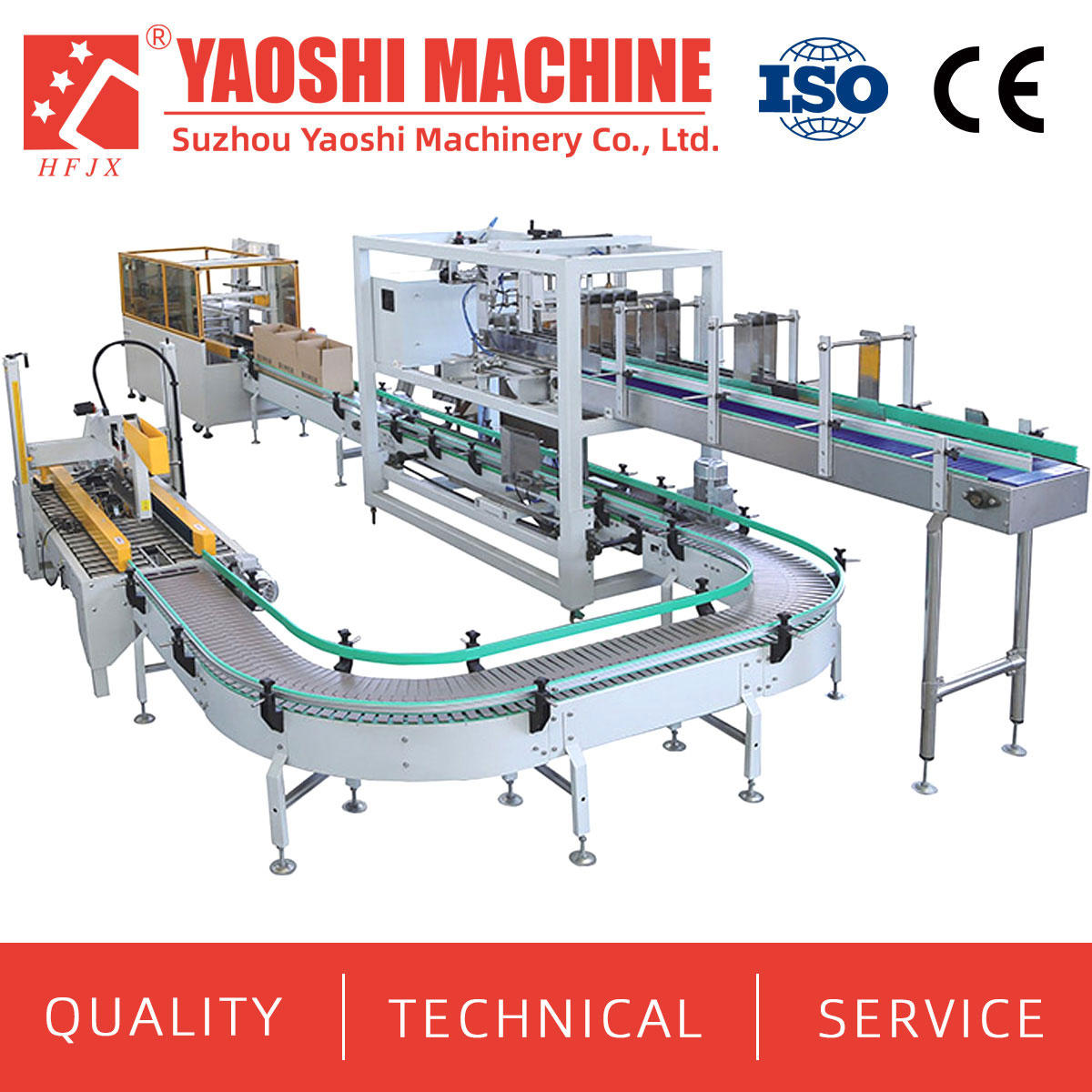
Yaoshi's automatic carton packaging machine groups bottles, feeds board and forms a glued package. The product page states 35–45 boxes per minute, 3 × 4 or 4 × 6 grouping, and an applicable bottle/can range of 60–90 mm diameter and 120–280 mm height. These figures belong to that product page; a mineral-water project still needs confirmation against its bottle, carton blank and desired output.
Request a carton dieline, sample board, filled case weight, closure method and pallet pattern. At a factory test, look at bottle count and orientation, carton squareness, closure, code readability and how the case transfers to the palletizer. If the buyer wants case erecting, bottle loading and sealing as separate units, the equipment list should name each unit and its interface.
The figures below come from three separate Yaoshi product pages. They help compare quotation inputs, not the performance of complete mineral-water packing lines. In particular, packs per minute and boxes per minute must be converted using the same bottle count and production conditions.
| Published Product | Selected Page Parameters | Project Confirmation Needed |
|---|---|---|
| WP-350A linear film shrink wrapper | 16–20 packs/min; PE film 0.03–0.15 mm; 30 kW listed equipment power; 0.6–0.8 MPa air pressure | Bottle count per pack, film width, finished pack size and sustained rate with samples |
| PE film packer with tray | Maximum pack 450 × 400 × 320 mm; PE film; cardboard thickness at least 2 mm; 3.6 kW packer / 22–28 kW shrink section listed | Tray style and blank drawing; actual packs/min because the published efficiency field is malformed |
| Automatic carton packaging machine | 35–45 boxes/min; 3 × 4 or 4 × 6 format; bottle/can diameter 60–90 mm, height 120–280 mm; 20 kW listed power | Mineral-water bottle compatibility, carton blank, closure and sustained case rate |
Machine dimensions and power are useful for the layout and utility schedule, but they do not settle pack quality. Do not transfer a rate or pack-size limit from one published machine to a different tray or carton model.
Calculate the required packing rate from the good bottles leaving the upstream line:
Required packs per minute = good bottles per hour ÷ bottles per pack ÷ 60.
For example, 12,000 good bottles per hour arranged 24 per pack require 500 packs per hour, or about 8.3 packs per minute. The same bottle output in six-packs requires about 33.3 packs per minute. These are arithmetic requirements before rejects, short stops, replenishment and changeovers. The supplier should show how its proposed equipment and buffer handle the actual production profile.
Also define where the packer begins and ends. Confirm labeled-bottle infeed lanes, accumulation, packer discharge elevation, inspection and reject points, and the conveyor to palletizing. A shrink tunnel and cooling section need space and utilities; a carton machine needs board loading and glue service access. Ask for a line layout that includes maintenance access and a clear route for rejected packs.
Bring the bottle, label, film and board materials intended for production to the test. One neat display pack does not show what happens across a sustained run. Define test duration, pack count, allowable defects and the point where output is counted. Record film-seal and shrink appearance for film packs; tray squareness and bottle retention for tray packs; carton closure and board damage for cases. Test pallet stacking and representative transport handling before approving the packaging design.
Send the same RFQ to all suppliers: bottle drawing and filled weight; bottle output by SKU; pack counts and layouts; film or carton specifications; pallet dimensions and stacking pattern; available floor space, electricity and air; and the intended infeed and discharge interfaces. Ask each bidder to mark included machines, options, change parts, spares, testing and installation work. That makes a film, tray and carton proposal comparable on the same mineral-water project basis.
No. Test the actual bottle and bundle. Bottle geometry, filled weight, label, film and pallet load decide whether the group remains stable.
Consider one when the pack needs a defined base for conveying, display or stacking. Confirm the tray design through pack and distribution tests.
No. The quotation must list each supplied function, machine and interface. The website shows more than one carton configuration.
Only after stating bottles per pack, reference bottle, approved material, test duration and count point. The two figures come from different machines and formats.
The current product page displays date-like text instead of a usable packaging-efficiency number. Request a corrected datasheet and a rate test with the proposed pack.
Yes, for a meaningful trial. Label material, placement and behavior through the tunnel can affect the accepted pack.
Send bottle drawings and samples, case count and arrangement, carton dieline and board specification, required cases per minute, and pallet pattern.
For a new mineral-water line or a downstream packing upgrade, send Yaoshi Machinery the bottle drawing, filled sample, target good-bottle output, proposed film or carton materials, pack patterns and factory layout. Ask for a format recommendation, machine and conveyor list, line-rate basis and sample-test plan. Contact tony@yaos.ltd or +86 18915689808.


+86-512-58530618

Wukesong Road, Sanxing Town, Zhangjiagang City, Jiangsu Province, China